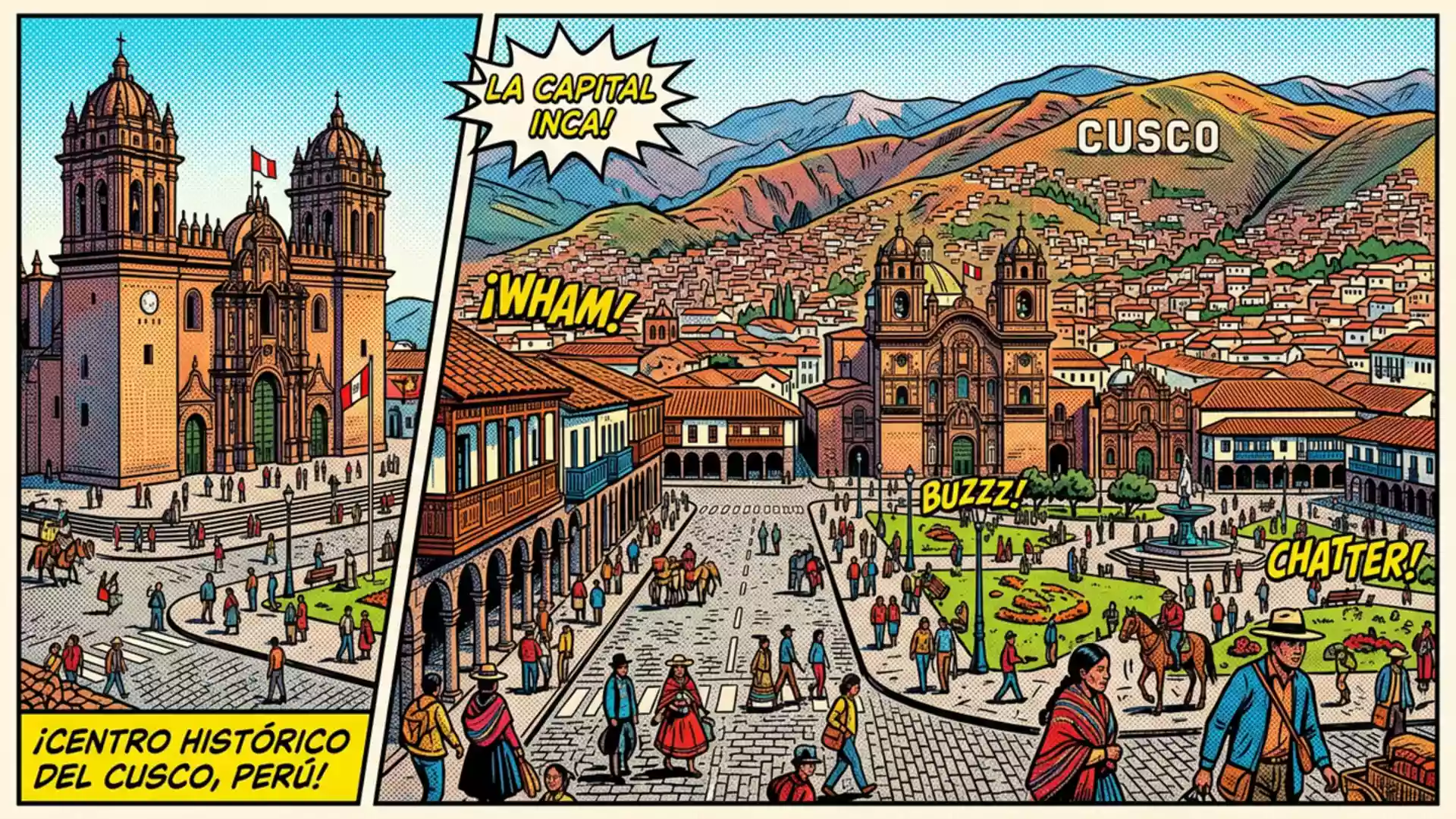
Centro Historico del Cusco and its layered stone cityscape
Published on 09/03/2026 at 22:30 | Editorial responsibility: Rafael Müller, Editor-in-Chief AD HOC NEWS
Centro Historico del Cusco is the historic centre of Cusco in Peru, where Inca stonework and colonial façades share the same streets. The district belongs to the World Heritage listing for the City of Cuzco, inscribed in 1983.
Inca streets beneath colonial fronts
The strongest impression comes from the masonry. Large Inca blocks sit below later plaster, balconies and church fronts, creating a streetscape that reads in layers rather than in a single style.Inca and colonial layers
UNESCO’s description of the City of Cuzco places Pachacutec at the centre of the city’s Inca development, and the historic core was later folded into a Spanish colonial city. That double inheritance remains visible in walls, squares and the rhythm of the old street plan.historic centre maps
Pachacutec, 1972 and 1983
The place is tied to two dates that matter to its identity. The Peruvian state declared the Monumental Area in 1972, and UNESCO added the City of Cuzco to the World Heritage List in 1983.Monumental Area in 1972
The Inca association is equally central. Pachacutec shaped Cuzco into a complex urban centre, and the World Monuments Fund places the city’s origins in the twelfth century before its fifteenth-century expansion.twelfth century origins
Stone, balconies and plazas
Centro Historico del Cusco is not a museum district frozen behind ropes. It remains a city centre, with churches, squares and civic streets built into an urban fabric that still carries Inca foundations.urban fabric
The UNESCO entry describes a property of streets and squares framed by carefully cut granite or andesite, together with later colonial buildings. That mix gives the centre its severe stone base and its softer upper storeys.granite or andesite
Visiting Centro Historico del Cusco: what travellers from Western Europe should know
- The centre lies in Cusco, in the Peruvian Andes. It is reached through the city’s streets and squares, with the historic core extending around the main plaza and adjoining blocks.
- The terrain is high-altitude urban ground, with slopes, stone paving and short changes in level. Older streets can be narrow and irregular underfoot.
- The historic centre contains churches, colonial houses and Inca walls in the same area. The protected core also has a buffer zone around it.
- Spanish is the main language in the city, and the currency is the Peruvian sol.
- Entry requirements depend on your nationality; UK travellers can check the FCDO travel advice at gov.uk/foreign-travel-advice, Irish travellers the Department of Foreign Affairs at ireland.ie.
Searching for Centro Historico del Cusco on social platforms
These links open searches for Centro Historico del Cusco on each platform.
Frequently asked questions about Centro Historico del Cusco
Where is Centro Historico del Cusco?
It is the historic centre of Cusco, in southern Peru. The core area sits within the UNESCO property known as the City of Cuzco.
What does a visit involve?
Expect a working city centre with stone streets, squares, churches and colonial façades. The high-altitude setting and uneven paving are part of the experience.
What makes it distinctive?
Its distinction lies in the visible overlap of Inca and Spanish urban layers. The centre combines fine stone bases, colonial fronts and a preserved historic street pattern.