
Centro Historico de Sucre and the architecture of a white Andean city
Published on 09/23/2026 at 03:00 | Editorial responsibility: Rafael Müller, Editor-in-Chief AD HOC NEWS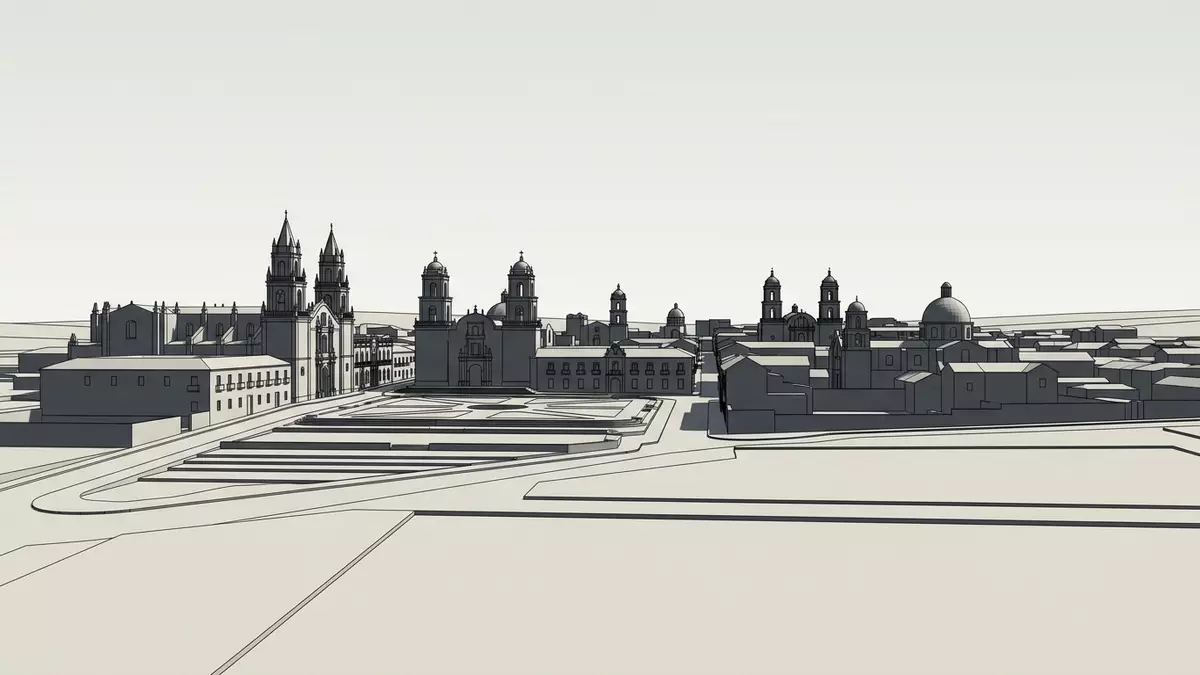
Centro Historico de Sucre is a whitewashed urban landscape spread across the Andean foothills of Sucre, Bolivia. Its streets, patios, churches and civic buildings preserve a colonial grid while carrying the history of the country’s independence.
White façades across the Andean foothills
The historic centre lies on the lower slopes of Sica Sica and Churuquella, in the central-southern highlands of Bolivia. White walls form a continuous street frontage, while red-tiled roofs, balconies and church towers create a varied roofline.
Sucre was founded by the Spanish in 1538 as Ciudad de la Plata de la Nueva Toledo, on lands associated with the Yampara and the Characas confederation. The city took the name Sucre in 1839, honouring Antonio José de Sucre, a leader of the independence struggle and Bolivia’s first president.
The district retains a checkerboard street plan characteristic of Spanish colonial towns in the Americas. The Historic City of Sucre is set within a broader heritage area that includes buildings from the sixteenth to nineteenth centuries.
Plaza 25 de Mayo and the city’s patios
Plaza 25 de Mayo forms the civic and historical centre of Centro Historico de Sucre. The Metropolitan Cathedral, Casa de la Libertad and other public buildings stand around or close to the square.
White façades often conceal courtyards behind the street frontage. Arcades, galleries, carved portals and wrought-iron balconies connect the public face of the city with patios inside houses, convents and civic buildings.
Religious architecture gives the old town much of its vertical character. San Lázaro, San Francisco, Santo Domingo and the Metropolitan Cathedral preserve elements from the colonial period, while later buildings introduce Baroque and Neoclassical forms.
Construction of the Metropolitan Cathedral began in 1559 and continued for centuries. Its architectural language brings together Renaissance, Baroque and Neoclassical features within the historic centre.
Churches, independence and architectural blending
Casa de la Libertad occupies a former Jesuit complex constructed in 1621. Bolivia’s Declaration of Independence was signed there on 6 August 1825, giving the building a central place in the country’s political history.
The square and its surrounding streets connect religious, educational and administrative buildings. The result is a dense urban setting in which national history appears beside everyday residential architecture.
The historic centre also records the meeting of architectural traditions. Local materials and craft practices appear alongside styles brought from Europe, including Renaissance, Mudéjar, Gothic, Baroque and Neoclassical elements.
Sucre received national historic designations in 1969 and 1970, followed by recognition as Ciudad Monumental de América in 1979. The 1991 World Heritage inscription records the historic city as an intact example of architectural blending in Latin America.
The white cityscape is therefore more than a colour scheme. It is the visible surface of a historic plan, with churches, patios, civic buildings and domestic façades gathered within one compact urban fabric.
Visiting Centro Historico de Sucre: what travellers from Western Europe should know
- Centro Historico de Sucre lies at the centre of Sucre in central-southern Bolivia. Plaza 25 de Mayo provides the main urban reference point.
- The district occupies Andean foothills. Streets include gradients, while approaches to church towers and elevated convent spaces involve staircases.
- Several landmarks, including the cathedral, Casa de la Libertad and historic convents, stand within the old town’s pedestrian routes and narrow cobbled streets.
- The official language is Spanish and the currency is the Bolivian boliviano.
- Entry requirements depend on your nationality; UK travellers can check the FCDO travel advice at gov.uk/foreign-travel-advice, Irish travellers the Department of Foreign Affairs at ireland.ie.
Searching for Centro Historico de Sucre on social platforms
These links open searches for Centro Historico de Sucre on each platform.
Frequently asked questions about Centro Historico de Sucre
Where is Centro Historico de Sucre?
Centro Historico de Sucre forms the historic centre of Sucre in central-southern Bolivia. It lies on the foothills of Sica Sica and Churuquella.
What can visitors expect in the historic centre?
The district contains whitewashed façades, tiled roofs, churches, courtyards, civic buildings and streets arranged around Plaza 25 de Mayo.
What makes the district distinctive?
Its colonial grid combines local Andean traditions with European architectural styles. Casa de la Libertad and the 1991 World Heritage inscription add political and cultural significance.


