
Centro Historico de Sucre and its white colonial cityscape
Published on 09/09/2026 at 15:18 | Editorial responsibility: Rafael Müller, Editor-in-Chief AD HOC NEWS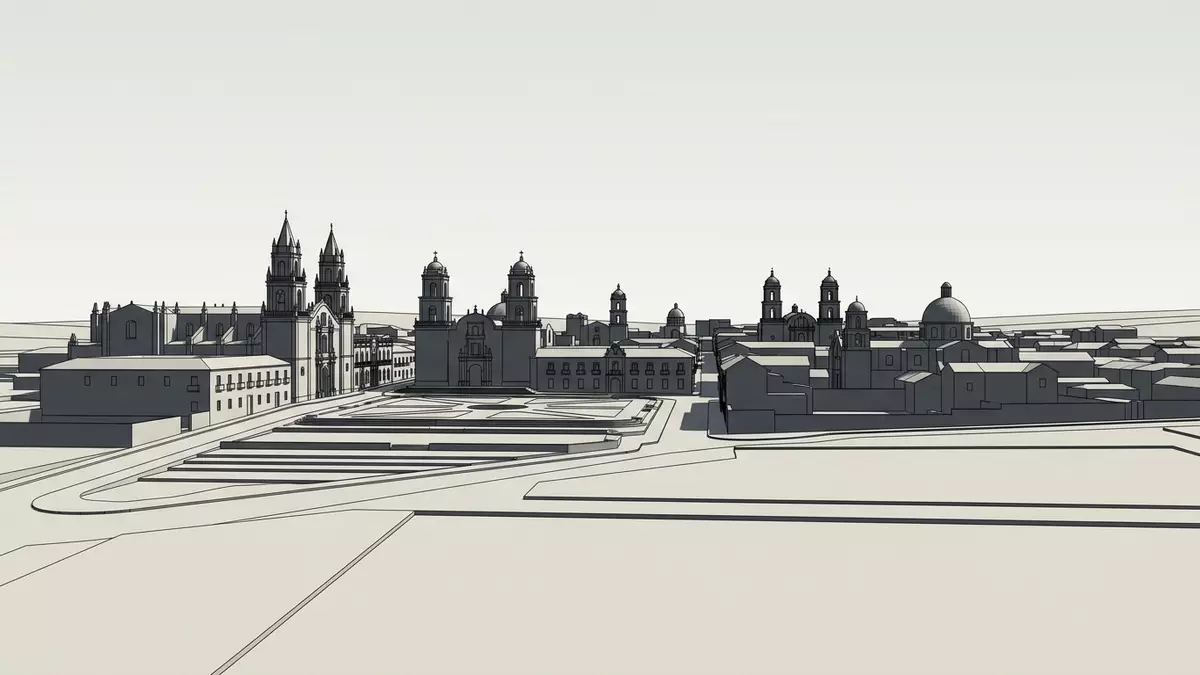
Centro Historico de Sucre is the historic core of Sucre, Bolivia’s constitutional capital, and it is distinguished above all by a consistent white colonial cityscape set on Andean foothills. This compact district preserves an urban fabric from the Spanish colonial and republican periods, anchored by civic and religious buildings that remain closely tied to Bolivia’s political and cultural history.
A white city shaped by colonial and republican architecture
Sucre developed as an important administrative and ecclesiastical centre of the Spanish Empire in the Andes, and Centro Historico de Sucre still reflects those origins in its layout and architecture.The Historic City of Sucre occupies the historic core of the city in central-southern Bolivia, lying in the foothills of the Sica Sica and Churuquella hills and presenting an intact example of a Hispanic colonial and republican centre.
The streets of Centro Historico de Sucre are laid out in a grid, a pattern that dates back to Spanish colonial town planning and centres on a main square that became Plaza 25 de Mayo.Sucre travel guide Within this grid, whitewashed façades and red-tiled roofs define the character of houses, convents and civic buildings, while wrought-iron balconies and carved stone portals mark many street fronts.Sucre Altstadt, Bolivia’s White City Heart
Plaza 25 de Mayo and the core monuments of independence
At the physical and symbolic heart of Centro Historico de Sucre lies Plaza 25 de Mayo, the principal square framed by important religious and civic buildings.Plaza 25 de Mayo main square Monuments in the square honour figures including Simón Bolívar and Antonio José de Sucre, underlining the city’s role in the wider history of independence in the Andes.Centro Historico de Sucre and its white colonial cityscape
On one side of Plaza 25 de Mayo stands the Casa de la Libertad, housed in a former Jesuit complex where Bolivia’s declaration of independence was signed on 6 August 1825.Sucre walking tour Nearby rises the Cathedral of Sucre, whose origins go back to the sixteenth century and whose towers overlook the rooftops of the white city, while municipal and departmental buildings line other sides of the square, bringing administrative life into the same open space.
Protected historic district and surrounding quarters
Centro Historico de Sucre is formally recognised by UNESCO as the Historic City of Sucre, a World Heritage Site inscribed in 1991 for its exceptional state of preservation and its blend of local and European traditions in architecture.Historic City of Sucre inscription Long before that, Sucre had received national and continental designations that emphasised its monumental character, reflecting the value placed on its colonial and republican buildings.historic designations of Sucre
Within the historic district, planners distinguish several protection areas to manage conservation: an area of intensive preservation covering the oldest streets, a transition area around it and a landscape protection zone where views towards hills and surrounding neighbourhoods form part of the heritage value.Centro histórico de Sucre structure Churches, convents and civic buildings from the colonial and republican eras are distributed across these areas, including landmarks such as San Felipe Neri, La Merced, Santo Domingo and La Recoleta, each with its own cloisters, towers and courtyards linked to the streets of Centro Historico de Sucre.manual for conservation of Sucre’s heritage
Visiting Centro Historico de Sucre: what travellers from Western Europe should know
- Centro Historico de Sucre occupies the historic centre of Sucre in central-southern Bolivia, set on Andean foothills and centred on Plaza 25 de Mayo, which functions as a key orientation point for exploring the district.
- The terrain within the historic centre is walkable, with streets arranged in a grid and many routes involving cobbled surfaces and gentle gradients rather than long, steep climbs.
- From Plaza 25 de Mayo, streets lead to landmarks such as the Casa de la Libertad, the Cathedral of Sucre and several convents, so walking from the square offers access to religious, historical and administrative buildings.
- The official language is Spanish and the currency is the Bolivian boliviano.
- Entry requirements depend on your nationality; UK travellers can check the FCDO travel advice at gov.uk/foreign-travel-advice, Irish travellers the Department of Foreign Affairs at ireland.ie.
Searching for Centro Historico de Sucre on social platforms
These links open searches for Centro Historico de Sucre on each platform.
Frequently asked questions about Centro Historico de Sucre
Where is Centro Historico de Sucre located?
Centro Historico de Sucre occupies the historic centre of Sucre in central-southern Bolivia, set on Andean foothills in the district recognised by UNESCO as the Historic City of Sucre.
What should travellers expect when visiting Centro Historico de Sucre?
Travellers encounter a walkable colonial and republican cityscape of whitewashed buildings, red-tiled roofs, churches, convents and civic institutions arranged around Plaza 25 de Mayo and adjoining streets.
What makes Centro Historico de Sucre distinctive?
The district is distinctive for the coherence of its white colonial architecture, the concentration of independence monuments and historic buildings around Plaza 25 de Mayo, and its formal protection as a UNESCO World Heritage Site.


