
Centro Historico de Sucre and Bolivia’s white colonial cityscape
Published on 09/16/2026 at 15:24 | Editorial responsibility: Rafael Müller, Editor-in-Chief AD HOC NEWS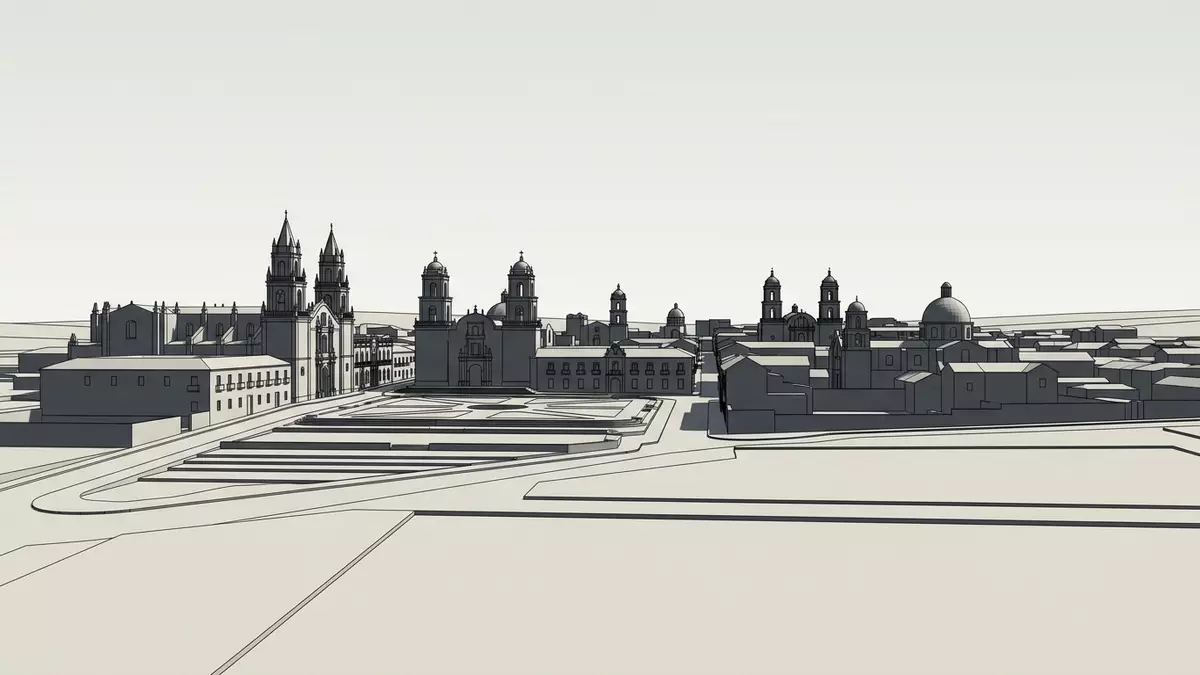
Centro Historico de Sucre is the historic heart of Sucre, Bolivia’s constitutional capital, and it is distinguished above all by a remarkably consistent white colonial cityscape set on Andean foothills. Within a compact grid of streets, civic and religious buildings from the Spanish colonial and republican periods frame plazas and patios that together tell a concentrated story of architecture and independence.
A white city in the Andean foothills
Sucre lies in the central-southern highlands of Bolivia, and Centro Historico de Sucre occupies its historic core on the lower slopes of the Sica Sica and Churuquella hills, where the urban fabric first took shape under Spanish rule.Historic City of Sucre The district forms a largely intact colonial-era grid, its streets lined with whitewashed façades that give Sucre the widely used moniker of Bolivia’s “white city”. Many houses and convents present plain walls to the street, hiding inner courtyards that bring light and air into the depth of the block.
Above this continuous band of white masonry, church towers, belfries and domes rise over the roofline, marking the presence of religious complexes that were integral to city life in the sixteenth to eighteenth centuries.white colonial capital The elevation of Sucre in the Andean foothills means long perspectives along streets end not only in façades but also in glimpses of surrounding hills, reinforcing the relationship between the gridded townscape and its topography.
Colonial grid, plazas and patios
Centro Historico de Sucre preserves an urban layout characteristic of Spanish colonial planning in the Andes: straight streets intersect at right angles, creating blocks that are modest in scale compared with some Latin American capitals, and giving the old town a walkable character.colonial urban landscape At the centre of this grid lies Plaza 25 de Mayo, the main square from which distances in the historic centre are often measured and around which several of Bolivia’s most historically significant buildings are grouped.
Plaza 25 de Mayo is framed by the Metropolitan Cathedral of Sucre, the Casa de la Libertad, and civic buildings such as the local government palace, forming a dense ensemble of religious and secular architecture.Plaza 25 de Mayo ensemble Many structures around the square and in the surrounding streets follow similar patterns: arcaded ground floors or recessed entrances, wrought-iron balconies, and ornamental portals that add texture to otherwise unbroken white walls. Behind these façades, patios with galleries and gardens provide quieter internal spaces that contrast with the traffic and movement outside, while cloistered courtyards in convents such as San Felipe Neri offer elevated walks above the tiled roofs.
Independence landmarks and heritage protection
Among the buildings in Centro Historico de Sucre, the Casa de la Libertad on Plaza 25 de Mayo holds particular significance as the place where the act of independence of Bolivia was signed in the early nineteenth century.Casa de la Libertad The square itself takes its name from 25 May 1809, the date associated with an uprising in Chuquisaca that forms part of the wider narrative of South American independence.Chuquisaca Revolution date Together with the cathedral and the university-related buildings nearby, these structures anchor Sucre’s role in the political and intellectual history of Bolivia.
The architectural and historical value of Centro Historico de Sucre has been recognised through multiple designations over the second half of the twentieth century, including national decrees that declared Sucre a historic monumental city and heritage of Bolivians, followed by recognition as Ciudad Monumental de América by the Organisation of American States.historic designations In 1991 the Historic City of Sucre was inscribed on the UNESCO World Heritage List as a cultural site, highlighting the intact urban plan and the blending of European and local traditions in its colonial and republican architecture.UNESCO inscription 1991
Visiting Centro Historico de Sucre: what travellers from Western Europe should know
- Centro Historico de Sucre lies at the centre of Sucre in central-southern Bolivia, and is reached by urban streets radiating from Plaza 25 de Mayo, the city’s main square.
- The historic centre stands on Andean foothills, so many streets include gentle to moderate gradients, and some approaches to church towers and viewpoints involve staircases of multiple flights.
- Within the old town, several landmarks such as the cathedral, Casa de la Libertad and convents sit within short walking distance of one another, with pavements and narrow cobbled streets providing the main routes.
- The official language is Spanish and the currency is the Bolivian boliviano.
- Entry requirements depend on your nationality; UK travellers can check the FCDO travel advice at gov.uk/foreign-travel-advice, Irish travellers the Department of Foreign Affairs at ireland.ie.
Searching for Centro Historico de Sucre on social platforms
These links open searches for Centro Historico de Sucre on each platform.
Frequently asked questions about Centro Historico de Sucre
Where is Centro Historico de Sucre located?
Centro Historico de Sucre forms the historic centre of Sucre in central-southern Bolivia, set on the foothills of the Sica Sica and Churuquella hills.
What can visitors expect when exploring the area?
Visitors encounter a compact grid of streets lined with whitewashed colonial and republican buildings, centred on Plaza 25 de Mayo and punctuated by churches, patios and civic landmarks.
What makes Centro Historico de Sucre distinctive among historic cities?
The district is distinctive for its consistent white colonial cityscape, concentration of independence-era landmarks around Plaza 25 de Mayo, and recognition as the Historic City of Sucre on the UNESCO World Heritage List.


