
Centro Historico de Puebla and its talavera-clad streets
Published on 09/19/2026 at 19:46 | Editorial responsibility: Rafael Müller, Editor-in-Chief AD HOC NEWS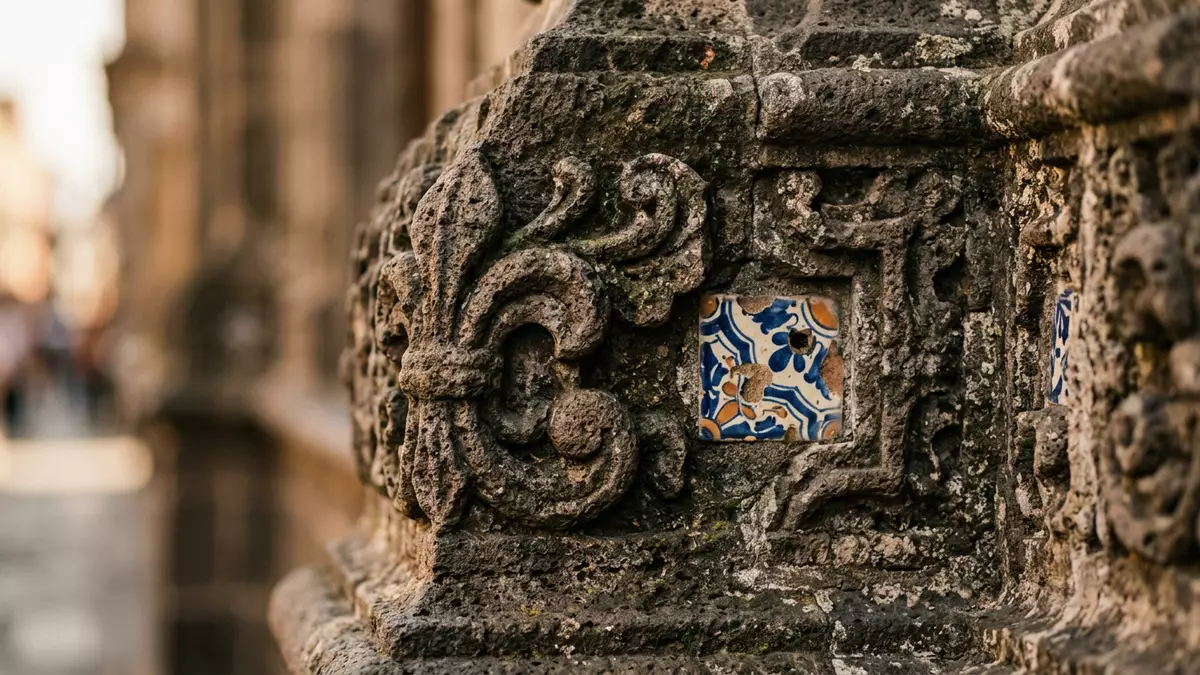
Centro Historico de Puebla is the historic core of Puebla in central Mexico, a planned colonial grid of religious and civic buildings whose façades are enlivened by glazed talavera tiles. Recognised as the Historic Centre of Puebla on the UNESCO World Heritage List since 1987, it preserves streets and squares first laid out after the city’s foundation in 1531.
A planned colonial city at the foot of Popocatépetl
The city of Puebla was founded ex nihilo in 1531 in the valley east of Mexico City, close to the volcanic massif dominated by Popocatépetl. In urban terms this foundation created a new town with a regular plan, not an extension of an older settlement. Streets in the Centro Historico de Puebla follow a checkerboard pattern traced from the corners of the main square, forming rectangular blocks that still organise movement through the centre.Founded ex nihilo in 1531 The Zócalo, Puebla’s principal square, occupies one of these blocks and holds a cluster of civic buildings, shaded walkways and planted areas that give the centre a clear focus.
This colonial grid contains architecture dating from the sixteenth to the nineteenth century, with an especially dense concentration of structures from the baroque era. The centre was designated a Historic Monuments Zone by presidential decree in 1977 and ten years later the World Heritage inscription followed, recognising the coherence of the urban fabric and its unusually complete set of religious and civil buildings.Historic Monuments Zone in 1977 The protected area extends across hundreds of city blocks and includes thousands of properties with documented historical value.UNESCO core of Puebla
Baroque churches and civic palaces in stone and tile
Religious architecture defines the skyline of Centro Historico de Puebla. The cathedral, whose construction spans the sixteenth and seventeenth centuries, stands near the Zócalo with towers and domes rising above the surrounding roofs.Cathedral dating to the sixteenth and seventeenth centuries Alongside it, major churches such as Santo Domingo, San Francisco and the Jesuit church form part of the ensemble identified in the World Heritage listing. Their façades combine carved stone portals and cornices with stucco surfaces and tiled domes, creating intricate compositions visible from many corners of the centre.
Civic buildings are equally prominent. Palaces with arcaded fronts face the main square, while former residences and commercial houses line the side streets. Many façades reach across several window bays, with balconies set above ground-floor doorways and stone surrounds framing openings. The old archbishop’s palace, associated with the Palafox Library, stands among these larger structures and reflects the city’s role as an ecclesiastical and administrative centre during the colonial period.Old archbishop’s palace and library Together, these churches and palaces give Centro Historico de Puebla a dense architectural profile, where different building types share common materials and proportions.
Talavera tiles and façades as open-air gallery
What distinguishes the streetscape of Centro Historico de Puebla is the extensive use of glazed ceramic tiles, known locally as talavera, on the walls of residential and commercial buildings. These tiles form patterned surfaces in blues, whites and other colours, set into bands, panels and fields that cover significant areas of the façades.Talavera tiles on façades In many streets the tiled sections align with stone pilasters and cornices, so that ceramic and masonry work together to articulate each elevation.
This combination of talavera and carved stone gives even narrow frontages a sense of depth, as framed panels, projecting mouldings and tiled spandrels catch the light differently through the day. Architectural styles range from Renaissance-derived elements to an exuberant Mexican baroque that developed a distinctive character in Puebla, evident in richly modelled façades and layered decoration.Architectural range from sixteenth to nineteenth century Walking through the centre becomes a progression of variations on stone and ceramic, with each block presenting new patterns and compositions while remaining within the shared language of the townscape.
Visiting Centro Historico de Puebla: what travellers from Western Europe should know
- Centro Historico de Puebla lies in the city of Puebla in central Mexico, east of Mexico City at the foot of the Popocatépetl volcano, and is reached overland from Mexico City and via transport links serving Puebla’s airport.
- Within the historic centre, the streets form a regular grid around the Zócalo, with many routes involving walks along paved pavements and crossings over cobbled sections.
- The area stands at an elevation typical of the Mexican highlands, and visitors moving between churches and palaces cover substantial ground on foot along urban blocks.
- Spanish is the official language and the currency is the Mexican peso.
- Entry requirements depend on your nationality; UK travellers can check the FCDO travel advice at gov.uk/foreign-travel-advice, Irish travellers the Department of Foreign Affairs at ireland.ie.
Searching for Centro Historico de Puebla on social platforms
These links open searches for Centro Historico de Puebla on each platform.
Frequently asked questions about Centro Historico de Puebla
Where is Centro Historico de Puebla located?
Centro Historico de Puebla forms the historic centre of the city of Puebla in central Mexico, east of Mexico City at the foot of the Popocatépetl volcano.
What can visitors expect when walking through the historic centre?
Visitors encounter a planned grid of streets lined with churches, civic palaces and townhouses whose façades combine carved stone elements with extensive areas of glazed talavera tiles.
What makes Centro Historico de Puebla distinctive among colonial cities?
The centre stands out for its coherent colonial street plan, dense concentration of religious and civic architecture from the sixteenth to nineteenth centuries, and the widespread use of talavera tiles as integral façade surfaces.


