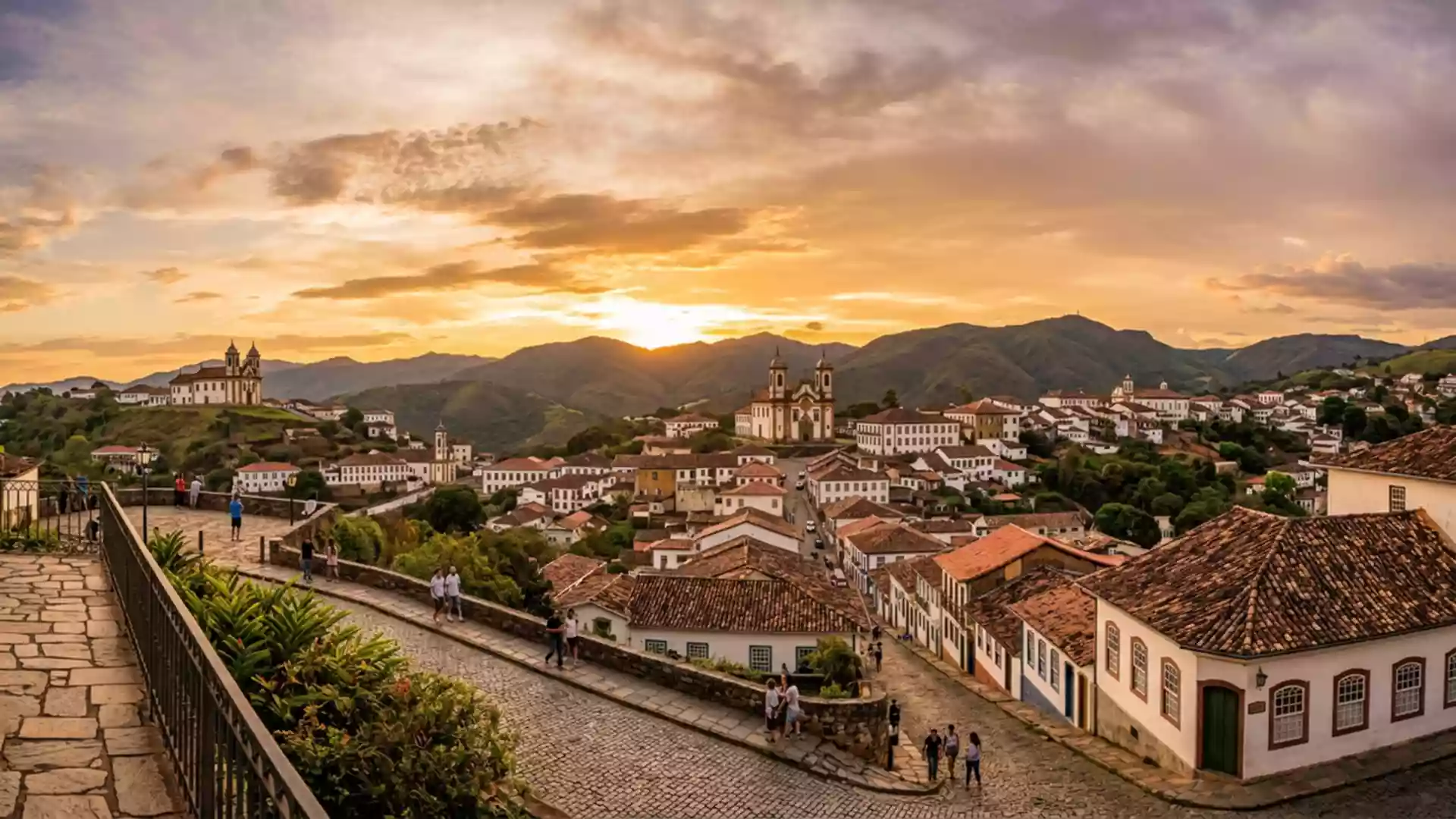
Centro Historico de Ouro Preto and its baroque hillside streets
Published on 09/09/2026 at 08:00 | Editorial responsibility: Rafael Müller, Editor-in-Chief AD HOC NEWS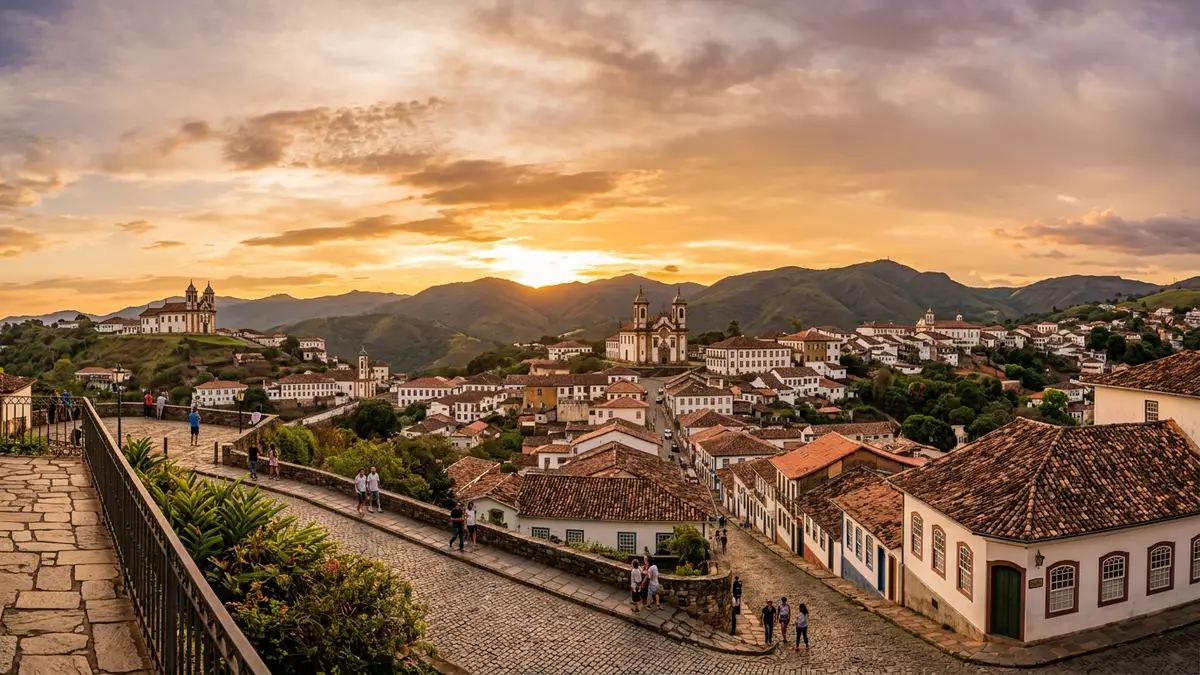
Centro Historico de Ouro Preto is the historic centre of Ouro Preto in Minas Gerais, Brazil, a hillside district where colonial streets climb towards baroque church fronts and tiled houses from the eighteenth century. Set among the mountains of the Serra do Espinhaço, the town inherited its wealth from the gold rush of the early eighteenth century and preserves an unusually complete ensemble of colonial buildings and streets from that period.
From black gold to a baroque colonial townscape
The story of Centro Historico de Ouro Preto begins with the discovery of “ouro preto”, black gold, in the riverbeds around the future town in the late seventeenth century, when prospectors from São Paulo pushed inland in search of precious metals.The discovery of ouro preto triggered a gold rush that brought settlers, enslaved labour and administrators into these hills, and several mining settlements were combined into Vila Rica, the “rich town”, in 1711.The creation of Vila Rica In 1720 Vila Rica became capital of the Minas Gerais captaincy, anchoring mining administration and taxation in what is now the historic centre.
The name Ouro Preto, “black gold”, refers to gold ore darkened by iron oxide, a reminder that wealth here was extracted from hard rock rather than river sand.Gold ore darkened by iron As the gold cycle reached its height in the eighteenth century, the town’s steep slopes filled with churches, administrative buildings and townhouses, creating a dense colonial fabric that still defines Centro Historico de Ouro Preto. The ensemble bears witness to the Brazilian gold cycle under Portuguese rule, when taxes on gold and the concentration of power in Minas Gerais also gave rise to movements such as the Inconfidência Mineira of 1789, an early conspiracy for independence centred on Vila Rica.Inconfidência Mineira in 1789
Baroque streets on steep hillsides
Centro Historico de Ouro Preto spreads across steep hills, its streets climbing and descending in sequences of cobbles, staircases and short ramps that reflect the contours of the Serra do Espinhaço. Many of the houses along these streets are painted in white with coloured timber frames and doors, their tiled roofs stepping with the slope and forming continuous terraces along the hillside. The gradients make the urban fabric three-dimensional: from certain corners a visitor looks across rooflines towards church towers that rise above the neighbourhoods below.
The churches and public buildings of Ouro Preto are known for their Portuguese colonial Baroque and Rococo architecture, with richly worked façades, sculpted stone surrounds and ornamented altarpieces inside.Baroque colonial architecture In Centro Historico de Ouro Preto these churches frequently occupy prominent hilltops or street corners, their towers visible from multiple angles as the streets wind around them. The result is a townscape in which religious architecture and modest dwellings share the same slopes, and where the changing levels lend each square and junction a distinct perspective over the surrounding hills.
Preservation and World Heritage recognition
The historical and artistic value of Ouro Preto was recognised early in the twentieth century, when the town was declared a national monument in the 1930s and the surrounding region was designated for protection.National monument status This status helped preserve the colonial streets and buildings in Centro Historico de Ouro Preto at a time when many Brazilian cities were undergoing rapid modernisation, and the historic centre retained its late eighteenth-century character to a striking degree.
In 1980 the Historic Town of Ouro Preto became Brazil’s first cultural property inscribed on the UNESCO World Heritage List, recognised for the integrity of its Baroque colonial ensemble and the way its urban fabric reflects the gold economy of the eighteenth century.UNESCO World Heritage inscription in 1980 The inscription covers the historic town as a whole rather than individual monuments, underlining that Centro Historico de Ouro Preto is valuable not only for isolated churches or palaces but for the continuous streets, squares and clusters of houses that together convey the scale of a colonial mining capital.
Visiting Centro Historico de Ouro Preto: what travellers from Western Europe should know
- Centro Historico de Ouro Preto lies in the city of Ouro Preto in Minas Gerais, in south-eastern Brazil, reached overland from regional hubs such as Belo Horizonte.
- The historic centre occupies steep hillsides with cobbled streets and staircases, so moving between districts involves sustained gradients and frequent climbs on uneven stone.
- Many viewpoints in the historic centre are at appreciable elevation above the surrounding valleys, with streets that curve around slopes and offer changing views over rooftops and church towers.
- The official language is Portuguese and the currency is the Brazilian real.
- Entry requirements depend on your nationality; UK travellers can check the FCDO travel advice at gov.uk/foreign-travel-advice, Irish travellers the Department of Foreign Affairs at ireland.ie.
Searching for Centro Historico de Ouro Preto on social platforms
These links open searches for Centro Historico de Ouro Preto on each platform.Frequently asked questions about Centro Historico de Ouro Preto
Where is Centro Historico de Ouro Preto located?
Centro Historico de Ouro Preto forms the historic centre of Ouro Preto, a city in the state of Minas Gerais in south-eastern Brazil, in the Serra do Espinhaço mountains.
What should visitors expect on a visit to Centro Historico de Ouro Preto?
Visitors encounter steep cobbled streets, colonial houses with tiled roofs and prominent Baroque churches, all arranged across hillsides that offer repeated views over the townscape.
What makes Centro Historico de Ouro Preto distinctive among historic towns?
Its distinction lies in the unusually complete eighteenth-century colonial ensemble, recognised as a national monument in the 1930s and inscribed in 1980 as Brazil’s first cultural property on the UNESCO World Heritage List.