
Centro Historico de Morelia and its pink-stone grid
Published on 09/14/2026 at 14:06 | Editorial responsibility: Rafael Müller, Editor-in-Chief AD HOC NEWS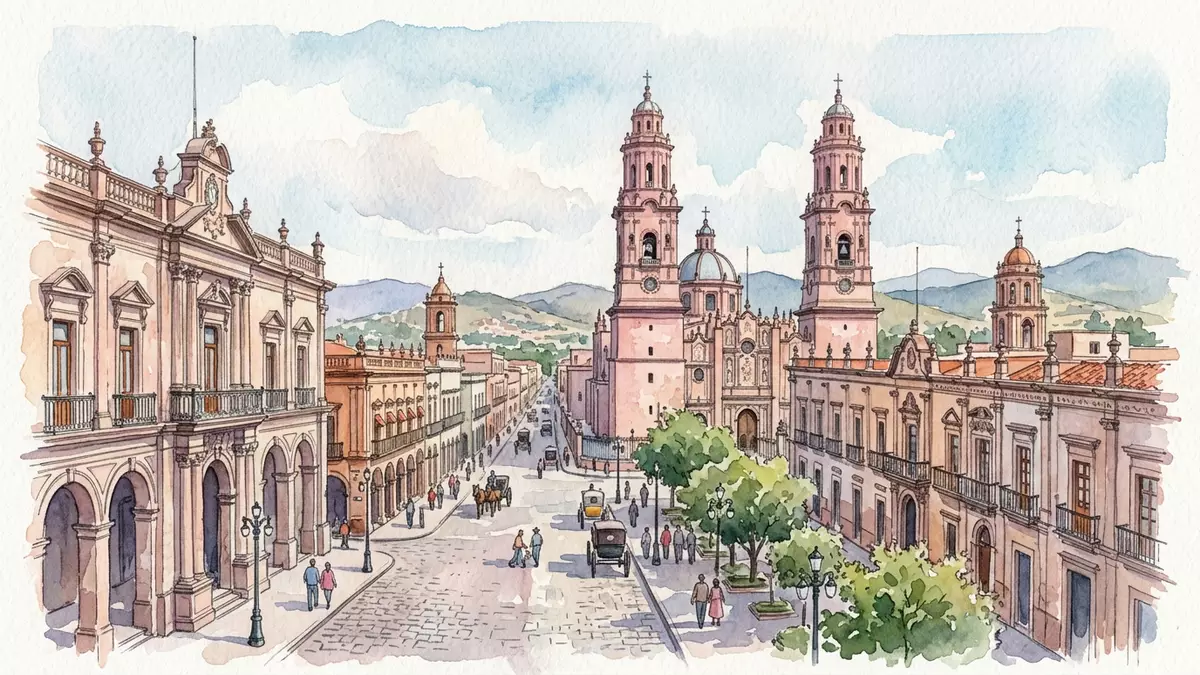
Centro Historico de Morelia is the historic core of Morelia, laid out in the sixteenth century on a grid of streets and squares. Its pink stone buildings, Baroque façades and broad civic spaces give the centre a clear visual identity.
Morelia’s sixteenth-century grid in pink stone
The Historic Centre of Morelia was built in the sixteenth century and inscribed on the UNESCO World Heritage List in 1991. The historic area is associated with Spanish Renaissance town planning and Mesoamerican experience, a combination that remains visible in the street pattern.
Morelia sits at the foot of the Sierra Madre Occidental, near the agricultural valley of Morelia-Querendaro. The centre’s historic buildings are chiefly built in the region’s characteristic pink stone, which gives the streetscape its distinctive colour.
Churches, civic buildings and the cathedral front
The central part of the historic centre includes 249 monuments of prime importance, among them churches and civil constructions. That concentration includes the cathedral and churches such as Santa Rosa, de las Monjas and Guadalupe, which help define the historic skyline.
The city’s architecture mixes medieval, Renaissance, Baroque and neoclassical elements. Antonio de Mendoza ordered the founding of Valladolid in the sixteenth century, and the city was renamed Morelia in 1828 in honour of José María Morelos.
The aqueduct and the long edges of the old city
Beyond the church fronts, the aqueduct brings a long line of stone arches into the historic fabric. It gives the north side of the centre a strong horizontal counterpoint to the towers and façades.
The urban plan also includes squares, arcades and broad streets that still follow the original layout. In visual terms, the place is as much about sequence and repetition as about any single monument.
Visiting Centro Historico de Morelia: what travellers from Western Europe should know
- Centro Historico de Morelia lies in Morelia, in Michoacán, central Mexico. Entry requirements depend on your nationality; UK travellers can check the FCDO travel advice at gov.uk/foreign-travel-advice, Irish travellers the Department of Foreign Affairs at ireland.ie.
- The historic centre is a city district rather than a single enclosed monument. Streets, plazas, churches and the aqueduct form a walkable urban ensemble.
- The area sits on a hill site with streets that follow the historic grid. That makes the layout clear on foot and in photographs.
- Pink stone is one of the centre’s defining materials. The colour appears across façades, towers and civic fronts.
- The cathedral, plazas and churches form the most recognisable cluster of buildings within the centre. They give the historic area its strongest architectural rhythm.
Searching for Centro Historico de Morelia on social platforms
These links open searches for Centro Historico de Morelia on each platform.
Frequently asked questions about Centro Historico de Morelia
Where is Centro Historico de Morelia?
It is the historic centre of Morelia in Michoacán, central Mexico. The site lies at the foot of the Sierra Madre Occidental and near the agricultural valley of Morelia-Querendaro.
What does a visit involve?
It is an urban historic district with streets, plazas, churches and stone façades. The historic grid makes it a place for walking between monuments and open squares.
What makes Centro Historico de Morelia distinctive?
Its sixteenth-century plan, pink stone architecture and concentration of historic buildings define it. The cathedral, aqueduct and Baroque churches give the centre its strongest character.


