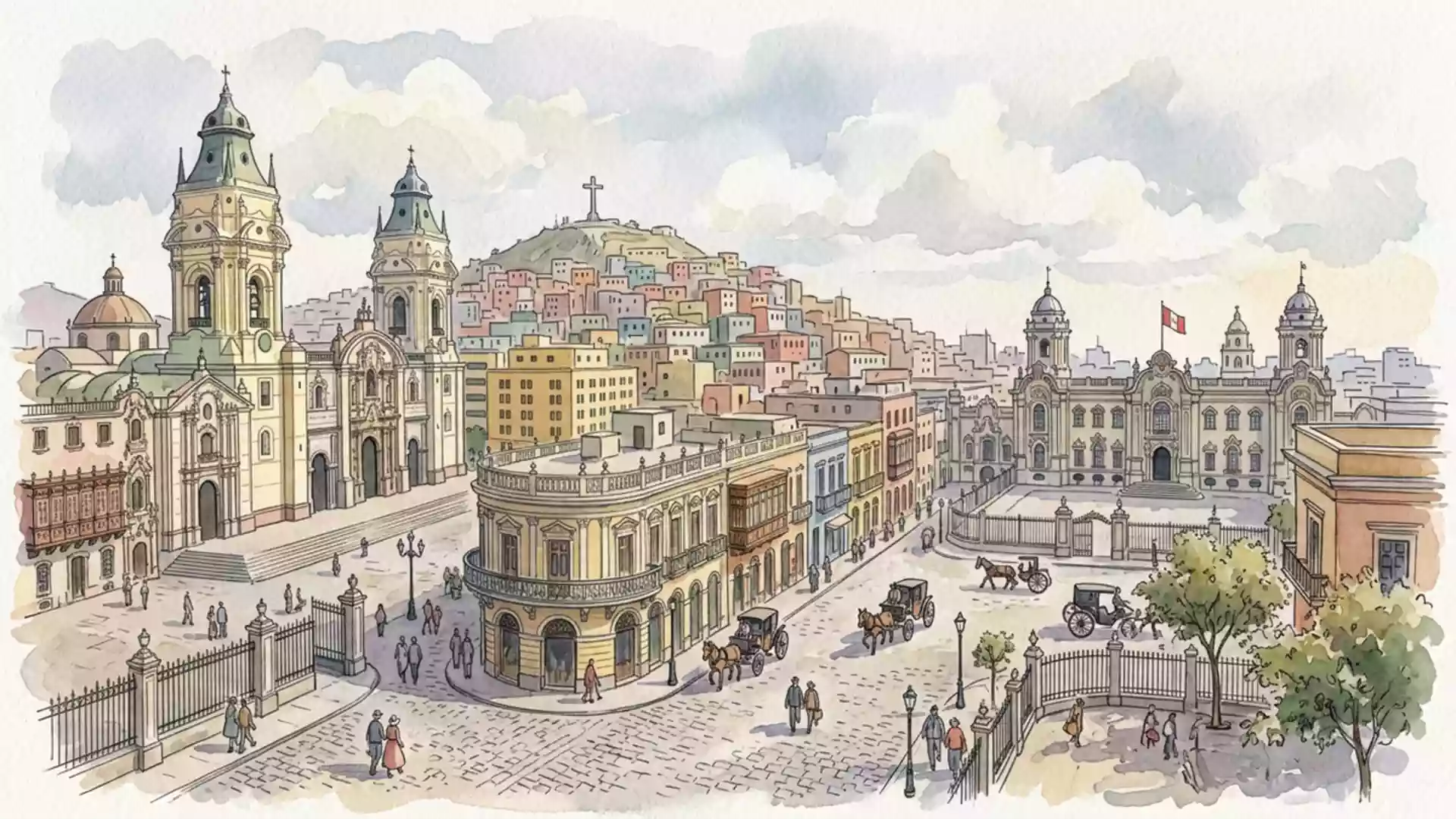
Centro Historico de Lima and the Plaza Mayor at the heart of Peru’s capital
Published on 09/11/2026 at 10:01 | Editorial responsibility: Rafael Müller, Editor-in-Chief AD HOC NEWS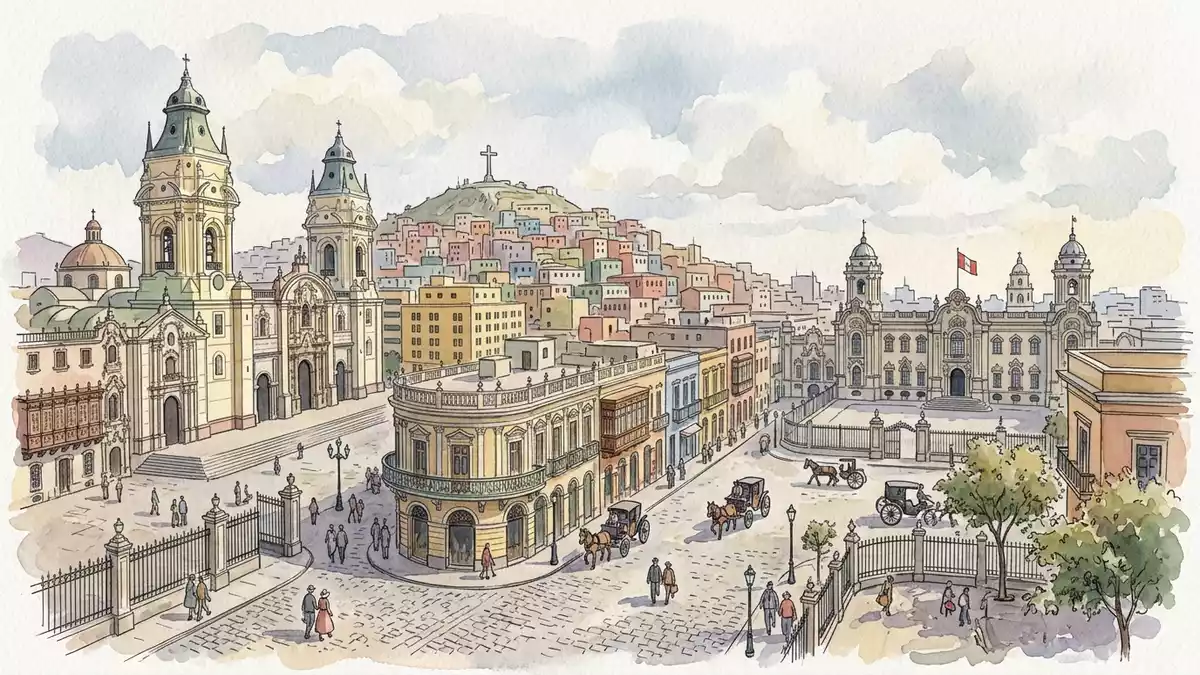
Centro Historico de Lima is the colonial core of Lima, laid out after Francisco Pizarro founded the “City of Kings” in January 1535 and still organised around its central square.Historic Centre of Lima The district is recognised as a UNESCO World Heritage Site and preserves streets, churches and civic buildings from the period when Lima was the capital of the Viceroyalty of Peru.historic city centre of Lima
The colonial grid and river setting
Centro Historico de Lima occupies land on both banks of the Rímac River, following an urban plan laid out as a checkerboard during the sixteenth century.checkerboard urban foundation design The early city grew in the Rímac valley, using straight streets to link religious complexes, administrative buildings and mansions.
The historic centre includes areas in the districts of Lima and Rímac, defined as a Monumental Zone by the Peruvian state and a core zone for UNESCO.property and buffer zone figures Within this fabric, colonial buildings stand alongside later nineteenth and twentieth century structures that maintain the scale and alignment of the original streets.
Plaza Mayor and its surrounding landmarks
At the centre of the grid lies Plaza Mayor, also known as Plaza de Armas, the principal public square of the historic centre of Lima.Plaza Mayor of Lima The square dates back to Pizarro’s foundation of the city on 18 January 1535 and has served as a civic stage for markets, celebrations and political events.
The plaza is bounded by streets such as Carabaya, Junín, Huallaga and Unión, and is framed by major buildings including the Government Palace, the Metropolitan Cathedral of Lima, the Archbishop’s Palace, the Municipal Palace and the Palacio de la Unión.surrounding palaces and cathedral Together they present façades in baroque and neoclassical styles, defining the square as the institutional heart of the city.
Churches, convents and historic houses
Beyond the main square, Centro Historico de Lima contains religious complexes such as the Convent of San Francisco, described as one of the largest of its type in South America.Lima Historic Center description These ensembles combine churches, cloisters and courtyards with carved wood and stone details.
The streets hold mansions and commercial buildings from the seventeenth to nineteenth centuries, some with projecting balconies and internal patios.Jiron Ucayali, block 3 Many structures have been adapted to later uses but retain façades that reflect the eras when Lima was the seat of viceregal power.
Visiting Centro Historico de Lima: what travellers from Western Europe should know
- Centro Historico de Lima lies in central Lima on both sides of the Rímac River, with Plaza Mayor acting as a focal point for exploring the surrounding streets.
- The area is an urban district with paved streets and squares, so visiting involves walking along level surfaces and navigating building interiors with staircases.
- Within sight of Plaza Mayor stand the Government Palace, the Metropolitan Cathedral of Lima and the Municipal Palace, giving a concentration of major landmarks in a compact area.
- The official language is Spanish and the currency is the Peruvian sol.
- Entry requirements depend on your nationality; UK travellers can check the FCDO travel advice at gov.uk/foreign-travel-advice, Irish travellers the Department of Foreign Affairs at ireland.ie.
Searching for Centro Historico de Lima on social platforms
These links open searches for Centro Historico de Lima on each platform.
Frequently asked questions about Centro Historico de Lima
Where is Centro Historico de Lima located?
Centro Historico de Lima forms the historic core of Lima in Peru, spanning districts on both sides of the Rímac River and centred on Plaza Mayor.
What should visitors expect on a visit to Centro Historico de Lima?
Visitors encounter an urban district laid out in a colonial grid, with streets leading to squares lined by churches, convents, palaces and civic buildings in historic styles.
What makes Centro Historico de Lima distinctive among historic city centres?
The area combines a sixteenth-century checkerboard plan with landmarks such as Plaza Mayor, the Government Palace and the Metropolitan Cathedral, reflecting Lima’s role as a former viceregal capital.