
Centro Historico de Lima and its grid of plazas and facades
Published on 08/29/2026 at 11:12 | Editorial responsibility: Rafael Müller, Editor-in-Chief AD HOC NEWS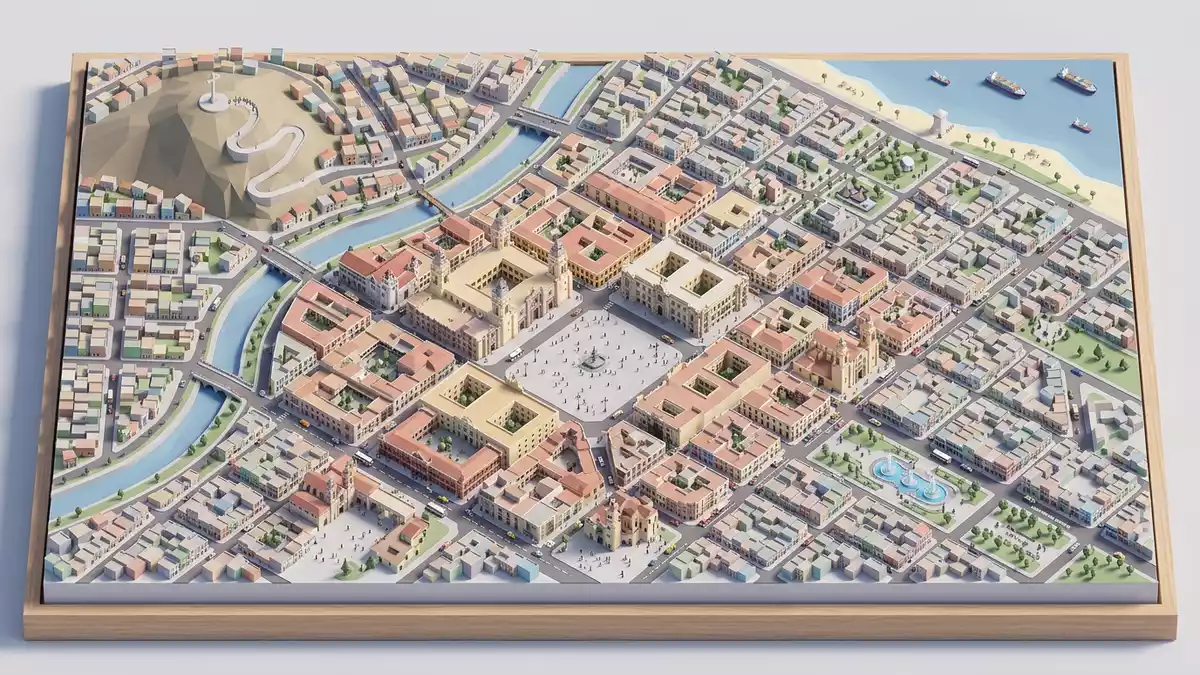
Centro Historico de Lima is the colonial heart of Lima, laid out as a Spanish grid around Plaza Mayor after Francisco Pizarro founded the city in January 1535. The historic centre is recognised as a UNESCO World Heritage Site, reflecting its dense concentration of colonial architecture and long role as Peru’s political capital.
The colonial grid and Plaza Mayor as Lima’s starting point
The story of Centro Historico de Lima begins with the foundation of Lima by the Spanish conquistador Francisco Pizarro in January 1535, on land in the Rimac valley. He set out the city’s main square, Plaza Mayor, following ordinances issued by King Charles I of Spain in 1523 that prescribed a regular street grid radiating from a central plaza for new towns in the Americas.Historic Centre of Lima Around this square, plots were allocated and the checkerboard of streets took shape, forming the urban core that later became known as Centro Historico de Lima.historic city centre
Plaza Mayor itself became the ceremonial and civic focus of the city. It was the site where José de San Martín proclaimed the independence of Peru in 1821, marking a shift from viceregal capital of the Viceroyalty of Peru to seat of a sovereign republic.independence of Peru A bronze fountain dating from the mid seventeenth century stands in the centre of the square, surrounded by lawns and paved walks, while its edges are lined with arcaded buildings that define the open space and frame views across the historic core.Plaza Mayor of Lima
Layers of architecture in the “City of Kings”
Centro Historico de Lima preserves a dense mix of religious, civic and residential buildings that record changing architectural styles from the sixteenth century onwards. Among its most prominent monuments is the Church and Convent of San Francisco, whose ensemble is described by UNESCO as an outstanding example of a colonial convent complex in Latin America, with cloisters, church and ancillary buildings forming a self-contained baroque group within the street grid.San Francisco de Lima convent Nearby, the cathedral on Plaza Mayor was completed in the early seventeenth century and rebuilt after earthquakes, combining Renaissance and baroque elements in its facade and interior.cathedral completed in 1622
Government and ecclesiastical power are written into the architecture of the square. On one side stands the Presidential Palace, occupying the same riverside plot where Pizarro established his palace in the sixteenth century and later rebuilt in the twentieth century with a new facade. The Archbishop’s Palace, opened in the early twentieth century, shows a neo-colonial style that echoes earlier baroque forms while using modern construction.Presidential and Archbishop’s palaces Throughout the historic centre, plastered facades are punctuated by wooden balconies, carved and enclosed, which project over the street and have become one of Lima’s defining architectural features. Together, these buildings give the Monumental Zone of the historic centre a layered character, where different centuries of construction sit within the same grid of streets.Monumental Zone declaration
World Heritage recognition and the Damero de Pizarro
The Peruvian government formally recognised the significance of Centro Historico de Lima in 1972 by declaring a Monumental Zone that protects a large collection of historic buildings. Within this area lies the section inscribed on the UNESCO World Heritage List in 1988, later extended in 1991 and 2023, covering hundreds of monuments distributed across the regular street pattern known locally as the Damero de Pizarro, Pizarro’s checkerboard.UNESCO inscription and extensions Many facades and churches carry a small black-and-white shield that marks them as part of the inscribed property and signals the continuity of preservation efforts.UNESCO shield on buildings
The World Heritage listing highlights the historic centre’s role as a key example of Spanish colonial town planning in Latin America. The combination of orthogonal blocks, central plaza, religious complexes and governmental palaces illustrates how the “City of Kings” became a seat of viceregal administration and remained a national capital. Within the inscribed area, the built fabric extends over more than 260 ha, providing a contiguous ensemble of streets, courtyards and plazas that continue to express the original urban concept even where individual buildings have been rebuilt.mapped property area
Visiting Centro Historico de Lima: what travellers from Western Europe should know
- Centro Historico de Lima lies in the central districts of Lima and Rímac on the south bank and north bank of the Rimac river, with Plaza Mayor as a common starting point reached by city buses and taxis.
- The historic core is largely level but includes long stretches of paving, arcaded walkways and interior staircases in churches and civic buildings, some of them narrow and extended.
- The Rimac river runs beside the northern part of the historic centre, and bridges link streets in the Rímac district with Plaza Mayor and surrounding blocks.
- Spanish is the official language and the currency is the Peruvian sol.
- Entry requirements depend on your nationality; UK travellers can check the FCDO travel advice at gov.uk/foreign-travel-advice, Irish travellers the Department of Foreign Affairs at ireland.ie.
Searching for Centro Historico de Lima on social platforms
These links open searches for Centro Historico de Lima on each platform.
Frequently asked questions about Centro Historico de Lima
Where is Centro Historico de Lima located within the city?
Centro Historico de Lima occupies the historic core of Lima and Rímac in the Rimac valley, centred on Plaza Mayor and extending across both sides of the Rimac river.
What can visitors expect when walking through the historic centre?
Visitors encounter a regular grid of streets, plazas such as Plaza Mayor, churches, convents and civic palaces, many with arcades, plastered facades and projecting wooden balconies.
What makes Centro Historico de Lima distinctive among Latin American city centres?
The area combines an early colonial grid laid out in 1535, major religious and governmental complexes and a UNESCO-listed ensemble of hundreds of monuments marked with characteristic black-and-white shields.


