
Centro Historico de Cuenca, an Andean grid of rivers and domes
Published on 09/18/2026 at 19:49 | Editorial responsibility: Rafael Müller, Editor-in-Chief AD HOC NEWS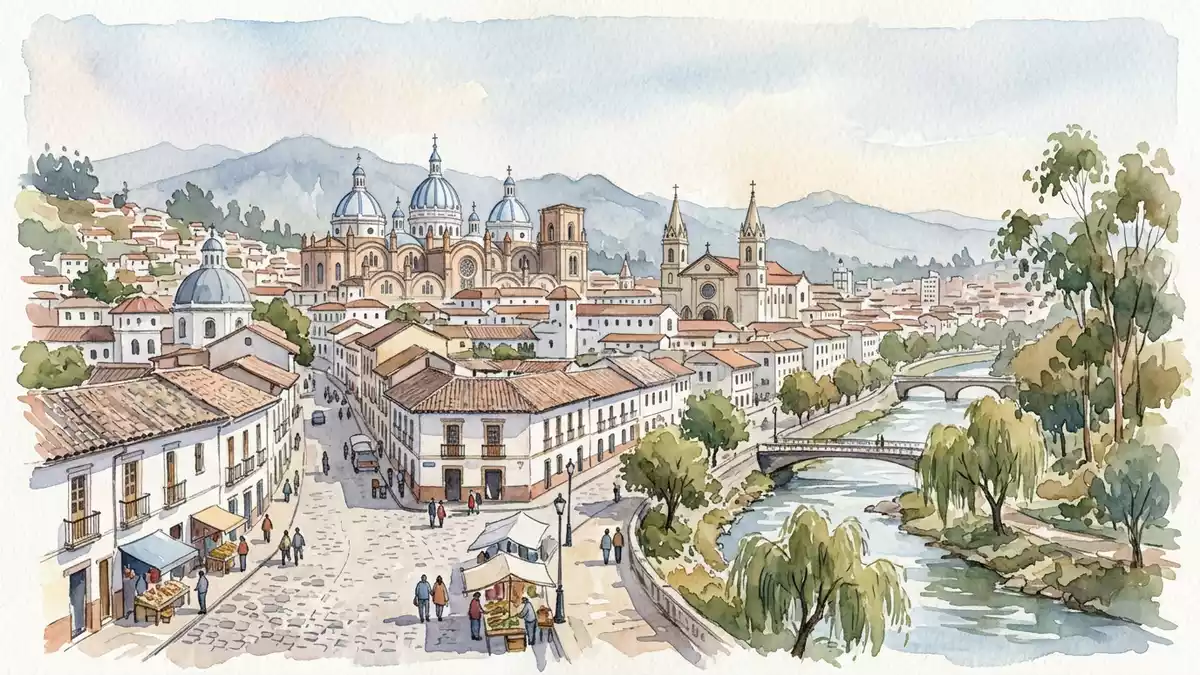
Centro Historico de Cuenca is the historic core of Santa Ana de los Ríos de Cuenca in southern Ecuador, a planned Andean city whose streets and churches unfold across a highland plateau framed by rivers and tiled roofs.
An Andean plateau shaped into a planned colonial centre
Centro Historico de Cuenca occupies the central part of Cuenca in Azuay Province in southern Ecuador, set on a plateau in the Andes crossed by rivers such as the Río Tomebamba.central part of Cuenca The historic centre follows a rectilinear street grid that dates back to the city’s foundation in the sixteenth century under the Spanish crown, with straight streets meeting at regular junctions and enclosing city blocks.
The formal name recognised in heritage documentation is the Historic Centre of Santa Ana de los Ríos de Cuenca, and the protected area extends across more than 200 ha of urban fabric and associated sites.Historic Centre of Santa Ana de los Ríos de Cuenca The layout reflects Renaissance-inspired town planning principles brought from Spain, applied inland on Andean terrain that drops towards the rivers at the edges of the grid.planned inland Spanish town
Layers of architecture from colonial churches to riverside houses
Architecture in Centro Historico de Cuenca ranges from colonial churches and convents to republican civic buildings and rows of town houses, giving the streets a low-rise scale punctuated by towers and domes.centenares de edificaciones patrimoniales Many façades are rendered and painted, with balconies facing the street, while religious complexes gather cloisters, courtyards and chapels behind comparatively simple street fronts.
Along the Barranco del Tomebamba, where the historic grid meets the river escarpment, houses step down the slope with their rear elevations facing the water and front doors opening to the upper streets.Barranco del Tomebamba Within the grid, plazas such as the one dominated by the Catedral de la Inmaculada Concepción bring together civic and religious buildings, framed by arcades and street trees that mark them out as gathering spaces.Cuenca's UNESCO Historic Center
World Heritage recognition and Andean cultural continuity
Centro Historico de Cuenca was declared “Patrimonio Cultural del Ecuador” in 1982, recognising its architectural complexes, archaeological remains and cultural practices as fundamental to national identity.Patrimonio Cultural del Estado en 1982 On 1 December 1999, UNESCO inscribed the Historic Centre of Santa Ana de los Ríos de Cuenca on the World Heritage List as a cultural site, emphasising the preservation of the original grid since the city’s sixteenth-century foundation and the fusion of Spanish, Cañari and Inca cultural elements in its urban fabric.UNESCO declaró al Centro Histórico de CuencaWorld Heritage List in 1999
The protected area includes not only the colonial and republican streets but also the archaeological zone of Pumapungo and corridors that follow ancient access routes into the town.archaeological site of Pumapungo This combination of built fabric and underlying Andean history means that a walk through Centro Historico de Cuenca passes churches, markets and artisan quarters alongside traces of earlier settlement on the plateau and above the river terraces.Patrimonio Cultural del Ecuador y de la Humanidad
Visiting Centro Historico de Cuenca: what travellers from Western Europe should know
- Centro Historico de Cuenca lies in the city of Cuenca in Azuay Province in southern Ecuador and is reached by road connections that link the highland plateau with regional airports and intercity bus terminals.
- Many streets in the historic centre follow the planned grid but meet sloping ground near the Barranco del Tomebamba, where pavements drop towards the river and stairways connect upper streets with riverside walks.
- The official language is Spanish and the currency is the US dollar.
- Entry requirements depend on your nationality; UK travellers can check the FCDO travel advice at gov.uk/foreign-travel-advice, Irish travellers the Department of Foreign Affairs at ireland.ie.
Searching for Centro Historico de Cuenca on social platforms
These links open searches for Centro Historico de Cuenca on each platform.
Frequently asked questions about Centro Historico de Cuenca
Where is Centro Historico de Cuenca?
Centro Historico de Cuenca is the historic centre of the city of Santa Ana de los Ríos de Cuenca in Azuay Province in southern Ecuador, set on an Andean plateau crossed by rivers.
What should visitors expect on a first walk through the area?
Visitors encounter a planned grid of streets, plazas framed by churches and civic buildings, artisan quarters and stretches of riverside houses above the Barranco del Tomebamba.
What makes Centro Historico de Cuenca distinctive among Andean cities?
Its combination of a Renaissance-inspired street grid, riverside escarpment with houses facing the water and formal recognition as both national heritage and a UNESCO World Heritage cultural site makes it distinctive.


