
Centro Historico de Arequipa and the architecture of sillar
Published on 09/24/2026 at 10:19 | Editorial responsibility: Rafael Müller, Editor-in-Chief AD HOC NEWS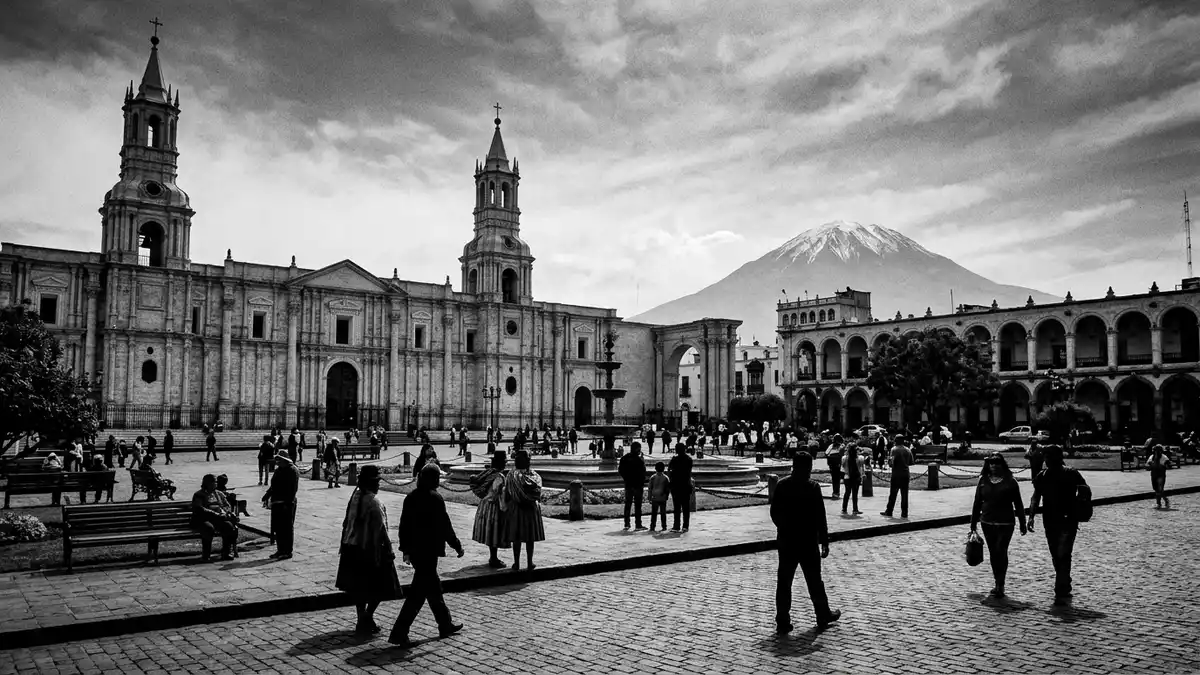
Centro Historico de Arequipa is a city centre built in pale volcanic sillar, a material visible across churches, houses, arcades and courtyards. The stone cityscape belongs to Arequipa, southern Peru, and its architectural language combines European forms with native building traditions.
Sillar across the streets of Arequipa
Sillar is volcanic tuff, quarried from deposits associated with the volcanoes surrounding Arequipa. Its light colour appears across long façades, heavy walls and carved doorways, giving the historic centre a consistent material character.
The stone is also a surface for decoration. Baroque façades carry deep relief, floral details, geometric borders and local imagery, while entrances and galleries use arches. In the casonas, vaulted roofs and interior courtyards connect domestic architecture with the larger urban fabric.
Colonial forms and native craftsmanship
Arequipa’s historic centre took shape during the Spanish colonial period, with early buildings dating from the seventeenth century. European architectural forms appear in churches, civic buildings and residences, while Indigenous and Criollo masons developed the city’s carved volcanic-stone vocabulary.
Robust masonry, arcades, vaults and open courtyards are recurring features. The result is not a collection of isolated monuments, but an urban ensemble in which streets, religious buildings and townhouses share materials and decorative habits.
From colonial settlement to World Heritage city
The official World Heritage name is Historical Centre of the City of Arequipa. UNESCO inscribed the cultural site in 2000, recognising its ornamented architecture and the integration of European and native characteristics.
The protected historic centre includes religious, civic and domestic buildings. Among its prominent landmarks are the Basilica Cathedral of Arequipa, Santa Catalina Monastery, the Church of La Compañía and the courtyards of colonial casonas. World Heritage designation places the city’s stone architecture within a wider history of colonial settlement and regional cultural exchange.
Public squares and arcaded streets provide the clearest view of the centre’s proportions. In the Plaza de Armas, the cathedral façades and surrounding arcades frame an urban space whose details range from monumental stonework to small carved elements above doorways.
Visiting Centro Historico de Arequipa: what travellers from Western Europe should know
- Centro Historico de Arequipa occupies the central urban area of Arequipa in southern Peru. Streets, plazas and landmarks are reached on foot from the city centre, with local buses and taxis serving the wider city.
- The city lies at high Andean altitude, and the historic centre contains stone pavements, steps, arcades and uneven surfaces. Churches and monasteries may include enclosed courtyards, vaulted interiors and narrow passages.
- The official language is Spanish and the currency is the Peruvian sol.
- Entry requirements depend on your nationality; UK travellers can check the FCDO travel advice at gov.uk/foreign-travel-advice, Irish travellers the Department of Foreign Affairs at ireland.ie.
Searching for Centro Historico de Arequipa on social platforms
These links open searches for Centro Historico de Arequipa on each platform.Frequently asked questions about Centro Historico de Arequipa
Where is Centro Historico de Arequipa?
It is the historic urban centre of Arequipa in southern Peru, within the city’s central streets and plazas.
What can visitors expect there?
Visitors encounter sillar façades, colonial churches, courtyards, arcades, vaulted interiors and carved Baroque details across a working city centre.
What makes the centre distinctive?
Its distinctive character comes from the extensive use of volcanic sillar and the combination of European architectural forms with native craftsmanship.


