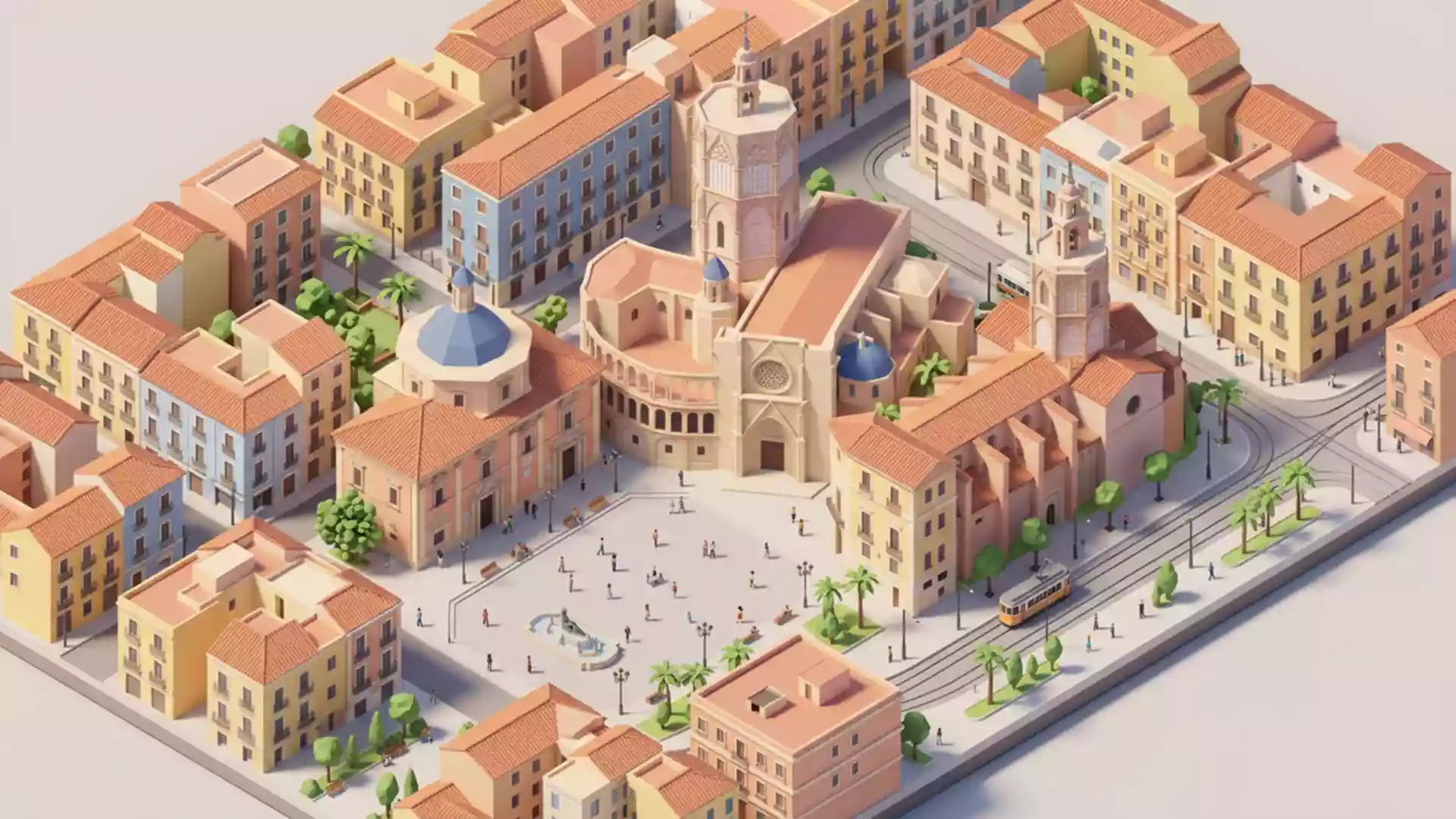
Catedral de Valencia and its layered Gothic heart
Published on 09/09/2026 at 18:24 | Editorial responsibility: Rafael Müller, Editor-in-Chief AD HOC NEWS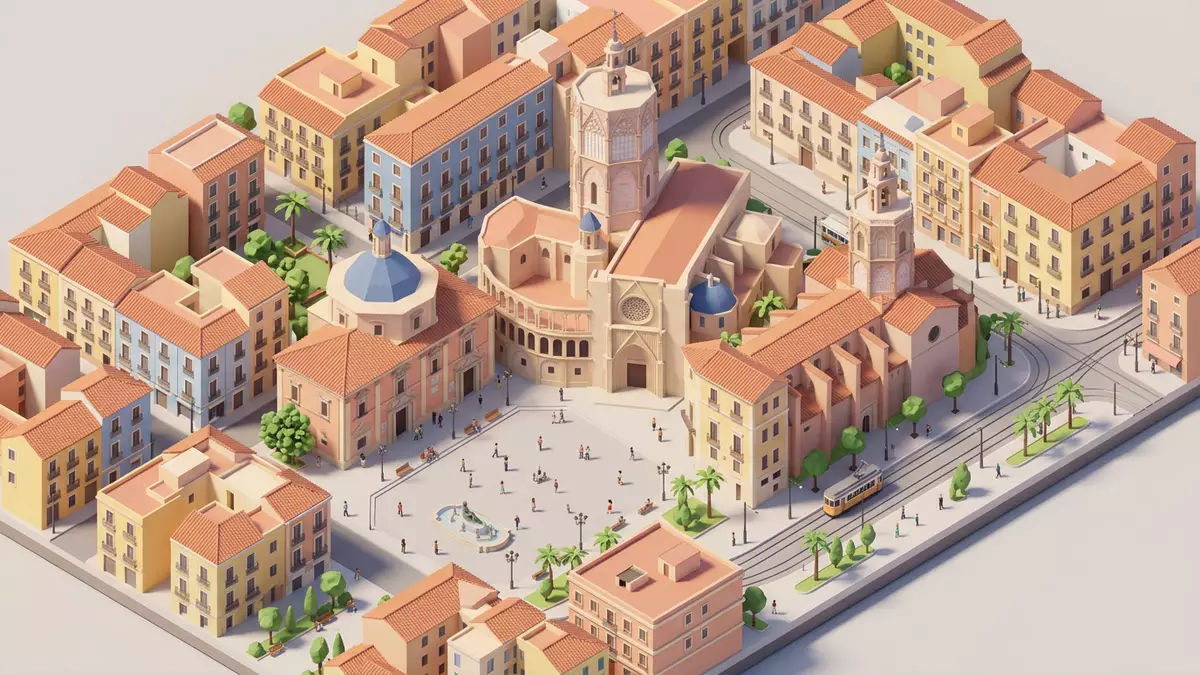
Catedral de Valencia, formally the Metropolitan Cathedral–Basilica of the Assumption of Our Lady of Valencia, stands in the historic centre as a largely Gothic church whose fabric grew across several centuries of building. Its story begins under King James I of Aragon after the Christian conquest of Valencia in 1238, with a foundation stone laid in 1262 and later extensions that carried the structure through Medieval, Renaissance, Baroque and Neoclassical phases.
A Gothic cathedral built over centuries
The present cathedral emerged on land that had been central to Valencia’s religious life since the Middle Ages, when the main mosque of Balansiya occupied the site before Christian rule. Construction of the current church began on 22 June 1262 under Bishop Fray Andrés de Albalat, and the earliest work concentrated on the ambulatory and a late Romanesque doorway known as the Almoina door, setting out the plan at the east end.construction began in 1262 From that starting point, the builders turned decisively to Valencian Gothic, with pointed arches and ribbed vaults shaping a stone interior.
Much of the visible bulk of Catedral de Valencia dates from the fourteenth and fifteenth centuries, when master builders such as Andreu Juliá, Francesc Baldomar and Pere Compte extended the nave and raised key elements including the lantern tower over the crossing and the bell tower known as El Micalet.Andreu Juliá, Francesc Baldomar and Pere Compte The result is a three-nave Gothic church with chapels set between its buttresses, so that the interior reads as a dense sequence of altars, vaults and columns rather than a single empty hall.Romanesque, Gothic, Renaissance, Baroque and Neoclassical
Styles layered onto a Valencian Gothic core
Although Gothic forms dominate, the fabric of Catedral de Valencia records successive architectural tastes in stone and plaster. The original late Romanesque work around the Almoina doorway survives alongside the Gothic nave and transept, creating a clear shift in profile where rounded arches and heavier mouldings give way to slender ribs and taller windows.Metropolitan Cathedral–Basilica of the Assumption of Our Lady of Valencia Renaissance and Baroque interventions took place mainly inside, with altarpieces, frescoes and chapels adding carved marble, painted ceilings and gilded ornament to the medieval shell.didactic example of different stylistic expressions
During the seventeenth and eighteenth centuries Neoclassical taste left its own mark, especially around the main entrance, where a Baroque façade and later rounding of pointed arches changed the way the building meets the square. Inside the choir and main chapel, structural Gothic elements coexist with marble and bronze decoration in post-medieval styles, so that moving through the cathedral becomes a passage across several architectural periods inside one footprint.Baroque façade and later alterations
The Holy Chalice and chapels around the nave
Among the many chapels that line the naves and ambulatory, the Chapel of the Holy Chalice has a special place in the identity of Catedral de Valencia. Beneath a Gothic dome and above an alabaster altarpiece, it houses a relic widely venerated as the Holy Chalice, and for some scholars associated with the tradition of the Holy Grail.Chapel of the Holy Chalice The story links the chalice to King Martín el Humano in 1399 and King Alfonso el Magnánimo, who transferred it to the cathedral in 1437, anchoring the object in the history of the Crown of Aragon.
Beyond this single chapel, the cathedral contains a ring of spaces devoted to different saints and devotions, each marked by its own altarpiece, sculpture or painting. Many of these chapels occupy the gaps between external buttresses, so that the side aisles feel like sequences of small churches threaded along the main volume rather than simple corridors. The cathedral functions as the seat of the archbishop of Valencia and the principal church of the archdiocese, and its chapels and nave continue to host liturgy within a building that also serves as a major monument of Valencian religious architecture.principal representation of religious architecture
Visiting Catedral de Valencia: what travellers from Western Europe should know
- Catedral de Valencia stands in Valencia’s historic centre around Plaza de la Reina and Plaza de la Almoina, reached on foot from the surrounding streets and by city bus services that stop near the old town.
- The interior involves walking along stone floors and up short flights of steps between chapels, while access to the bell tower El Micalet requires climbing a long, narrow staircase inside the tower walls.
- Valencia lies on Spain’s Mediterranean coast, and the official language in the city is Spanish alongside Valencian; the national currency is the euro.
Searching for Catedral de Valencia on social platforms
These links open searches for Catedral de Valencia on each platform.
Frequently asked questions about Catedral de Valencia
Where is Catedral de Valencia located in the city?
Catedral de Valencia stands in Valencia’s historic centre, around Plaza de la Reina and Plaza de la Almoina, within the old street network of the city.
What can visitors expect inside Catedral de Valencia?
Visitors encounter a three-nave Gothic church with chapels arranged between buttresses, where medieval stonework coexists with Renaissance, Baroque and Neoclassical decoration.
What makes Catedral de Valencia distinctive among Spanish cathedrals?
Its layered architecture, the presence of the Holy Chalice in a dedicated chapel, and the combination of Valencian Gothic with later styles give the building a distinctive character.