
Catedral de Valencia and its layered Gothic heart
Published on 08/20/2026 at 19:17 | Editorial responsibility: Rafael Müller, Editor-in-Chief AD HOC NEWS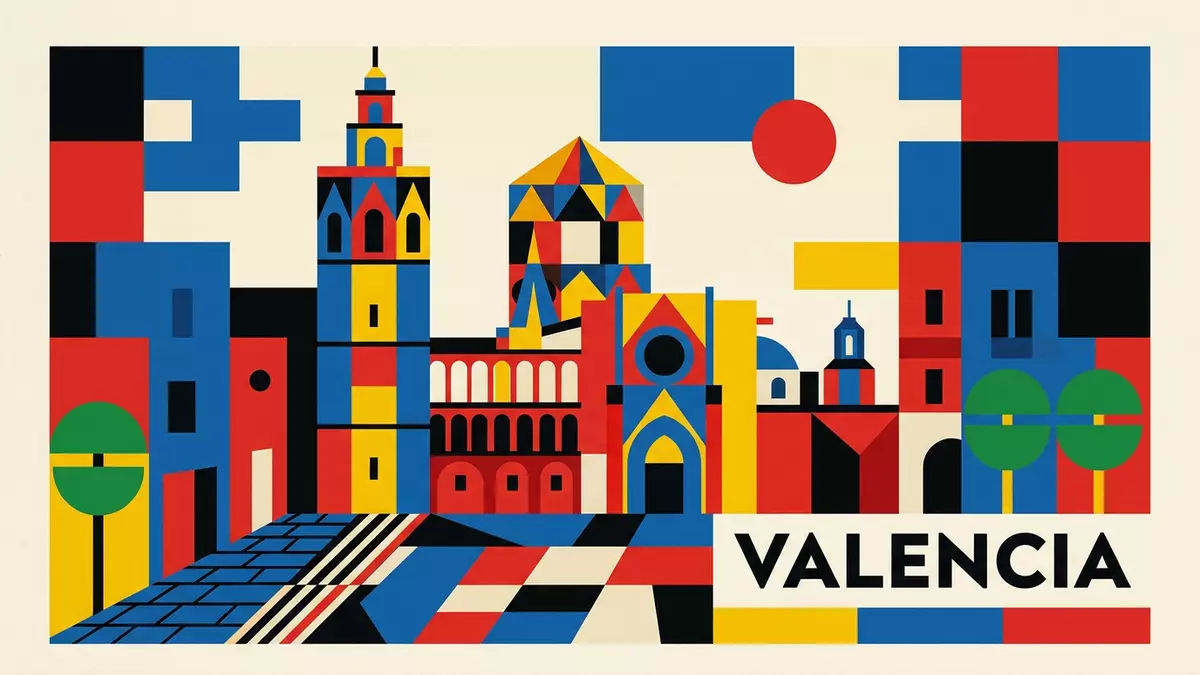
Catedral de Valencia, also known in English as Valencia Cathedral, rises between Plaza de la Virgen and Plaza de la Reina as a compact Gothic church whose fabric records centuries of change. Rooted in the thirteenth century and dedicated to the Assumption of Our Lady, it brings together Romanesque, Valencian Gothic, Renaissance, Baroque and Neoclassical elements under one dense, stone shell.
A thirteenth-century cathedral in a Roman and Islamic crossroads
The official title of Catedral de Valencia is the Metropolitan Cathedral–Basilica of the Assumption of Our Lady of Valencia, and it serves as the seat of the archbishop in this Mediterranean port city.Metropolitan Cathedral–Basilica of the Assumption The present building stands on ground once occupied by the main mosque of Balansiya, the Islamic city that preceded Christian Valencia.main mosque of Balansiya
James I of Aragon, remembered as James I the Conqueror, took Valencia for the Crown of Aragon in 1238, integrating the city into a new Christian kingdom. In 1262 Bishop Fray Andrés de Albalat set the foundation stone of the current cathedral, beginning with the Almoina doorway and the surrounding ambulatory in a late Romanesque style before work moved fully into Gothic forms.foundation stone of the current cathedral
A Gothic shell with Romanesque, Renaissance and Baroque layers
The core of Catedral de Valencia reads as a Gothic church organised around three naves with chapels slotted between the buttresses of the transept.core of Catedral de Valencia is a Gothic church The plan creates a relatively compact footprint, but the ribs and pointed arches draw the eye upwards, giving the interior a vertical emphasis that contrasts with the tight urban grid outside.
Work on major features continued into the fourteenth and fifteenth centuries. The so-called apostles’ doorway on the western side, the lantern tower over the crossing, the chapter hall and the bell tower known as Micalet all grew from this long building campaign under master builders including Andreu Julià, Francesc Baldomar and Pere Compte.Andreu Juliá, Francesc Baldomar and Pere Compte Later centuries layered Renaissance and Baroque altarpieces and Neoclassical interventions onto this Gothic structure, so that chapels, portals and cornices from different periods stand side by side within the same unified volume.Romanesque, Baroque and other influences
The Holy Chalice chapel and the Micalet tower
Among the most distinctive interior spaces is the Chapel of the Holy Chalice, whose present form developed from the chapter hall begun in the fourteenth century.chapter hall, the Holy Chalice chapel The chapel houses an agate cup mounted on a later gold-and-pearl base, presented here as the Holy Chalice, a relic associated with the Last Supper that has long drawn pilgrims and visitors.agate cup with a later gold-and-pearl base
Above the cathedral’s skyline, the bell tower known as El Micalet or Miguelete has become one of Valencia’s best recognised silhouettes.Torre del Miguelete, one of the symbols of the city Begun in the fourteenth century and rising separately from the main nave, it frames views across the historic centre and out towards the newer districts, tying the medieval core of Valencia to the wider city that has grown around it.
Visiting Catedral de Valencia: what travellers from Western Europe should know
- Catedral de Valencia stands in the historic centre of Valencia between Plaza de la Virgen and Plaza de la Reina, with entrances facing the surrounding squares and narrow streets.
- The cathedral interior includes chapels arranged between structural buttresses and a climbable bell tower, so visits involve long staircases and uneven stone floors.
- Valencia sits on Spain’s Mediterranean coast and is reached by long-distance trains and flights; the cathedral lies within walking distance of the city’s central rail stations.
- The official language is Spanish and the currency is the euro.
Searching for Catedral de Valencia on social platforms
These links open searches for Catedral de Valencia on each platform.
Frequently asked questions about Catedral de Valencia
Where is Catedral de Valencia located?
Catedral de Valencia stands in the historic centre of Valencia, Spain, between Plaza de la Virgen and Plaza de la Reina, close to the city’s main historic streets.
What can visitors expect inside Catedral de Valencia?
Visitors encounter a Gothic church with three naves, chapels fitted between buttresses and a mix of Romanesque, Renaissance, Baroque and Neoclassical details around the main altar and side spaces.
What makes Catedral de Valencia distinctive among Spanish cathedrals?
The cathedral combines a compact Gothic layout, the prominent Micalet bell tower and the Chapel of the Holy Chalice, which preserves an agate cup presented here as the Holy Chalice.


