
Catedral de Valencia and its Gothic core in the old city
Published on 09/19/2026 at 13:06 | Editorial responsibility: Rafael Müller, Editor-in-Chief AD HOC NEWS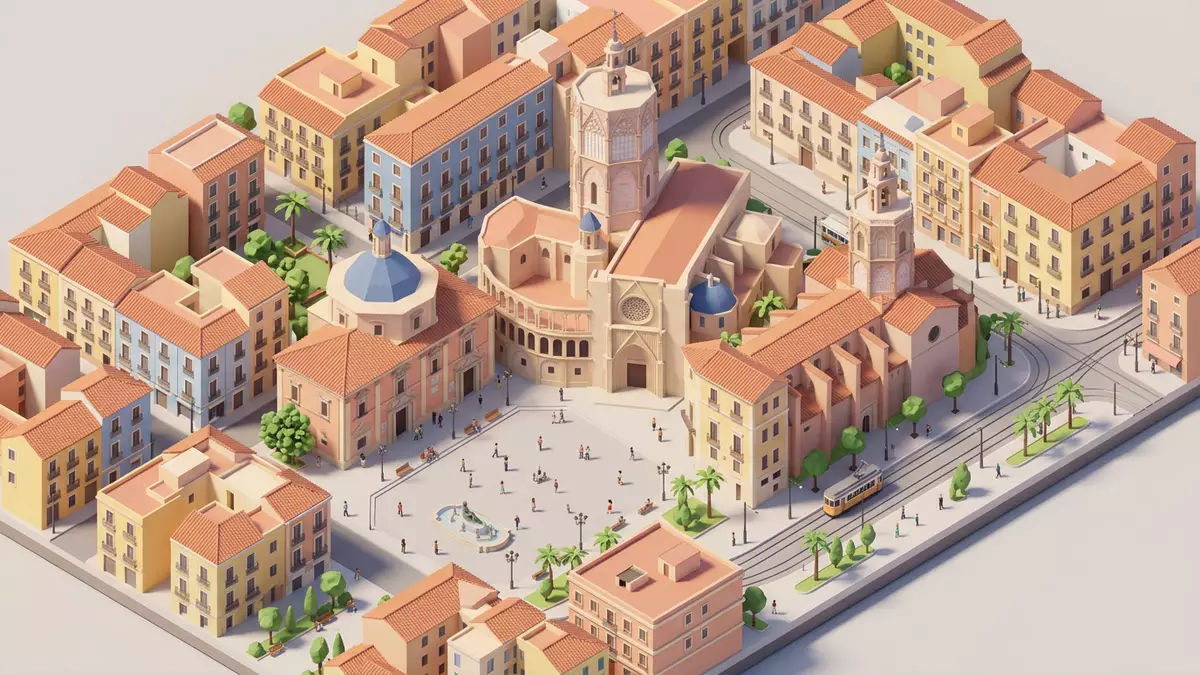
Catedral de Valencia, formally the Metropolitan Cathedral–Basilica of the Assumption of Our Lady of Valencia, rises in the historic centre as a mainly Gothic church woven through with later styles. Set between Plaza de la Reina and Plaza de la Virgen, it has stood since the thirteenth century as the seat of the archbishop of Valencia and a landmark of the city’s religious life.
A Gothic cathedral shaped over medieval centuries
The present Catedral de Valencia developed after King James I of Aragon’s conquest of Valencia in 1238, when Christian rule replaced the earlier Islamic emirate in the region. Construction of the Gothic cathedral began in 1262 under Bishop Andrés de Albalat, establishing the basis of the building that visitors see now.Valencia Cathedral The church is frequently described in full as the Iglesia Catedral Basílica Metropolitana de la Asunción de Nuestra Señora Santa María de Valencia, and it serves as the metropolitan cathedral-basilica of the city.official cathedral title
The core of the fabric belongs to the Valencian Gothic tradition, with pointed arches and ribbed vaulting creating an interior whose stone structure dates largely from the fourteenth and fifteenth centuries.medieval building phases Over these medieval centuries, master builders working in Valencia extended the nave and raised key features such as the lantern tower above the crossing and the bell tower known locally as El Micalet. The result is a building whose mass and layout reflect the long thirteenth- to fifteenth-century period of construction rather than a single campaign.
Layers of style from Romanesque to Neoclassical
Although Catedral de Valencia is primarily Gothic, its exterior and interior incorporate a mix of Romanesque, Renaissance, Baroque and Neoclassical elements that reveal successive phases of work.mixed architectural styles One of the earliest surviving features is a Romanesque doorway on the east side, known as the Almoina door, which marks the thirteenth-century phase of the church and contrasts with the later Gothic portals. On the main approach from Plaza de la Reina, the principal entrance carries a Baroque façade designed in the eighteenth century by the German architect Conrad Rudolph, enclosing the older structure behind an opulent front.Baroque portal and later changes
Inside, the nave, aisles and chapels show how changes in taste altered the medieval geometry. In the seventeenth and eighteenth centuries, works added a main chapel decorated with marbles and bronzes and modified earlier Gothic elements with classical forms, rounding pointed arches and cladding columns with Corinthian pillars.seventeenth- and eighteenth-century interior These interventions did not replace the underlying Gothic structure, which still determines the overall plan and volume; instead they layered different stylistic languages over the original stone, making the cathedral a compact survey of several centuries of architecture in Valencia.
The Holy Chalice and a prominent bell tower
Among the devotional treasures held at Catedral de Valencia, one of the most discussed is the Santo Cáliz, a chalice venerated as the Holy Grail and kept in a chapel within the cathedral complex.Holy Chalice association The building’s full title often highlights this association with the Santo Cáliz, and the presence of the chalice has long formed part of the cathedral’s role within Spanish religious culture.La Catedral del Santo Cáliz
Externally, the bell tower known as El Micalet or El Miguelete is one of the most recognisable features of Catedral de Valencia. Rising beside the main body of the church, this tower was substantially completed in the fifteenth century and is associated with names such as Jaime de Aragón in historical accounts.El Miguelete bell tower Its presence gives the cathedral a vertical accent visible from many points in the old city and marks the transition from the surrounding streets to the interior world of the church.
Visiting Catedral de Valencia: what travellers from Western Europe should know
- Catedral de Valencia stands in Valencia’s old centre between Plaza de la Reina and Plaza de la Virgen, reached on foot from the surrounding streets and squares.
- The interior includes a nave with side chapels and a lantern tower over the crossing, while access to the bell tower involves a climb on a narrow staircase with many steps.
- The cathedral is in Spain; the official language is Spanish and the currency is the euro.
Searching for Catedral de Valencia on social platforms
These links open searches for Catedral de Valencia on each platform.
Frequently asked questions about Catedral de Valencia
Where is Catedral de Valencia located in the city?
Catedral de Valencia stands in the historic centre of Valencia, Spain, between Plaza de la Reina and Plaza de la Virgen in the old urban core.
What should visitors expect inside Catedral de Valencia?
Visitors encounter a mainly Gothic interior with stone vaults, side chapels, later Baroque and Neoclassical additions, and a chapel housing the Santo Cáliz.
What makes Catedral de Valencia distinctive among Spanish cathedrals?
Catedral de Valencia is distinctive for its layered mix of Gothic, Romanesque, Baroque and Neoclassical architecture and for the veneration of the Santo Cáliz within its chapels.


