
Catedral de Sevilla and the Giralda’s layered architecture
Published on 09/24/2026 at 07:08 | Editorial responsibility: Rafael Müller, Editor-in-Chief AD HOC NEWS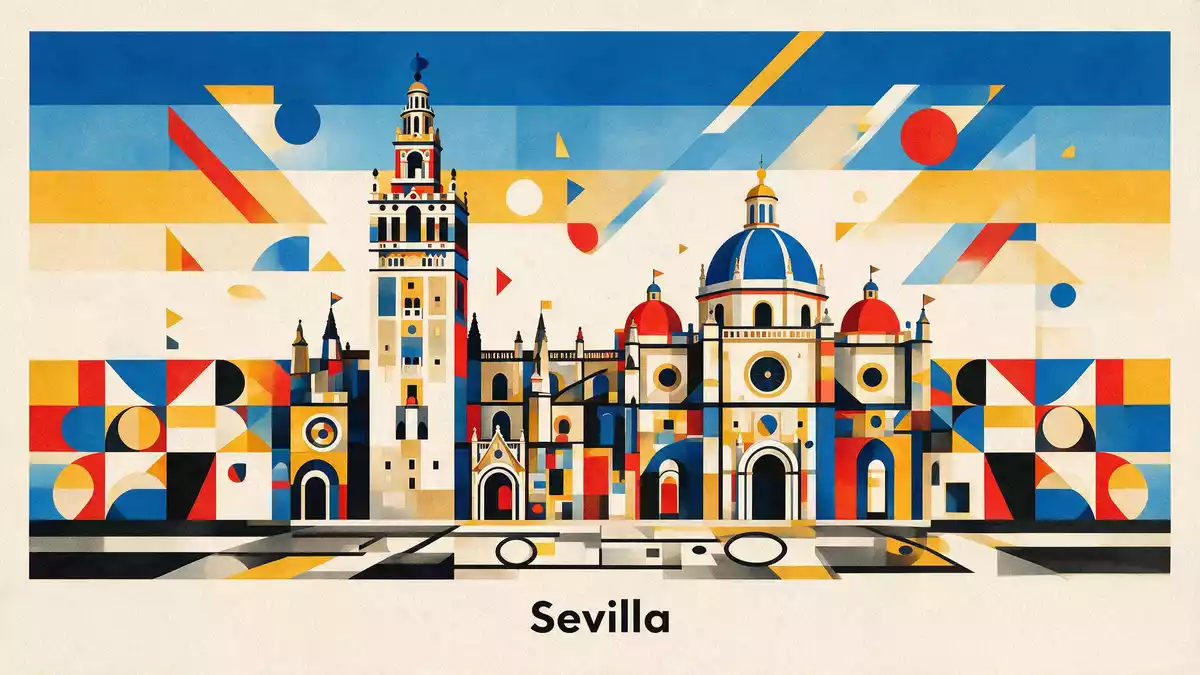
Catedral de Sevilla gathers several centuries of architecture inside one immense Gothic church. Its five naves rise beside the Giralda, an Almohad minaret transformed into a Christian bell tower, while the Orange Tree Courtyard preserves another part of the earlier complex.
The building’s visible character comes from this meeting of forms: Gothic stonework, Islamic brick construction, Renaissance additions and later works occupy the same monumental ensemble.
Catedral de Sevilla and the scale of a Gothic cathedral
The main Gothic construction belongs to the fifteenth and early sixteenth centuries. The project is traditionally dated to 1401, and the cathedral was founded in 1403 on the site of Seville’s former main mosque. Its major construction phase reached completion in 1519.
The cathedral covers about 23,500 square metres. The Gothic section measures 126 metres in length and 83 metres in width, with a maximum height of 37 metres at the centre of the transept. Five naves organise the interior, accompanied by chapels, altars and monumental tombs.
Among the best-known funerary monuments is the tomb of Christopher Columbus. The cathedral also contains the royal chapel, the main sacristy, the chapter house and the Chapel of Granada, each contributing a different architectural register.
Gothic ribs and clustered supports dominate the great interior. Renaissance work appears in the chapter house and adjoining spaces, while paintings, sculpture, stained glass and metalwork extend the visual range beyond the building’s medieval framework.
The Giralda, from Almohad minaret to bell tower
The Giralda forms the clearest architectural link between the mosque complex and Catedral de Sevilla. Its square lower structure belonged to the Almohad minaret built between 1184 and 1198, when Seville was a major city of the Almohad empire.
The tower’s central prism is enclosed by four external walls. Brick surfaces, framed openings and patterned decoration belong to its Islamic architectural language. The upper Christian section was added in the sixteenth century, and Hernán Ruiz built the Renaissance belfry between 1558 and 1568.
The tower reaches 96 metres from the ground to its weather vane. Its upper figure, the Giraldillo, gives the tower its familiar name and completes the vertical composition beside the cathedral.
After Seville became Christian in 1248, the former minaret became a bell tower. The change of function remains legible in the tower’s materials and proportions, rather than being hidden behind a single architectural style.
A cathedral within Seville’s World Heritage ensemble
Catedral de Sevilla, the Royal Alcázar and the Archivo de Indias form a World Heritage Site inscribed in 1987. The three buildings occupy adjoining ground in the historic centre and represent Islamic, Christian and early modern chapters of Seville’s urban history.
The Orange Tree Courtyard preserves the memory of the mosque complex through its planted court and surviving architectural elements. The courtyard lies beside the cathedral and connects the building’s Christian use with the Almohad fabric that preceded it.
The Archivo de Indias stands nearby in the former merchants’ exchange, while the Royal Alcázar adds palatial architecture and gardens to the same monumental setting. Together, the buildings reflect Seville’s religious, royal and commercial roles from the medieval period through the sixteenth century.
Catedral de Sevilla remains a functioning place of worship. Its chapels, liturgical spaces and processional routes sit within a building that also preserves royal burials, historic artworks and the tomb associated with Christopher Columbus.
Visiting Catedral de Sevilla: what travellers from Western Europe should know
- Catedral de Sevilla stands in the historic centre of Sevilla, beside the Royal Alcázar and the Archivo de Indias. City buses, trams and the metro serve the central area.
- The complex includes broad stone floors, chapels, courtyards and tower access. The Giralda contains an ascending ramp rather than a conventional narrow staircase.
- The official language is Spanish and the currency is the euro.
Searching for Catedral de Sevilla on social platforms
These links open searches for Catedral de Sevilla on each platform.
Frequently asked questions about Catedral de Sevilla
Where is Catedral de Sevilla?
Catedral de Sevilla stands in the historic centre of Sevilla, beside the Royal Alcázar and the Archivo de Indias.
What can visitors expect inside?
The interior contains five naves, chapels, royal spaces, artworks, tombs and Renaissance rooms within a large Gothic structure.
What makes the cathedral distinctive?
The Giralda combines an Almohad minaret with a Renaissance belfry, while the cathedral and Orange Tree Courtyard preserve different phases of Seville’s history.


