
Catedral de Sal de Zipaquira, Colombia’s underground salt cathedral
Published on 09/19/2026 at 18:10 | Editorial responsibility: Rafael Müller, Editor-in-Chief AD HOC NEWS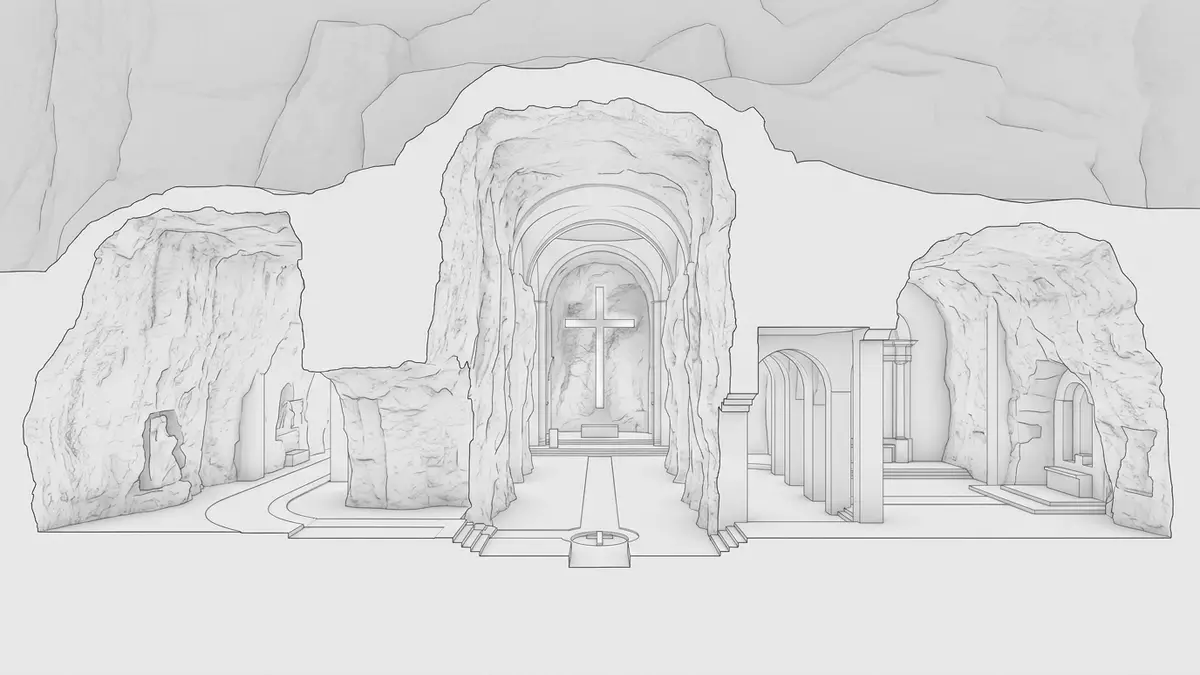
Far beneath the streets of Zipaquira in Colombia, Catedral de Sal de Zipaquira occupies galleries carved into a halite mountain, an underground church set in the tunnels of a working salt mine. The present cathedral opened in 1995, replacing an earlier mid?twentieth?century basilica in the same mountain and extending a much older tradition of worship in the dark chambers of the mine.Salt Cathedral of Zipaquirá
From Muisca salt mountain to underground cathedral
The story of Catedral de Sal de Zipaquira begins long before the first Christian sanctuary appeared in the mine, with the pre?Columbian Muisca culture extracting salt from this mountain from around the fifth century BC.pre?Columbian Muisca culture For the Muisca, salt was a crucial trade good, carried along highland routes and exchanged for other resources, and the layers of halite beneath Zipaquira formed one of their key economic bases.rock salt mines that would eventually house the cathedral
Industrial mining expanded in the nineteenth and twentieth centuries, and Catholic miners working in the shafts carved small places of devotion within the rock, including an altar cut into the salt in the early 1930s.altar and sanctuary where workers would pray By 1950, work began on a much larger underground church, inaugurated in 1954 and known as the first Salt Cathedral, a basilica with walkways and a high nave excavated from the mountain and supported on massive salt pillars.Basilika hatte eine Länge von 120 m That structure lay close to active mining areas and was eventually closed in 1990 because of safety concerns, clearing the way for the more robust complex that visitors enter today.current cathedral opened in 1995
The design of the modern cathedral beneath the old mine
The current Catedral de Sal de Zipaquira lies deeper in the mountain than the original basilica, about 60 m below the earlier church, and occupies a series of galleries and chambers reshaped from former mining tunnels.construcción de la catedral actual fue iniciada en 1991 Construction began in 1991 after a design contest organised by the Colombian Society of Architects, which selected the project of Roswell Garavito Pearl, working with engineer Jorge Enrique Castelblanco Reyes.Roswell Garavito Pearl The new cathedral was inaugurated in December 1995, with the President of Colombia, Ernesto Samper, present at the opening ceremony.inaugurada el 16 de diciembre de 1995
Visitors descend through a long access tunnel into an underground layout organised along a central axis, with chapels and niches cut into the walls and a main nave that opens into a broad worship space carved from the salt. The mountain’s halite provides the primary building material, and the walls, floors and supporting elements reveal the characteristic stratified textures of the rock. Sculptural reliefs and crosses emerge from the salt surfaces, some left in low relief, others fully detached as freestanding forms, and the cathedral’s compositional language plays continually between carved voids and solid masses.
Walking the underground route of crosses and chambers
The route through Catedral de Sal de Zipaquira passes a sequence of chapels dedicated to the Stations of the Cross, each chamber cut into the mine and marked by a cross shaped from the halite walls.underground Roman Catholic church built within the tunnels of a salt mine The path leads towards the central nave, where the main cross stands behind the altar, rising from the rock at the end of a long underground axis. Along the way, side galleries open into additional spaces, some used for liturgical functions, others for art and sculpture related to salt mining and religious themes, all contained within the mine’s excavated volumes.Catedral de Sal de Zipaquira and its underground spaces
Because the cathedral stands inside a former industrial site, the path also passes traces of mining infrastructure: broad tunnels, support chambers and cut faces where salt was removed. The interplay between religious architecture and the memory of labour gives the visit a particular character, and the galleries show how an extractive landscape has been reshaped into a large underground place of worship. The mine environment is enclosed, with rock all around, and the spatial sequence combines long, relatively straight passages with wider chambers where the rock has been excavated into higher volumes.
Visiting Catedral de Sal de Zipaquira: what travellers from Western Europe should know
- Catedral de Sal de Zipaquira lies in a halite mountain near the town of Zipaquira in central Colombia, north of Bogotá, and is reached via access roads leading up from the town.near the city of Zipaquirá, in Cundinamarca, Colombia
- The approach to the cathedral involves walking through underground tunnels and galleries cut into the salt mountain, with steps and inclined passages inside the mine.
- The official language is Spanish and the currency is the Colombian peso.
- Entry requirements depend on your nationality; UK travellers can check the FCDO travel advice at gov.uk/foreign-travel-advice, Irish travellers the Department of Foreign Affairs at ireland.ie.
Searching for Catedral de Sal de Zipaquira on social platforms
These links open searches for Catedral de Sal de Zipaquira on each platform.
Frequently asked questions about Catedral de Sal de Zipaquira
Where is Catedral de Sal de Zipaquira located?
Catedral de Sal de Zipaquira stands inside a halite mountain near the town of Zipaquira in the Colombian department of Cundinamarca, north of Bogotá.Salt Cathedral of Zipaquirá
What can visitors expect on a visit to the cathedral?
Visitors walk through underground tunnels and chambers carved from rock salt, passing chapels marked by crosses and reaching a large nave and altar deep inside the mountain.underground Roman Catholic church built within the tunnels of a salt mine
What makes Catedral de Sal de Zipaquira distinctive compared with other churches?
The cathedral is carved directly into the galleries of a former salt mine, combining religious architecture with industrial tunnels and a long history of salt extraction that dates back to the Muisca period.salt reserves mined since around the 5th century BC


