
Catedral de Sal de Zipaquira and its underground spaces
Published on 09/12/2026 at 06:03 | Editorial responsibility: Rafael Müller, Editor-in-Chief AD HOC NEWS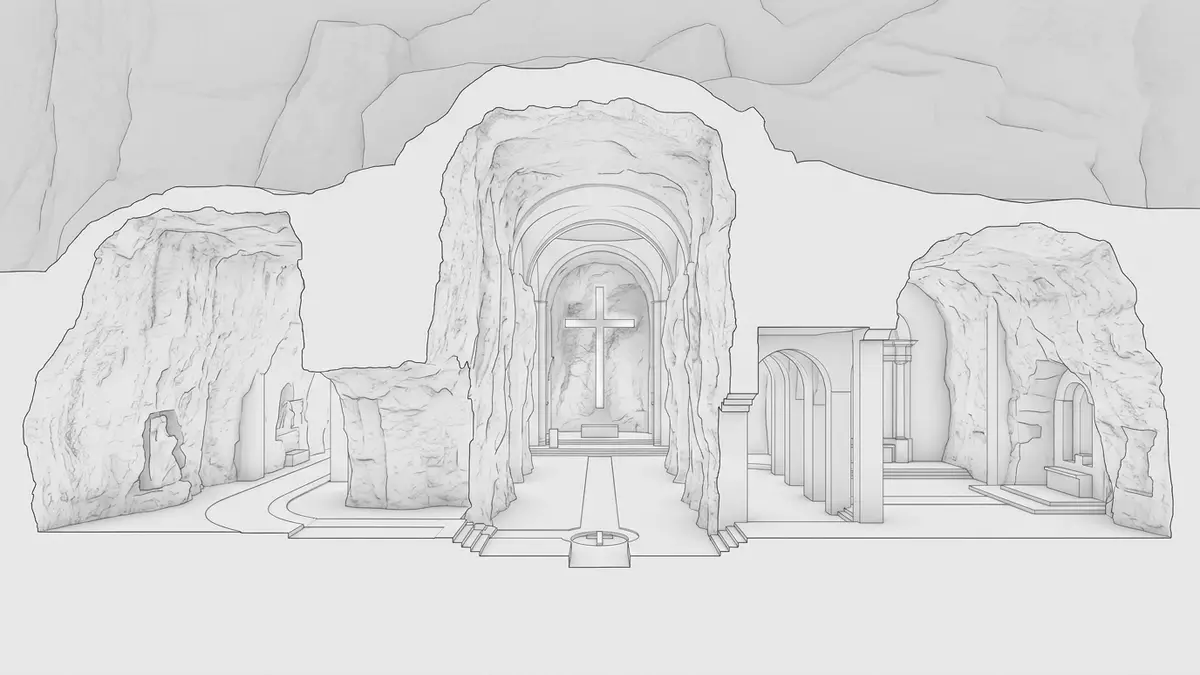
Catedral de Sal de Zipaquira is an underground Roman Catholic church in Zipaquira, Colombia, carved into salt workings beneath the hill. Its broad chambers and long passages make the place feel more like a subterranean landscape than a single hall, and the modern building opened in 1995 the modern building.
A cathedral inside a salt hill
The site is known for the contrast between sacred space and working geology. Salt walls, carved routes and lit devotional spaces define the interior, while the surrounding rock keeps the whole complex rooted in the mine rather than in a conventional urban church setting underground salt cathedral.
The cathedral’s present form belongs to the late twentieth century, but the salt landscape underneath Zipaquira has a much longer history. Pre-Columbian Muisca communities worked the area’s salt deposits, and the hill later became tied to organised mining and to religious use underground pre-Columbian times.
From miners’ sanctuary to modern cathedral
The best-known earlier layer was a miners’ sanctuary carved within the mine in the twentieth century. That older worship space was replaced by the current cathedral, which belongs to the 1990s and is linked with the architect Roswell Garavito Pearl Roswell Garavito Pearl.
The shift from working tunnels to church chambers remains visible in the plan. Long galleries, large carved spaces and devotional stops sit within the same rock that once formed the mine’s working ground, giving the place a direct connection between industry and worship worked the mine.
Salt, faith and the eastern Andes
Zipaquira’s salt deposits form part of the eastern Andean mountain range, and the cathedral sits inside that geology rather than beside it. The rock, the underground routes and the religious spaces belong to the same place, which keeps the cathedral tied to the mine’s physical substance eastern Andean mountain range.
The site also carries a strong civic identity in Colombia, where it has been presented as a major cultural landmark and a place of national memory. That broader role does not change the basic experience: visitors enter a salt-carved underground complex with chapels, paths and monumental chambers rather than a freestanding cathedral square Salt Cathedral of Zipaquirá.
Visiting Catedral de Sal de Zipaquira: what travellers from Western Europe should know
- The cathedral is in Zipaquira, north of Bogotá. Access is by road into the town, then into the Parque de la Sal complex.
- The visit takes place underground, with carved galleries and uneven passages in salt rock. Steps and changes of level are part of the route.
- The official language is Spanish and the currency is the Colombian peso.
- Entry requirements depend on your nationality; UK travellers can check the FCDO travel advice at gov.uk/foreign-travel-advice, Irish travellers the Department of Foreign Affairs at ireland.ie.
Searching for Catedral de Sal de Zipaquira on social platforms
These links open searches for Catedral de Sal de Zipaquira on each platform.
Frequently asked questions about Catedral de Sal de Zipaquira
Where is Catedral de Sal de Zipaquira?
It is in Zipaquira, north of Bogotá, inside the Parque de la Sal area. The cathedral is cut into salt-bearing rock beneath the town.
What does a visit involve?
The route runs through underground chambers, passages and devotional spaces in salt rock. Steps and changes of level are part of the experience.
What makes it distinctive?
Its defining feature is the combination of a cathedral and a salt mine. The present building dates to the 1990s, while the site’s mining history reaches back much further.


