
Catedral de Sal de Zipaquira, an underground cathedral of salt and light
Published on 09/10/2026 at 20:43 | Editorial responsibility: Rafael Müller, Editor-in-Chief AD HOC NEWS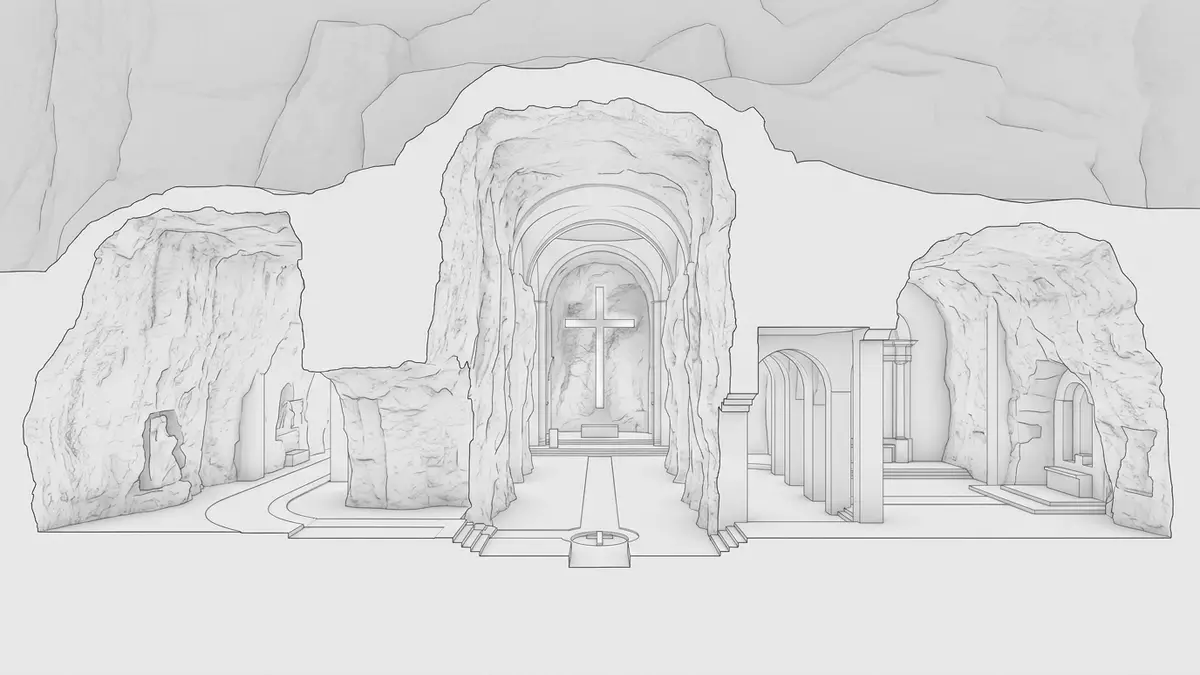
Far below the streets of Zipaquira in Colombia, Catedral de Sal de Zipaquira unfolds as an underground cathedral carved directly into a halite deposit, turning a working salt mine into a monumental worship space in rock and light. Opened in 1995 in disused tunnels shaped by generations of miners, it is one of the most striking examples of a religious interior created inside an industrial landscape.
From pre-Columbian salt to a twentieth-century cathedral
The story of Catedral de Sal de Zipaquira begins long before its naves and chapels were cut into the mountain, with salt extraction on this site reaching back to the Muisca people, whose mining activity is dated to around the fifth century BC in this part of the eastern Andes. Over the nineteenth century, industrial workings expanded the mine, driving several tunnels into the hill to remove halite on a larger scale than earlier indigenous extraction.salt mine history
In the early twentieth century, miners carved a small underground sanctuary near their working levels where they could pray before descending further into the mine, a modest space that marked the beginnings of organised worship inside the salt rock. That sanctuary was expanded into a much larger underground church project in the early 1950s, inaugurated in 1954 with a long nave and a basilica dome laid out in chambers cut from the mine’s galleries.first underground church Safety concerns linked to the active workings eventually led to the closure of that original cathedral around 1990, clearing the way for the present layout deeper inside the mountain.
The 1990s redesign inside the salt mountain
The current Catedral de Sal de Zipaquira took shape in the early 1990s after an architectural competition organised by Colombian institutions in 1990 chose a proposal by Bogotá architect Roswell Garavito Pearl. His design, built between 1991 and 1995, shifted the cathedral into disused mine workings roughly 60 m below the earlier sanctuary and combined broad worship spaces with reinforced tunnel structures and new circulation routes for visitors.Roswell Garavito Pearl design The new cathedral was inaugurated in 1995, and, because it has no bishop, it is technically not recognised as a cathedral under Catholic canon law even though its scale and layout reflect that status.1995 opening
This redesign retains the mine as structure rather than backdrop: the main axis follows a former tunnel of the industrial workings, while chapels and side spaces are carved out of cross passages in the salt. Excavation for the present Catedral de Sal de Zipaquira involved removing large volumes of rock salt to create broad chambers but maintaining the stability of the surrounding strata, a process that distinguished it from many surface-built churches.cathedral excavation The building has also been formally recognised within Colombia, being named the “First Wonder of Colombia” by the Colombian Society of Architects.First Wonder of Colombia
Spaces of salt, light and religious symbolism
Visitors enter Catedral de Sal de Zipaquira along a descent that moves from daylight into a long underground axis, passing a sequence of chapels carved from salt rock that correspond to the Stations of the Cross. The rock here is halite, and the surfaces of walls, pillars and vaults show layers of crystalline structure and sedimentary banding, giving the spaces a textured, stratified character distinct from brick or stone churches on the surface.halite deposit Lighting plays a central role, with coloured illumination washing the salt surfaces and highlighting sculpted crosses and reliefs, an approach that uses the reflective and translucent qualities of the rock.
The main altar sits in a broad underground chamber with a large illuminated cross that stands behind it, cut from the salt and emphasised by carefully placed lighting rather than daylight. Around this space, chapels and side altars extend into the walls of the mine, some incorporating statues or reliefs carved directly from the halite, others framed by architectural elements shaped from the rock. Beyond the liturgical core, the wider complex includes underground galleries used for exhibitions and interpretation of mining and religious history, as well as surface facilities at the hill’s entrance that connect the mine to the town of Zipaquira.underground spaces
Visiting Catedral de Sal de Zipaquira: what travellers from Western Europe should know
- Catedral de Sal de Zipaquira lies on a hill at the northern edge of Zipaquira, a town in Cundinamarca province north of Bogotá. The entrance complex stands near Villaveces Park and is reached from the town centre by local roads and paths into the former mine area.
The wider region is part of the eastern Andes, and the cathedral sits within a halite deposit beneath that mountain range. - Access to the underground spaces involves a gradual descent along tunnel floors and stepped ramps inside the former mine. Within the cathedral, some areas include stairways between levels and extended walking distances along the main axis and through chapels, all under a rock roof.
- Zipaquira is in Colombia, where the official language is Spanish and the currency is the Colombian peso.
- Entry requirements depend on your nationality; UK travellers can check the FCDO travel advice at gov.uk/foreign-travel-advice, Irish travellers the Department of Foreign Affairs at ireland.ie.
Searching for Catedral de Sal de Zipaquira on social platforms
These links open searches for Catedral de Sal de Zipaquira on each platform.
Frequently asked questions about Catedral de Sal de Zipaquira
Where is Catedral de Sal de Zipaquira located?
Catedral de Sal de Zipaquira stands within a former salt mine beneath a hill on the northern side of Zipaquira, a town in Cundinamarca department in central Colombia.
What can visitors expect inside the cathedral?
Visitors walk through mine tunnels into a sequence of salt-rock chapels, descending towards a large underground chamber with an illuminated cross and broad worship spaces carved from halite.
What makes Catedral de Sal de Zipaquira distinctive among churches?
It is built entirely inside a halite deposit, reusing industrial mine tunnels as its main structural framework, and combines large underground chambers with extensive sculpted religious symbolism in the rock.


