
Catedral de Mallorca and the light-filled Gothic nave of Palma
Published on 08/30/2026 at 11:55 | Editorial responsibility: Rafael Müller, Editor-in-Chief AD HOC NEWS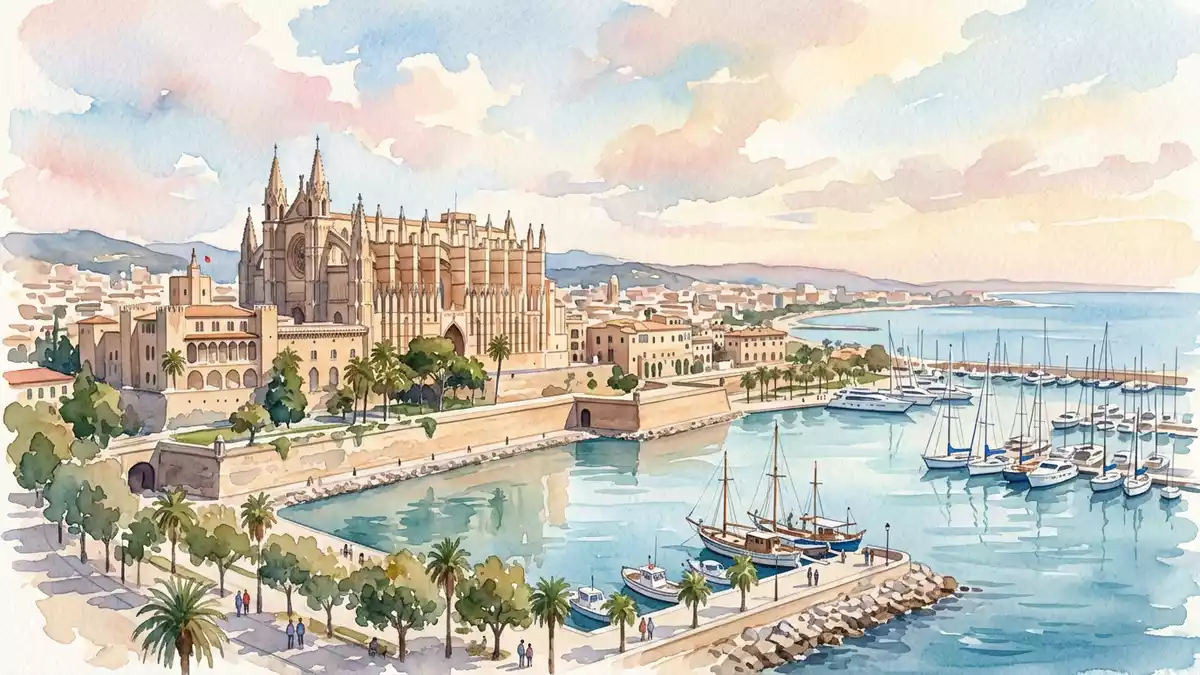
Catedral de Mallorca, also known as La Seu, dominates the waterfront of Palma with a Catalan Gothic silhouette that stands between the old city and the bay. Built as the Cathedral of Santa Maria of Palma in the wake of the medieval conquest of Mallorca, it combines a soaring nave with intricate stonework and coloured glass that turn the harbour-front into an architectural stage.
A Mediterranean Gothic giant above the bay
The cathedral stands close to the water’s edge on the Bay of Palma, its long south flank facing the sea and its apse turned towards the royal Almudaina Palace. Conceived as a Gothic Roman Catholic cathedral, it forms a stone ridge in front of the city, with buttressed walls, pinnacles and a towered western front that rise over lower civic buildings. The church is dedicated to Santa Maria, and its Catalan or Mediterranean Gothic style combines tall internal spaces with broad walls suited to the island’s light and coastal setting.Gothic Roman Catholic cathedral
The building history of Catedral de Mallorca runs from the thirteenth century into the seventeenth century, reflecting successive royal and ecclesiastical campaigns. Ground was broken after the conquest of the island by King James I of Aragon in 1229, and documents from 1230 mark the formal start of the project.construction started in the 13th century Over the following centuries the structure developed in phases: early chapels, the royal apse and the long nave. By about 1601 the main volume and principal portal were complete, and later works focused on restoration and interior rearrangement.groundbreaking in 1229 and completion in 1601
The high nave, slender piers and great rose window
From the western portal the visitor enters a nave that stretches for about 121 m (397 ft), divided into bays by tall octagonal piers and flanked by aisles that share much of its height.length 121 metres The overall width is around 40 m (131 ft), giving the interior a broad floor area relative to its vertical reach.40 metres wide and nave 44 metres tall The central vault rises to roughly 44 m (144 ft), with the stone arches resting on piers whose modest diameter underlines their slenderness. This combination of long plan, considerable height and narrow supports produces one of the most extreme Gothic proportions in the Mediterranean tradition.chef d’œuvre of Catalan Gothic
Light enters the nave through tall traceried windows and a series of rose windows, the most notable being the great east rose over the main altar. This circular composition has a diameter of about 12.55 m (41 ft) and is assembled from more than 1,200 coloured glass pieces set into stone tracery.diameter of 12.55 m and 1,200 glass fragments Smaller roses and lancet windows in the flanks add further colour, their surfaces catching Mediterranean sun and spreading patterned light over the sandstone interior. The aisles reach unusual heights for Gothic side naves, making the lateral volumes almost as lofty as the central space and reinforcing the sense of a continuous hall rather than sharply stepped tiers.highest lateral naves
Layers of history in chapels and interventions
Within the stone shell, centuries of liturgical and artistic change have left traces in chapels, altars and furnishings. The Chapel of the Holy Trinity, completed in 1327, stands near the apse as one of the earliest surviving interior spaces and was conceived as a burial chapel for the Mallorcan monarchy.Chapel of the Holy Trinity completed in 1327 Royal tombs, carved stone effigies and heraldic motifs connect the building directly with the medieval Crown of Aragon and the later Kingdom of Mallorca. Other chapels along the aisles carry Baroque altarpieces, painted panels and sculpted groups added in the seventeenth and eighteenth centuries, demonstrating how later styles were layered onto the Gothic framework.Baroque retables and altar of Corpus Christi
In the early twentieth century the interior was reworked under the direction of Antoni Gaudí, who adjusted liturgical arrangements and introduced new fittings while respecting the main Gothic volumes.Antoni Gaudí modified the interior More recently, the Chapel of the Blessed Sacrament has been reshaped with contemporary ceramic and sculptural interventions by the Mallorcan artist Miquel Barceló, setting modern art against the medieval stone envelope.reform of the Chapel of the Santísimo by Miquel Barceló These interventions, along with earlier Baroque and Neoclassical additions, mean that a visit today reveals not only medieval craftsmanship but also a sequence of artistic languages spanning from thirteenth-century masonry to contemporary installation.
Visiting Catedral de Mallorca: what travellers from Western Europe should know
- Catedral de Mallorca stands on the bay-side edge of Palma’s historic centre, south-east of the compact old town and close to the royal Almudaina Palace and Parc de la Mar. It is reached on foot from central Palma streets and by urban bus routes serving the waterfront.
- The interior is accessed via the main western entrance, with stone steps leading up from the surrounding square; once inside, the nave floor is level but chapels and galleries involve further short flights of steps.
- The cathedral’s elevated site above the bay means exterior viewpoints involve walking along stone terraces and promenades, with low walls and broad paved surfaces that can be exposed to sun and sea breezes.
- Palma lies on the island of Mallorca in Spain; the official language is Spanish (alongside Catalan on the island) and the currency is the euro.
Searching for Catedral de Mallorca on social platforms
These links open searches for Catedral de Mallorca on each platform.
Frequently asked questions about Catedral de Mallorca
Where is Catedral de Mallorca located?
Catedral de Mallorca stands in Palma on the island of Mallorca in Spain, forming part of the historic centre beside the Bay of Palma and near the Almudaina Palace.
What should visitors expect inside the cathedral?
Visitors encounter a long Gothic nave with high vaults supported by slender octagonal piers, flanked by tall aisles, chapels with medieval and Baroque furnishings, and coloured light from large stained-glass windows.
What makes Catedral de Mallorca distinctive among Gothic cathedrals?
Its combination of Mediterranean Gothic style, a nave around 44 m high with unusually tall lateral aisles, and a large rose window over the altar gives Catedral de Mallorca a distinctive light-filled hall rising above Palma’s waterfront.


