

Catedral de Mallorca and its soaring Gothic light
Published on 09/11/2026 at 09:47 | Editorial responsibility: Rafael Müller, Editor-in-Chief AD HOC NEWS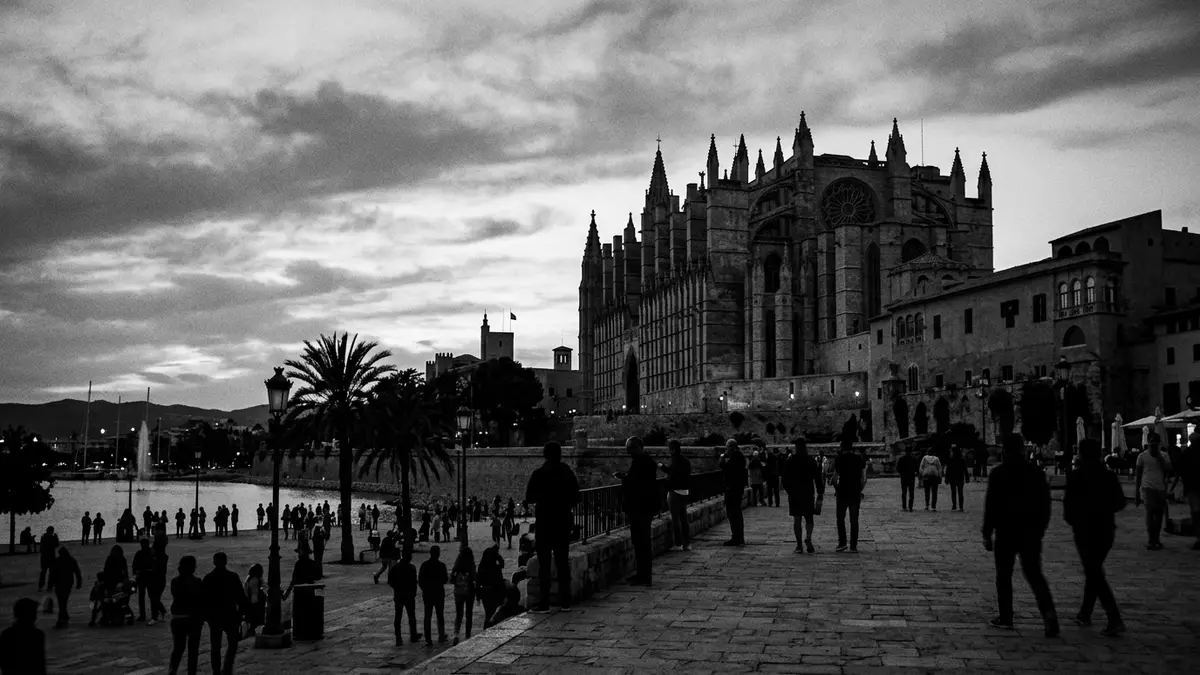
Catedral de Mallorca, also known as the Cathedral of Santa Maria of Palma or La Seu, dominates Palma’s waterfront with a vast Gothic interior raised above the old city walls. Built across the thirteenth to sixteenth centuries in Catalan Gothic style, it serves as the cathedral of the diocese of Mallorca and anchors the transition between the historic city and the Bay of Palma.
A Gothic cathedral between city and sea
Catedral de Mallorca stands in Palma on the island of Mallorca, Spain, on ground beside the city’s medieval walls and facing the bay. The building forms part of a stone ensemble with the Royal Palace of La Almudaina on one side and the Episcopal Palace of Mallorca on the other, so that church, royal residence and ecclesiastical administration share the same stretch of waterfront.
The cathedral is dedicated to Santa Maria and is widely known under its Catalan name La Seu, a designation used for episcopal cathedrals in the former Crown of Aragon.Cathedral of Santa Maria of Palma Its stone mass rises above a platform and is expressed externally as a long, high volume with buttresses, pinnacles and tracery, while the interior is organised as three naves with chapels along the sides.three naves with eight aisles each
Centuries of construction and later interventions
The origins of Catedral de Mallorca lie in the conquest of Madina Mayurqa by King Jaume I of Aragon in 1229, after which a Christian cathedral was planned on the site and work began in the thirteenth century.begun under King Jaume I after 1229 Construction extended across several centuries, with the fabric brought to completion around 1601, so the building combines early Gothic work with later additions from subsequent periods.finished around 1601
Within this long process, certain names stand out. The fifteenth-century architect and sculptor Guillem Sagrera is associated with the Portal del Mirador, the ocean-facing doorway whose carved stonework exemplifies Mediterranean Gothic sculpture.Guillem Sagrera and the Portal del Mirador In the nineteenth century an earthquake in 1851 damaged the west front, leading to a major neo-Gothic reconstruction of the main façade under architect Juan Bautista Peyronnet, which gives the present entrance its pointed gable and elaborate vertical emphasis.neo-Gothic main façade after 1851 In the early twentieth century Antoni Gaudí was invited to reconfigure parts of the interior, moving the choir closer to the high altar and adding a distinctive wrought-iron canopy above it, so that modern liturgical arrangements coexist with medieval stone structure.Gaudí’s intervention in the early 1900s
Light, space and characteristic details
The cathedral is a textbook of Mediterranean Gothic architecture, with a high, unified interior and slender columns supporting ribbed vaulting over a continuous nave. Its plan is rectangular, laid out in three naves divided into a sequence of aisles, leading the eye towards the chancel formed by the Royal Chapel and the raised Trinity chapel at the eastern end.rectangular plan and chancel arrangement
One of the most recognisable features of Catedral de Mallorca is its great rose window, which brings coloured light into the nave and has become a visual emblem of the building.famous for its rosette Alongside it, stained-glass windows and tall lancets admit daylight into the interior, while stone tracery and carved details animate the façades. Inside, Gaudí’s baldachin hangs over the high altar, and a sequence of chapels along the side aisles includes spaces adapted in the late twentieth century with contemporary artworks, such as interventions by Miquel Barceló in the Chapel of the Blessed Sacrament that introduce ceramic reliefs into the Gothic envelope.modern artistic adaptations in side chapels
Visiting Catedral de Mallorca: what travellers from Western Europe should know
- Catedral de Mallorca stands beside the waterfront in Palma, on Plaça de la Seu near the Royal Palace of La Almudaina, and is reached on foot from the historic centre or by road along the bay.
- The building rises above a stone platform with steps and has interior staircases and chapels along its aisles, so a visit involves walking on uneven floors and climbing short flights of steps.
- For travellers arriving from elsewhere in Spain or Europe, Palma’s port and airport provide access to the city, from which local streets lead directly to the cathedral precinct.
- The official language in this part of Spain is Spanish (Castilian), alongside Catalan, and the currency is the euro.
Searching for Catedral de Mallorca on social platforms
These links open searches for Catedral de Mallorca on each platform.
Frequently asked questions about Catedral de Mallorca
Where is Catedral de Mallorca located?
Catedral de Mallorca stands in Palma on the island of Mallorca in Spain, beside the bay and close to the Royal Palace of La Almudaina.
What can visitors expect inside the cathedral?
Visitors encounter a high Gothic interior with three naves, slender columns, a prominent rose window, Gaudí’s baldachin over the high altar and chapels with historic and contemporary artworks.
What makes Catedral de Mallorca distinctive among Spanish cathedrals?
Its Mediterranean Gothic style, long waterfront setting, extended construction history from the thirteenth to the early seventeenth century and later interventions by figures such as Guillem Sagrera, Juan Bautista Peyronnet and Antoni Gaudí give it a layered character.


