Catedral de Mallorca, a Mediterranean Gothic landmark by the sea
Published on 09/14/2026 at 16:54 | Editorial responsibility: Rafael Müller, Editor-in-Chief AD HOC NEWS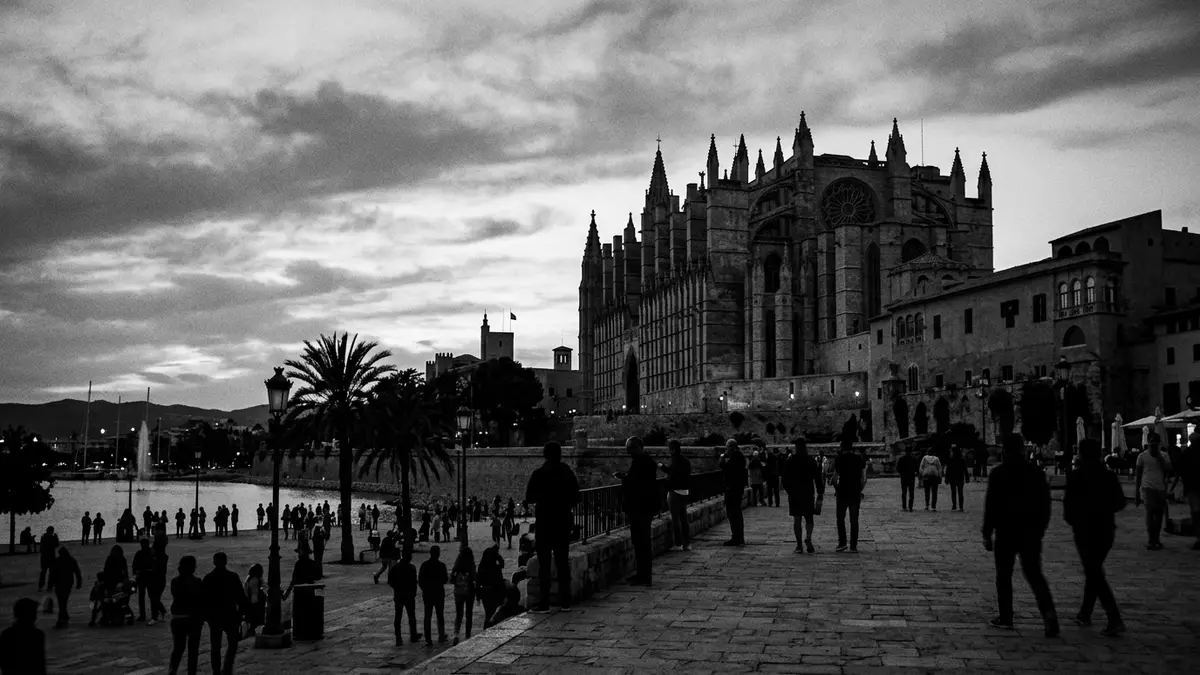
Catedral de Mallorca, also known as La Seu and officially dedicated to Santa Maria, dominates the waterfront of Palma with a vast Gothic hall church begun after King Jaume I’s conquest of Mallorca in 1229 and declared complete in 1601.
A stone ship overlooking Palma’s harbour
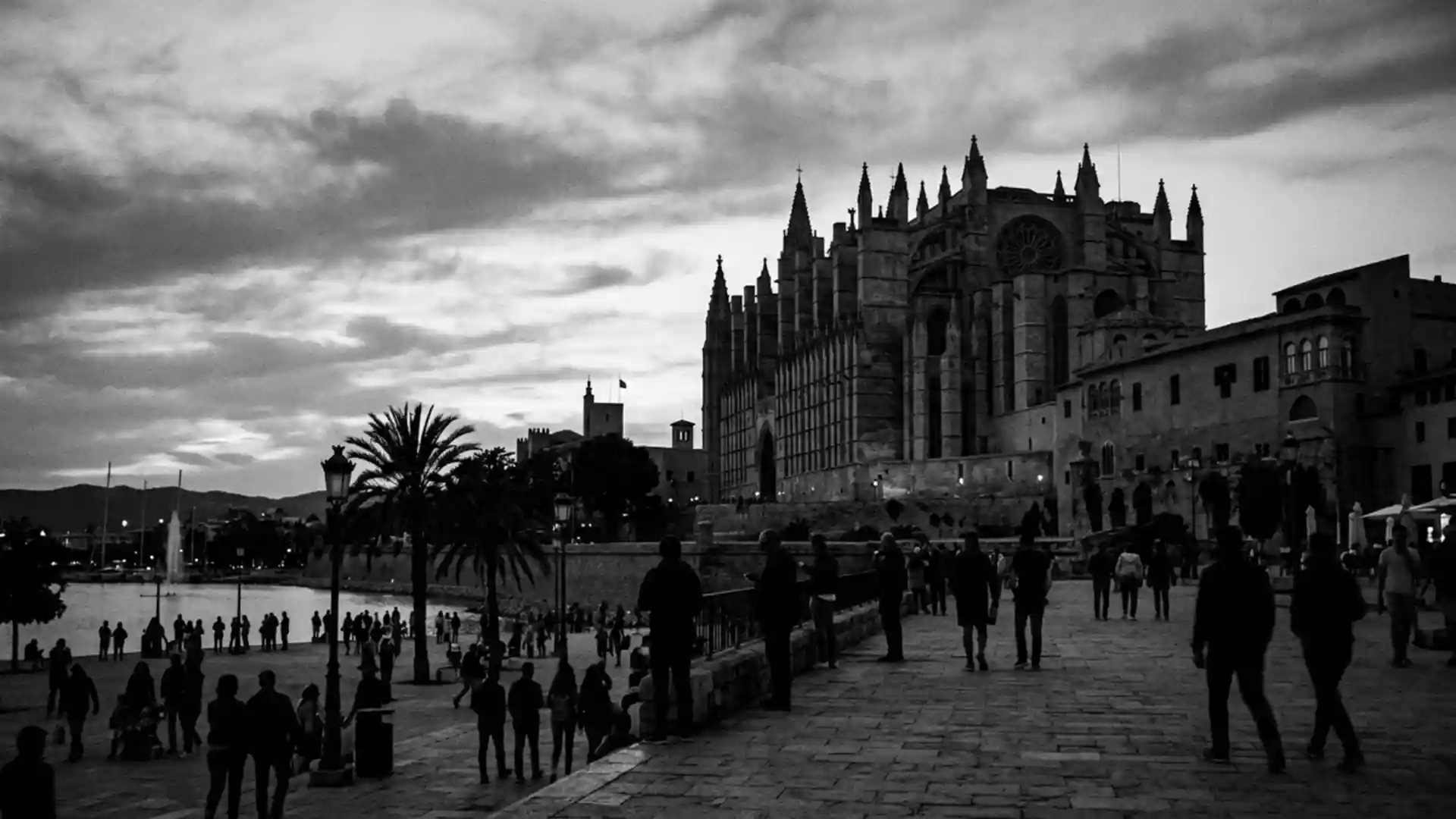
Catedral de Mallorca stands beside the sea in Palma, occupying a terrace above the old city walls with the Royal Palace of La Almudaina on one side and the episcopal buildings on the other.The cathedral of Santa Maria of Palma stretches along the edge of the historic centre, so its exterior appears almost like a stone ship moored above the harbour when seen from the Parc de la Mar below.
The building follows the Catalan or Mediterranean Gothic tradition, with a broad interior, slender supports and a strong horizontal emphasis that contrasts with the more vertically layered skyline outside.Designed in the Catalan Gothic style Its long south flank faces the water and carries buttresses and pinnacles, while portals and traceried openings punctuate the stone surfaces and give a sense of rhythm along the facade.
A Gothic hall of light and height
Behind the main entrances, the cathedral opens into a single luminous volume rather than a series of compartmentalised chapels, a characteristic hall-church or basilica plan that is a hallmark of Levantine Gothic in this region.Levantine Gothic with a single luminous space Tall stone columns rise to support the vaults, and the central nave reaches a documented height of about 44 m (144 ft), giving visitors a strong impression of vertical space framed within a wide floor plan.The nave is 44 metres tall
Light enters through numerous traceried openings, including several large rose windows and many smaller glazed apertures, so coloured glass punctuates the interior stonework and highlights the ribs and arches.The temple has many large windows and rose windows At certain times of year the effect of the main rose window can form patterns of coloured light on the internal stone surfaces, reinforcing the local nickname “Cathedral of Light” for the building.Known as the Cathedral of Light
Centuries of construction and later interventions
The official name of the building, Catedral-Basílica de Santa María de Mallorca, reflects its status as both cathedral and basilica within the Catholic hierarchy, and it serves as the seat of the Diocese of Mallorca.Catedral-Basílica de Santa María de Mallorca Construction stretches back to the thirteenth century and is linked to Jaume I of Aragon, whose conquest of Medina Mayurqa in 1229 initiated the project on the site of the former main mosque, with the great building campaign running through the thirteenth to the sixteenth centuries before the work was formally declared complete in 1601.Construction from 1229 to completion in 1601
Later centuries introduced further changes, and the west front visible today is a nineteenth-century neo-Gothic reconstruction carried out after earthquake damage in 1851.The main facade rebuilt in the nineteenth century Between 1904 and 1914 Antoni Gaudí worked on the interior, rearranging the choir stalls and designing a distinctive wrought-iron baldachin above the high altar, so the Gothic fabric now frames elements of early twentieth-century design.Gaudí’s renovation between 1904 and 1914 In the early twenty-first century, Mallorcan artist Miquel Barceló added a large ceramic mural in the Chapel of the Blessed Sacrament, extending the building’s story into contemporary art with a textured depiction of biblical themes.Barceló’s ceramic mural completed in 2007
Visiting Catedral de Mallorca: what travellers from Western Europe should know
- Catedral de Mallorca stands in central Palma on the waterfront terrace beside the Royal Palace of La Almudaina, reached on foot from the surrounding historic streets.
- The interior involves walking across large stone floors and, in some areas, climbing flights of steps; visiting elevated galleries or terraces includes staircases within the fabric.
- The official language is Spanish and the currency is the euro.
- Palma is served by Palma de Mallorca Airport, and the cathedral area is connected to the wider city by urban bus routes and road access.
Searching for Catedral de Mallorca on social platforms
These links open searches for Catedral de Mallorca on each platform.
Frequently asked questions about Catedral de Mallorca
Where is Catedral de Mallorca located?
Catedral de Mallorca stands in Palma on the island of Mallorca in Spain, beside the seafront and adjacent to the Royal Palace of La Almudaina.
What can visitors expect inside the cathedral?
Visitors encounter a tall Gothic hall with slender stone columns, extensive stained glass, historic chapels and later additions by Antoni Gaudí and Miquel Barceló.
What makes Catedral de Mallorca distinctive among Spanish cathedrals?
Its Mediterranean Gothic hall plan, waterfront setting above the harbour and emphasis on light through rose windows and traceried openings give it a characteristic presence in Palma.