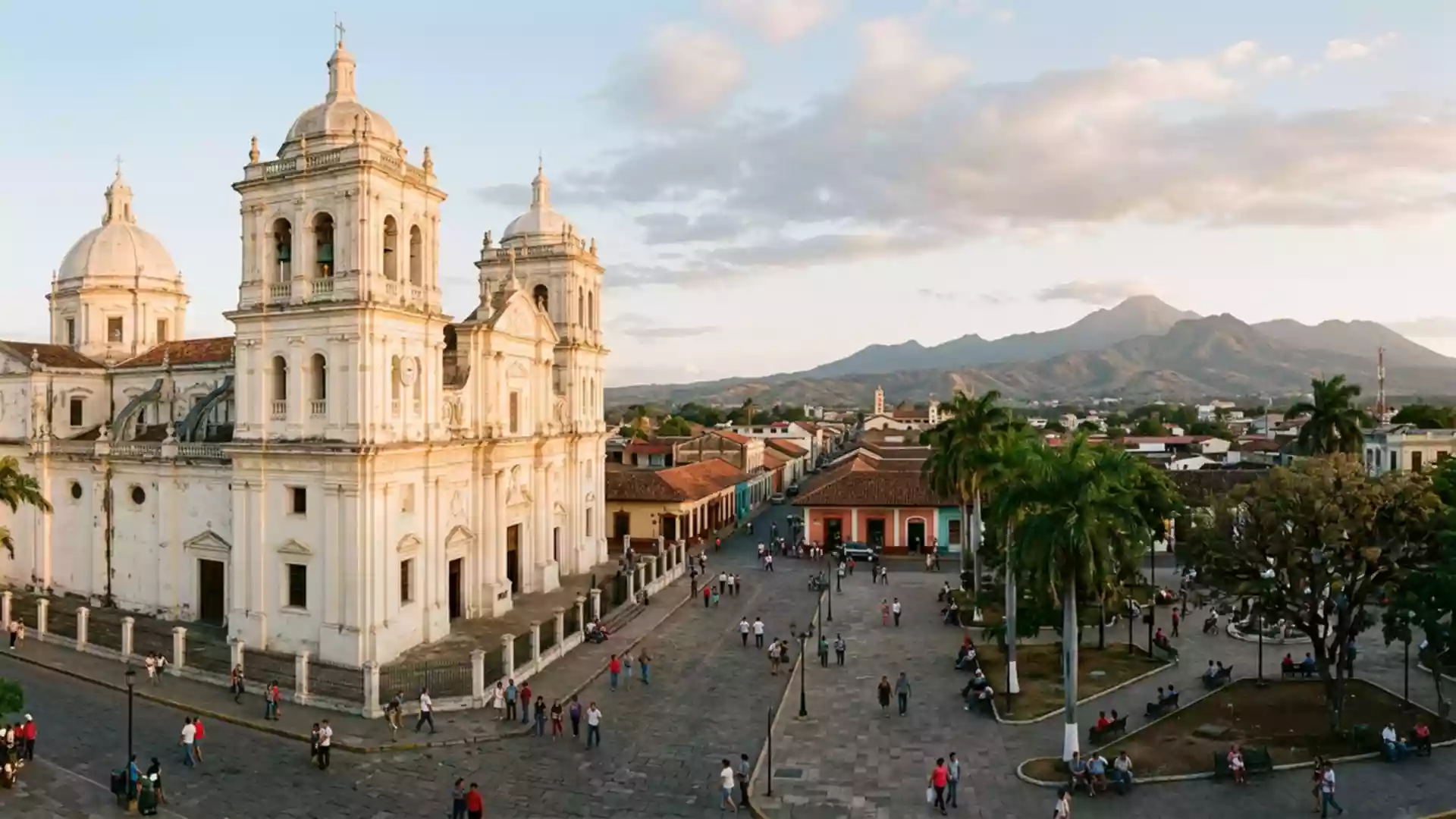
Catedral de Leon and the stone scale of León
Published on 09/14/2026 at 17:59 | Editorial responsibility: Rafael Müller, Editor-in-Chief AD HOC NEWS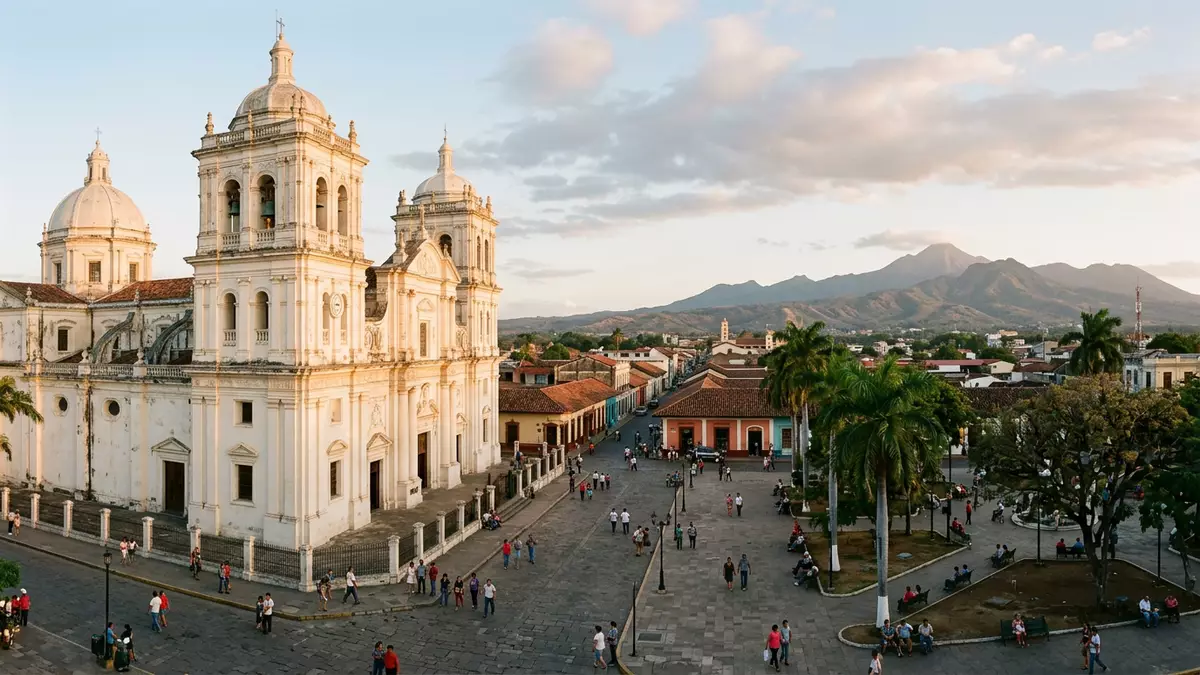
Catedral de Leon fills an urban block in León, Nicaragua, and its broad stone mass gives the city centre a clear architectural centre of gravity. Built between 1747 and 1814 and linked to Diego José de Porres Esquivel, it combines late Baroque and Neoclassical forms.
Catedral de Leon’s block-sized presence
The building occupies the historic centre of León as a monument of the Catholic Church and a UNESCO World Heritage site. Its recorded status dates from 2011, and the cathedral is associated with the city’s colonial fabric and main square.
The exterior is restrained for such a large church. Heavy walls, long horizontal lines and the twin towers create a calm front that contrasts with the more ornate sanctuary vault inside.
World Heritage text describes the building’s transition from Baroque to Neoclassical language, while the nomination dossier records the rectangular plan and the architect’s name.
Inside the cathedral’s layered form
The interior keeps a strong sense of length. The nave, side aisles and supporting bays create a basilica arrangement, while the sanctuary brings richer ornament than the outer walls suggest.
Natural light is a defining feature of the space. The interior decoration remains sober in many parts, but the roof structure and vaults bring a denser visual rhythm, and the cathedral contains a Flemish altarpiece and paintings by Antonio Sarria.
UNESCO Nicaragua page mentions the Neoclassical character and the interior’s restraint, while the World Heritage decision confirms the site’s criteria (ii) and (iv).
Diego José de Porres Esquivel and an 18th-century design
Diego José de Porres Esquivel, a Guatemalan architect, is the name most closely tied to the project. The cathedral was begun in the eighteenth century and completed in the early nineteenth century, placing it within the long colonial transition from Baroque exuberance to Neoclassical restraint.
The design uses a rectangular basilica layout familiar across Spanish America. That plan, combined with the building’s horizontal proportions and thick volumes, gives Catedral de Leon a particular clarity among Central American cathedrals.
The World Heritage documentation links the monument to Antigua Guatemala’s architectural tradition and to the wider spread of Spanish ecclesiastical layouts across the Americas. The result is a church that reads as both regional and imperial in its structure.
Visiting Catedral de Leon: what travellers from Western Europe should know
- The cathedral stands in the historic centre of León, Nicaragua, beside the city’s main square and within the colonial street grid.
- The building’s scale is best read from the outside first, because the block-wide footprint and long facade take a moment to absorb.
- The interior contains significant movable art, including a Flemish altarpiece and paintings by Antonio Sarria.
- León is the country’s second World Heritage site in this category, after León Viejo.
Searching for Catedral de Leon on social platforms
These links open searches for Catedral de Leon on each platform.
Frequently asked questions about Catedral de Leon
Where is Catedral de Leon?
It stands in León, Nicaragua, in the historic centre beside the main square.
What does a visit involve?
The exterior dominates the block, while the interior holds a basilica plan, a sanctuary vault and important artworks. The building reads as a large colonial church with restrained surfaces.
What makes it distinctive?
Its combination of a rectangular Spanish-American plan, Baroque and Neoclassical language, and a UNESCO World Heritage listing sets it apart within Central America.