
Catedral de Leon and the architecture of transition
Published on 09/23/2026 at 06:48 | Editorial responsibility: Rafael Müller, Editor-in-Chief AD HOC NEWS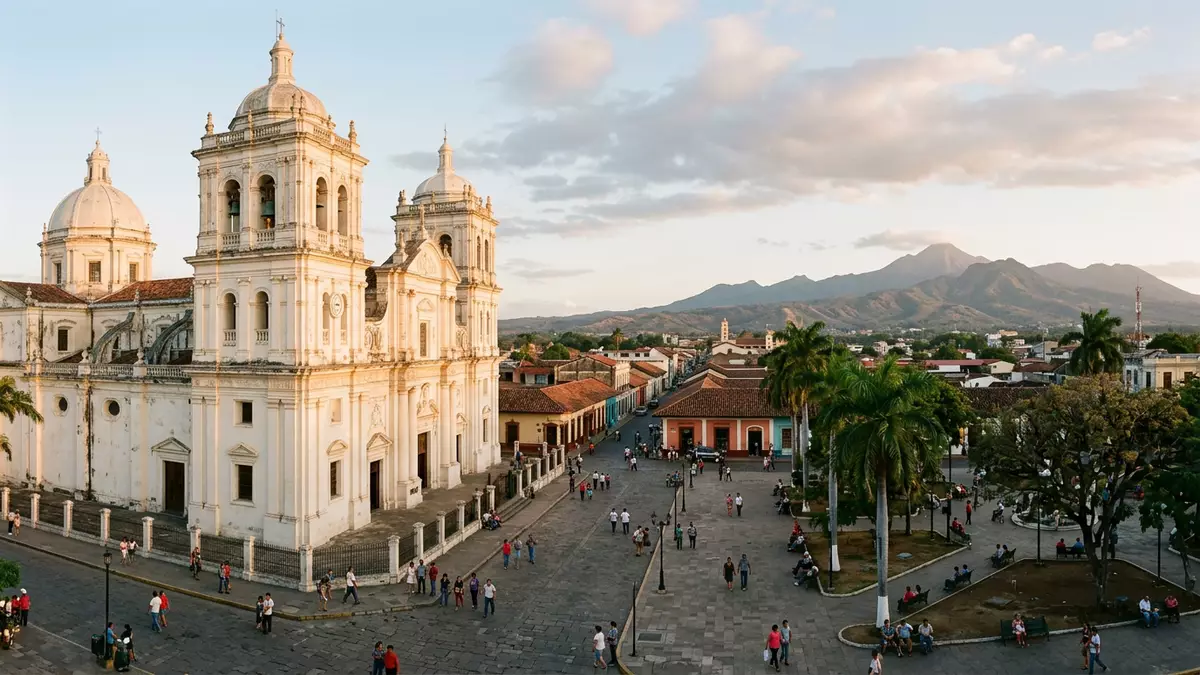
Catedral de Leon occupies a central place in Leon, Nicaragua, with a broad white exterior and a low, powerful profile. Built between 1747 and 1814, the cathedral brings late Baroque and Neoclassical architecture into one unified basilica, creating a building whose scale and details reward close attention.
Catedral de Leon: a cathedral between two styles
The cathedral is formally dedicated to the Assumption of the Virgin Mary. Its architecture belongs to a period when colonial building traditions were meeting newer Neoclassical ideas. The result is neither a purely Baroque church nor a purely Neoclassical one, but a carefully unified combination of both.
Guatemalan architect Diego José de Porres Esquivel is associated with the design. The building follows a rectangular basilica plan with broad horizontal proportions, thick walls and low towers. Its form reflects the Antigua Guatemala Baroque tradition while incorporating Spanish-derived planning and regional architectural features. the rectangular basilica layout remains central to its architectural character.
From late Baroque structure to Neoclassical restraint
Catedral de Leon was completed in 1814 after more than six decades of construction. Its long building period spans the late eighteenth century and the opening years of the nineteenth century, giving the cathedral a visible place in the transition between architectural languages.
The exterior is marked by restrained decoration rather than a dense accumulation of ornament. Inside, the scale of the nave and the sequence of arches establish the building’s spacious character. A Flemish altar provides a strong artistic focus, while paintings of the fourteen Stations of the Cross add a later layer of religious art. the Flemish altar belongs to the cathedral’s best-known interior features.
Art, burial and World Heritage status
The cathedral became the seat of the Diocese of Leon, whose history reaches back to 1531. That ecclesiastical role connects the building with the long history of Catholic institutions in Nicaragua and with Leon’s position as a colonial city of learning, worship and public life.
In 1860, the cathedral was consecrated by Pope Pius IX. UNESCO added Catedral de Leon to the World Heritage List in 2011 under criteria recognising architectural exchange and the regional interpretation of a religious building type. The inscription identifies the cathedral’s mixture of Spanish art, European Baroque, Neoclassical elements and local features as part of the cultural history of Latin America. the cathedral’s 1860 consecration marks a significant point in its religious history.
Visiting Catedral de Leon: what travellers from Western Europe should know
- Catedral de Leon stands in the centre of Leon, Nicaragua, within the city’s historic urban fabric. Leon is connected with Nicaragua’s road network and domestic transport routes.
- The building is a large basilica with broad interior spaces, arches, thick masonry and low towers. A visit involves moving between exterior paving, the main church interior and any accessible upper areas.
- The official language is Spanish and the currency is the Nicaraguan córdoba.
- Entry requirements depend on your nationality; UK travellers can check the FCDO travel advice at gov.uk/foreign-travel-advice, Irish travellers the Department of Foreign Affairs at ireland.ie.
Searching for Catedral de Leon on social platforms
These links open searches for Catedral de Leon on each platform.
Frequently asked questions about Catedral de Leon
Where is Catedral de Leon?
Catedral de Leon is in the centre of Leon, Nicaragua. It forms part of the city’s historic urban landscape and serves as the cathedral church of the Diocese of Leon.
What can visitors expect inside?
The interior contains broad basilica spaces, thick masonry, arches, a Flemish altar and paintings of the fourteen Stations of the Cross. The decoration combines restrained Neoclassical elements with Baroque features.
What makes Catedral de Leon distinctive?
Its construction between 1747 and 1814 joins late Baroque architecture with Neoclassical design. UNESCO inscribed it as a World Heritage Site in 2011 for its architectural and cultural significance.


