
Catedral de Burgos and its Gothic layers in stone
Published on 09/04/2026 at 15:44 | Editorial responsibility: Rafael Müller, Editor-in-Chief AD HOC NEWS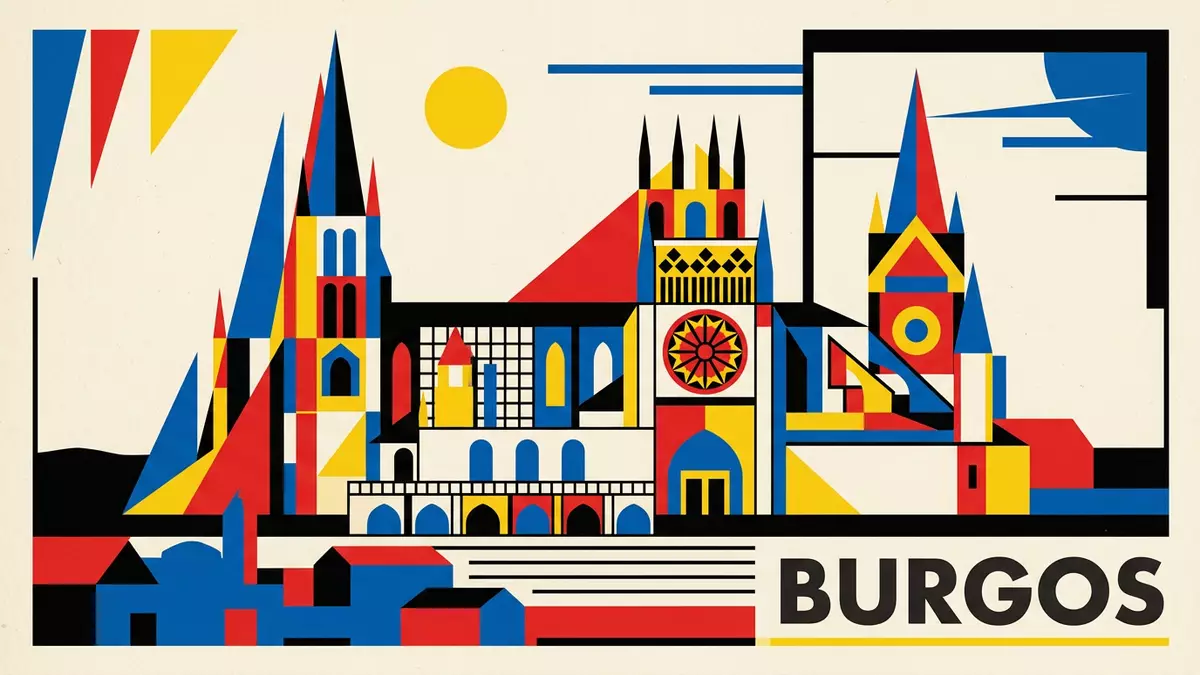
Catedral de Burgos rises in Burgos as a layered Gothic monument, with towers, openwork spires and a long building history that spans centuries. Begun in 1221 and recognised by UNESCO, it carries the name of Santa María de Burgos in its formal title.begun in 1221
Burgos Cathedral in its Gothic layers
The exterior combines the verticality of the west front with a more complex body behind it, where later work added chapels, a lantern tower and further sculptural detail. Juan de Colonia and his son Simón are among the names most closely tied to those later phases.Juan de Colonia
The cathedral is a Gothic building, yet its fabric reflects several centuries of work rather than a single campaign. Its UNESCO inscription identifies construction as beginning in 1221 and ending in 1567, and it places the monument within the wider story of European Gothic architecture.ending in 1567
Names and dates in the fabric
The association with Ferdinand III and Bishop Maurice belongs to the opening phase, when the new cathedral rose in the thirteenth century. That early campaign set the base for the later additions that shaped the present silhouette.Ferdinand III
Simón de Colonia is linked to the towers, the open spires of the façade and the Constable’s chapel, while Felipe de Borgoña appears in the same broad tradition of builders and workshop teams. The result is a cathedral that reads less like a single statement and more like a sequence of Gothic hands working across time.Simón de Colonia
The UNESCO status and the city setting
The cathedral stands in Burgos, the city that shares its name, and its protected status places it among Spain’s best-known medieval monuments. Its formal recognition as a World Heritage Site makes the building itself the focus, not a wider historic quarter around it.World Heritage Site
The stone mass, the traceried surfaces and the twin western towers give it a clear profile from outside. Inside, the cathedral holds chapels, choir stalls and other works that belong to the same long Gothic tradition.choir stalls
Visiting Catedral de Burgos: what travellers from Western Europe should know
- The cathedral stands in central Burgos, in Castile and León. Plaza Santa María places it within the historic urban core and close to the city’s main pedestrian routes.
- The monument is a large stone church with towers, steps and many interior levels. The western façade and the chapels reward slow movement through the building.
- English is not an official language in Spain, so the official language is Spanish and the currency is the euro.
- The cathedral’s identity rests on its Gothic fabric, its linked phases of construction and its association with Ferdinand III, Bishop Maurice, Juan de Colonia and Simón de Colonia.
- The monument is a World Heritage Site in its own right, not as part of a larger serial group. That designation reflects the building’s importance within Spanish Gothic architecture.
Searching for Catedral de Burgos on social platforms
These links open searches for Catedral de Burgos on each platform.
Frequently asked questions about Catedral de Burgos
Where is Catedral de Burgos?
It stands in Burgos, in the Spanish region of Castile and León, with Plaza Santa María as its immediate setting. The cathedral is part of the city’s historic centre.
What does a visit involve?
The building presents a large Gothic church with towers, chapels and a complex interior sequence. The western front and the later additions create a dense architectural experience.
What makes it distinctive?
Its distinction lies in the long arc of its construction, from 1221 to 1567, and in the named figures associated with key phases. The openwork spires and the UNESCO status are among its clearest identifying features.


