
Cataratas do Iguacu, a vast curtain of water at Foz do Iguacu
Published on 09/15/2026 at 07:59 | Editorial responsibility: Rafael Müller, Editor-in-Chief AD HOC NEWS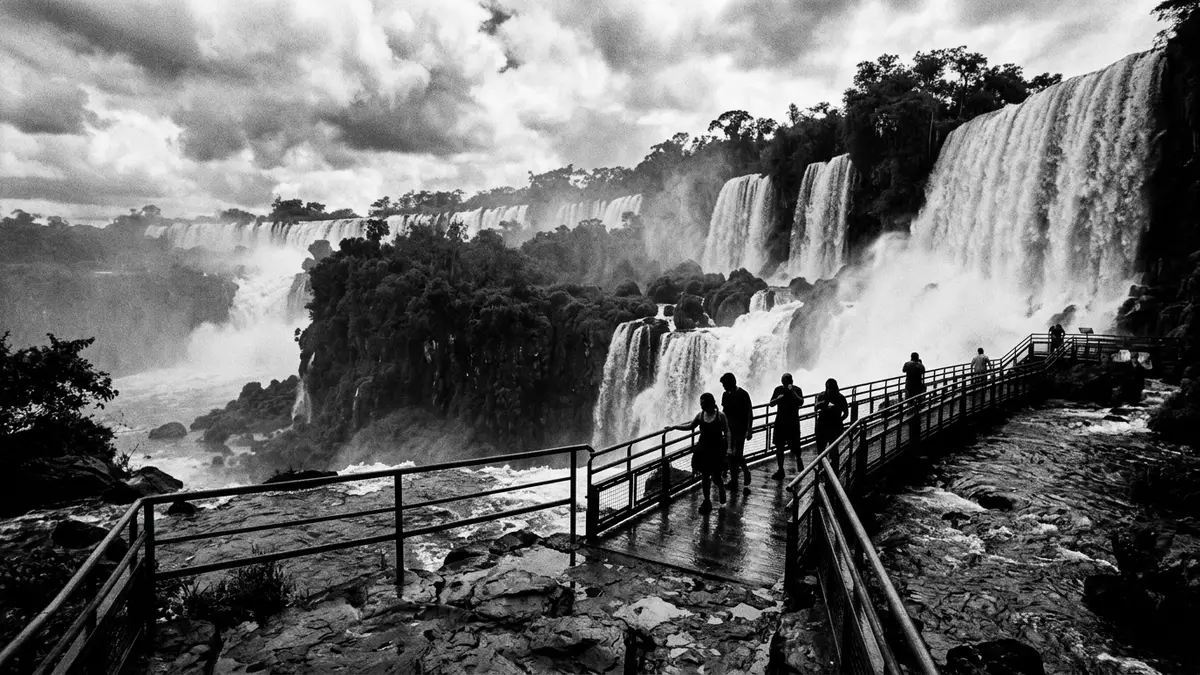
Cataratas do Iguacu, known in English as Iguazu Falls, form a broad amphitheatre of waterfalls on the Iguacu River at the border between Brazil and Argentina near Foz do Iguacu in the state of Parana. The cascades belong to Iguaçu National Park on the Brazilian side and Iguazú National Park in Argentina, both recognised as UNESCO World Heritage Sites in the 1980s, and they cut across a basalt plateau that extends over parts of Brazil, Argentina, Paraguay and Uruguay.
The waterfall system on the Iguacu River
The defining feature of Cataratas do Iguacu is the scale of the waterfall system, with hundreds of separate drops spread in a wide arc where the Iguacu River plunges off a volcanic plateau towards the Parana River basin.Iguazu Falls The river, which rises far to the east before flowing westwards through subtropical forest, reaches the edge of this plateau and breaks into many channels, creating a curtain of water that visitors see from walkways and viewpoints on both sides. The main horseshoe section of the falls is over 70 m (230 ft) high and measures around 2,700 m (8,860 ft) in length, with a significant part of this arc lying within Brazilian territory and the remainder belonging to Argentina.central horseshoe cataract
The Iguacu River forms the boundary between Misiones Province on the Argentine side and Parana State in southern Brazil, and the falls stand a short distance upstream from the confluence of the Iguacu and Parana Rivers where Brazil, Argentina and Paraguay meet.Iguacu River border location On the Brazilian bank the park protects large areas of Atlantic Forest and riverbank, and on the Argentine side trails and viewing platforms approach the edge of different cascades. Together the two national parks create a binational protected area centred on the waterfall system and the surrounding subtropical landscape.Iguacu and Iguazu National Parks
Iguaçu National Park and World Heritage status
Cataratas do Iguacu are set within Iguaçu National Park, a protected area of more than 160,000 hectares in Parana that conserves remnants of Brazil’s Atlantic Forest as well as riverine and plateau environments.Iguaçu National Park area The Brazilian park lies adjacent to Iguazú National Park in Argentina, and together these neighbouring reserves safeguard the waterfall system and surrounding ecosystems which include forest, river channels and basalt outcrops. The parks are recognised internationally for both scenic and ecological value, with diverse plant and animal life characteristic of the region.
UNESCO inscribed Iguazú National Park in Misiones Province on the World Heritage List in 1984 and added Iguaçu National Park in Parana in 1986, acknowledging both the outstanding natural spectacle of the falls and the biodiversity of the protected forests.UNESCO inscription of Iguazú National Park The World Heritage recognition highlights the semicircular waterfall system and its context within a basalt landscape, as well as the importance of preserving habitats for species adapted to this subtropical environment. The parks sit close to the point where the borders of Brazil, Argentina and Paraguay meet, giving the area a distinctive tri-border setting as well as its natural interest.tri-border configuration
Viewpoints and access from Foz do Iguacu
On the Brazilian side, the gateway city for Cataratas do Iguacu is Foz do Iguacu, located in the far west of Parana near the frontiers with Argentina and Paraguay.Foz do Iguacu city Roads lead from the urban area towards the entrance of Iguaçu National Park, where visitors pass through a visitor centre before continuing deeper into the protected area by park transport or on foot along marked routes. The principal viewpoints on the Brazilian side give panoramic perspectives along the length of the waterfall arc and across to Argentine platforms and islands.
The falls can also be reached from Puerto Iguazú on the Argentine side, which provides access to Iguazú National Park and its network of walkways leading to close-up views of individual cataracts.access from Puerto Iguazú Trails and viewing structures on both sides are arranged to bring visitors to the brink of different drops and to vantage points where the river’s descent over the basalt plateau can be appreciated from varying angles. From the Brazilian riverbank, the sweeping shape of the fall line and the surrounding forested escarpment are particularly apparent.
Visiting Cataratas do Iguacu: what travellers from Western Europe should know
- Cataratas do Iguacu lie near Foz do Iguacu in southern Brazil’s Parana State, with road access leading towards the entrance of Iguaçu National Park on the Brazilian side.
- The main visitor routes on the Brazilian side follow prepared paths and walkways through forest and along the riverbank, with sections that involve climbing and descending flights of steps.
- The falls sit in a humid subtropical region where high temperatures and strong sun are common, and exposed viewpoints near the river provide little shade.
- Foz do Iguacu lies close to border crossings with Argentina and Paraguay, and Puerto Iguazú in Misiones Province serves as a second gateway to the falls.
- The official language is Portuguese and the currency is the Brazilian real.
Searching for Cataratas do Iguacu on social platforms
These links open searches for Cataratas do Iguacu on each platform.
Frequently asked questions about Cataratas do Iguacu
Where are Cataratas do Iguacu located?
Cataratas do Iguacu are on the Iguacu River at the border between Brazil’s Parana State and Argentina’s Misiones Province, near the Brazilian city of Foz do Iguacu.
What should visitors expect on a visit?
Visitors encounter extensive waterfall views along prepared paths and platforms within Iguaçu National Park on the Brazilian side and Iguazú National Park on the Argentine side, with forest and river scenery.
What makes Cataratas do Iguacu distinctive?
The falls form a very wide arc of separate cascades on the edge of a basalt plateau, protected within two neighbouring national parks that share a subtropical tri-border setting.


