
Cataratas do Iguacu, a sweeping waterfall frontier
Published on 09/12/2026 at 18:46 | Editorial responsibility: Rafael Müller, Editor-in-Chief AD HOC NEWS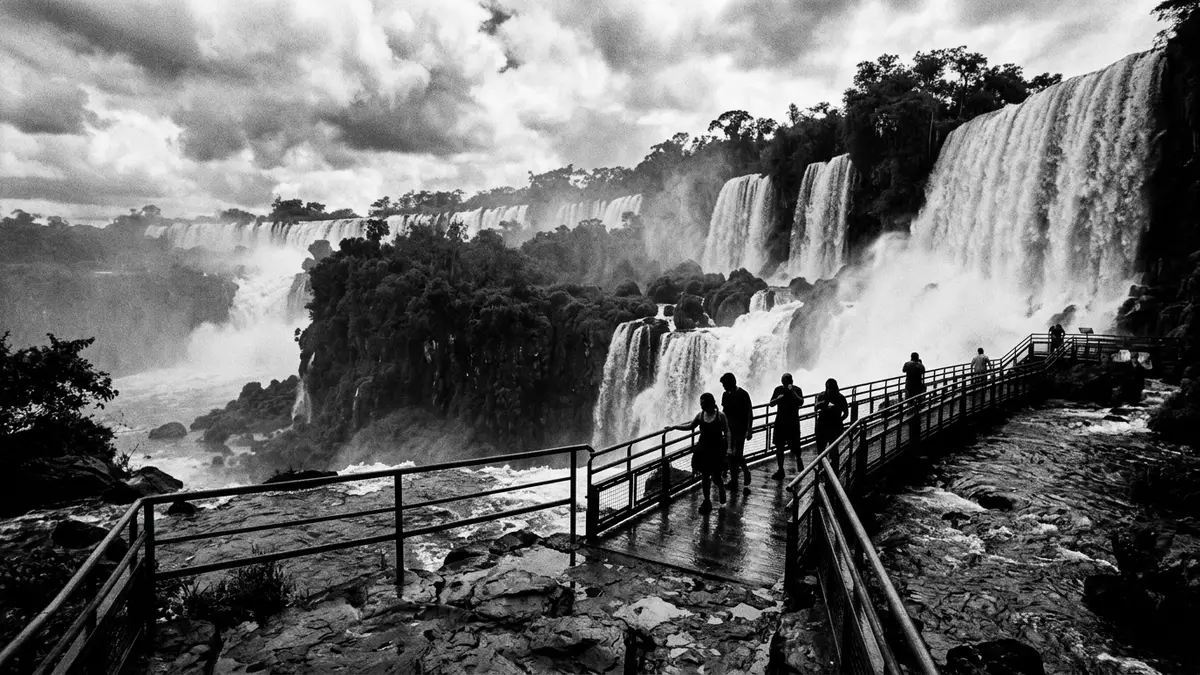
Cataratas do Iguacu, known in English as Iguazu Falls, form a vast series of waterfalls on the Iguacu River at the border between southern Brazil and northern Argentina. The cascades lie near Foz do Iguacu in the Brazilian state of Parana and spread across a basalt plateau where the river drops abruptly into a narrow gorge.
A curtain of water between Brazil and Argentina
Cataratas do Iguacu are not a single fall but a broad system of waterfalls where the Iguacu River breaks over an escarpment and fragments into many cascades. The waterfalls straddle the international frontier, with part of the arc viewed from Brazil and part from Argentina, as the river marks the line between Parana State and Misiones Province.frontier between Brazil and Argentina On the Brazilian side, the falls lie within Iguaçu National Park in Parana, while the Argentine side falls inside Iguazú National Park in Misiones.Iguaçu National Park in Parana
The Iguacu River approaches the escarpment as a broad flow before dropping in a long curve of water broken by islands and rocky ledges. The waterfall front extends for about 2.7 km (1.7 miles), with the main drops falling from heights in the region of 60 to more than 70 m (197–230 ft).2.7 km waterfall front Seen from the walkways on the Brazilian bank, the system reads as a sweeping curtain of water punctuated by spray, rock outcrops and patches of forest clinging to the cliff.
National parks and Atlantic Forest
Cataratas do Iguacu sit inside a protected landscape of subtropical forest, with conservation areas established on both sides of the border. The Brazilian park, Iguaçu National Park, was created by federal decree on 10 January 1939 and later recognised as a UNESCO World Heritage Site in 1986.created in 1939 and listed in 1986 Across the river, Iguazú National Park in Argentina holds a matching World Heritage inscription from 1984, reflecting the shared importance of the waterfall system and its surrounding forest.World Heritage inscription in 1984
The area around Cataratas do Iguacu preserves a remnant of Atlantic Forest, a biodiverse rainforest biome that once covered much of the coastal and southern regions of Brazil. Inside Iguaçu National Park, forested hills and river valleys frame the falls, with protected tracts of native vegetation extending well beyond the waterfall viewpoints.remnant of Atlantic Forest Wildlife moves through this forest, and the sound of water is joined by birdsong and the rustle of vegetation around the visitor routes.
Experiencing the falls from the Brazilian side
On the Brazilian side, Cataratas do Iguacu are approached through Iguaçu National Park along a road that leads from Foz do Iguacu towards the river. From the park infrastructure, visitors follow paths and viewing platforms that reveal different sections of the waterfall arc, including vantage points where the main cataracts can be seen head-on and in profile.paths and viewing platforms The walkways bring the flow of water into full view, with the river dropping in multiple tiers and channels as it enters the gorge.
The most dramatic sector of Cataratas do Iguacu is known as the Garganta do Diabo, or Devil’s Throat, a deep horseshoe-shaped recess where a large portion of the river plunges into a confined chasm. Here the waterfall line curves sharply, and a dense cloud of spray rises from the point where the cascades converge.central horseshoe cataract From Brazilian viewpoints, this feature appears as the focal point of the system, with surrounding falls feeding into the same section of gorge and the forested rim framing the scene.
Visiting Cataratas do Iguacu: what travellers from Western Europe should know
- Cataratas do Iguacu lie in southern Brazil near the city of Foz do Iguacu in Parana State, with road access leading towards the entrance of Iguaçu National Park on the Brazilian side.
- The terrain around the Brazilian viewpoints combines paved paths with sections of steps and elevated walkways beside the gorge, and footwear suitable for damp surfaces is advisable.
- The Iguacu River forms the frontier between Brazil and Argentina at the falls, and the twin towns of Foz do Iguacu and Puerto Iguazu stand nearby on either side of the border.
- Portuguese is the official language in this part of Brazil and the currency is the Brazilian real.
- Entry requirements depend on your nationality; UK travellers can check the FCDO travel advice at gov.uk/foreign-travel-advice, Irish travellers the Department of Foreign Affairs at ireland.ie.
Searching for Cataratas do Iguacu on social platforms
These links open searches for Cataratas do Iguacu on each platform.
Frequently asked questions about Cataratas do Iguacu
Where are Cataratas do Iguacu located?
Cataratas do Iguacu are on the Iguacu River at the border between Brazil and Argentina, near Foz do Iguacu in Parana State and Puerto Iguazu in Misiones.
What should visitors expect at the falls?
Visitors encounter a long arc of waterfalls dropping into a gorge, with walkways, platforms and forest surroundings forming part of the experience on the Brazilian side.
What makes Cataratas do Iguacu distinctive among waterfalls?
Cataratas do Iguacu stand out for their multi-kilometre waterfall front, the deep horseshoe chasm of the Devil’s Throat and the setting within protected Atlantic Forest on both sides of the border.


