
Cataratas do Iguacu, a monumental waterfall frontier
Published on 09/08/2026 at 19:53 | Editorial responsibility: Rafael Müller, Editor-in-Chief AD HOC NEWS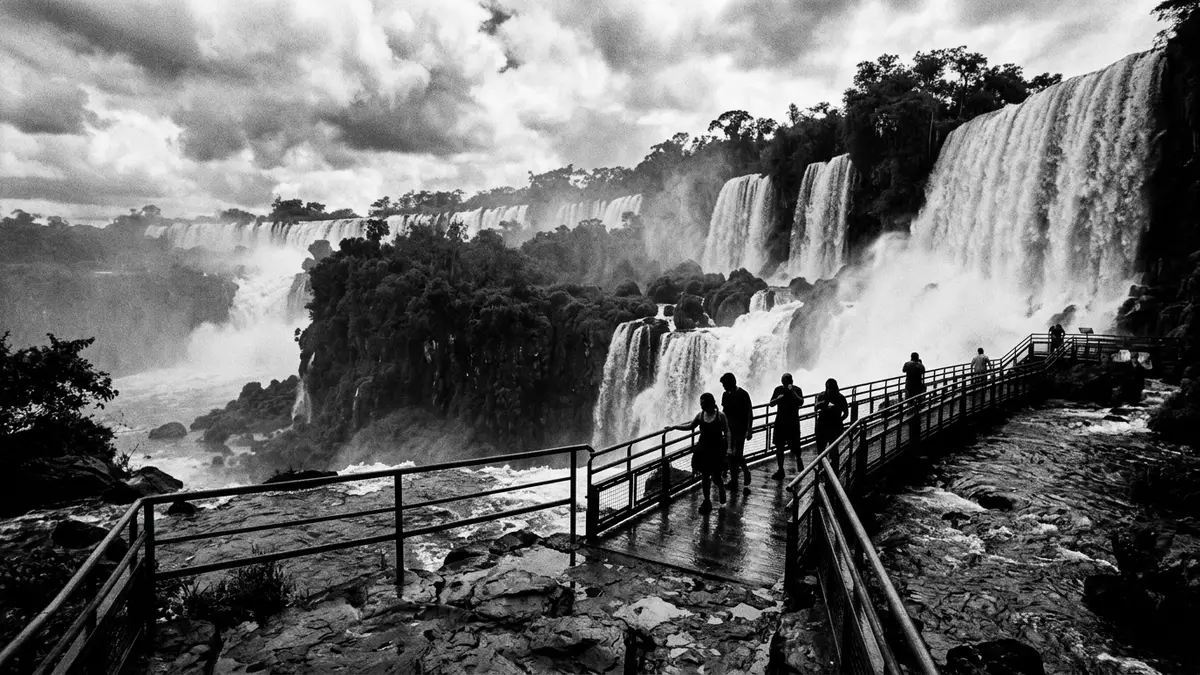
Cataratas do Iguacu near Foz do Iguacu in southern Brazil is a monumental chain of waterfalls where the Iguacu River drops over a basalt escarpment at the frontier with Argentina. Known in English as Iguazu Falls, this broad curtain of water sits between Brazil’s state of Paraná and Argentina’s Misiones Province, with the Brazilian side protected inside Iguaçu National Park, a UNESCO World Heritage Site since 1986.
Water falling in hundreds of separate curtains
Cataratas do Iguacu is not a single drop but a long arc of cascades stretching along the Iguacu River as it bends at the border between Brazil and Argentina. The falls occupy a reach of river where water plunges from a higher plateau towards the Paraná River basin, breaking into separate channels as it encounters resistant basalt rock.long arc of cascades On satellite images and maps they form a curved line of white water framed by dense subtropical forest.
Descriptions of Cataratas do Iguacu consistently refer to several hundred distinct waterfalls distributed along a stretch of river measuring a few kilometres.several hundred distinct waterfalls Individual named sections stand out within this chain, including the dramatic gorge known as Garganta do Diabo or Devil’s Throat, where some of the highest drops converge in a deep canyon at the meeting line between the two countries.Garganta do Diabo Together the many curtains, sprays and side channels create a continuous roar that defines this stretch of the Iguacu River.
Iguaçu National Park and the forest around the falls
On the Brazilian side, Cataratas do Iguacu lies within Iguaçu National Park, a protected area established by federal decree on 10 January 1939 to conserve the falls and the surrounding Atlantic Forest.Iguaçu National Park The park extends well beyond the immediate waterfall amphitheatre, covering a large tract of subtropical forest and riverbank habitat in western Paraná, across several municipalities including Foz do Iguacu.large tract of subtropical forest
Iguaçu National Park received its UNESCO World Heritage inscription as a natural site in November 1986, complementing the earlier listing of Argentina’s Iguazú National Park in 1984 and creating a binational protected landscape around the falls.binational protected landscape The forest here belongs to the Atlantic Forest biome, one of South America’s richest and most threatened ecosystems, and the park’s status reflects both the scenic character of Cataratas do Iguacu and the biodiversity of the surrounding vegetation. Trails and viewpoints on the Brazilian side thread through this forest, emerging at platforms where the river and the falls can be seen together.
Foz do Iguacu, border rivers and basalt rock
Cataratas do Iguacu sits near the city of Foz do Iguacu, at the far western end of Paraná state where the Iguacu River approaches its junction with the Paraná River.far western end of Paraná Foz do Iguacu itself lies on the banks of the Iguacu River facing the Argentine town of Puerto Iguazú, with Paraguay’s Ciudad del Este nearby across the Paraná. This three-border setting makes the city an important gateway for visitors approaching the falls from different directions.
The waterfall line of Cataratas do Iguacu follows the edge of a basalt plateau, giving the cliffs around the falls a dark, massive character distinct from the bright spray and foam below.edge of a basalt plateau Over geological time the river has cut channels into this hard volcanic rock, leaving isolated blocks that stand like islands at the brink and separating the flow into multiple strands. From viewpoints on the Brazilian side, visitors look out across the canyon towards Argentina, with basalt walls, vegetation and falling water forming a single landscape.
Visiting Cataratas do Iguacu: what travellers from Western Europe should know
- Cataratas do Iguacu is reached from Foz do Iguacu in southern Brazil, with road links from the city leading south-west towards the entrance of Iguaçu National Park on the Brazilian side.
- The Brazilian viewpoints around Cataratas do Iguacu stand above a river gorge with constructed walkways and platforms; some sections involve stairs and paths exposed to spray from the falls.
- Foz do Iguacu lies in western Paraná state on the Iguacu River near the border with Argentina and Paraguay, with Foz do Iguaçu/Cataratas International Airport serving the Brazilian gateway to the falls.
- The official language is Portuguese and the currency is the Brazilian real.
- Entry requirements depend on your nationality; UK travellers can check the FCDO travel advice at gov.uk/foreign-travel-advice, Irish travellers the Department of Foreign Affairs at ireland.ie.
Searching for Cataratas do Iguacu on social platforms
These links open searches for Cataratas do Iguacu on each platform.
Frequently asked questions about Cataratas do Iguacu
Where are Cataratas do Iguacu located?
Cataratas do Iguacu lie on the Iguacu River at the border between Brazil’s Paraná State and Argentina’s Misiones Province, near the Brazilian city of Foz do Iguacu.
What does a visit to Cataratas do Iguacu involve?
A visit on the Brazilian side usually centres on Iguaçu National Park, where walkways and viewing platforms give perspectives over the waterfall canyon and the surrounding Atlantic Forest.
What makes Cataratas do Iguacu distinctive among waterfalls?
Cataratas do Iguacu stands out for its combination of several hundred separate falls arrayed in a sweeping arc across a basalt plateau, shared between two countries and enclosed by protected subtropical forest.


