
Cataratas do Iguacu, a basalt waterfall frontier at Foz do Iguacu
Published on 09/19/2026 at 17:16 | Editorial responsibility: Rafael Müller, Editor-in-Chief AD HOC NEWS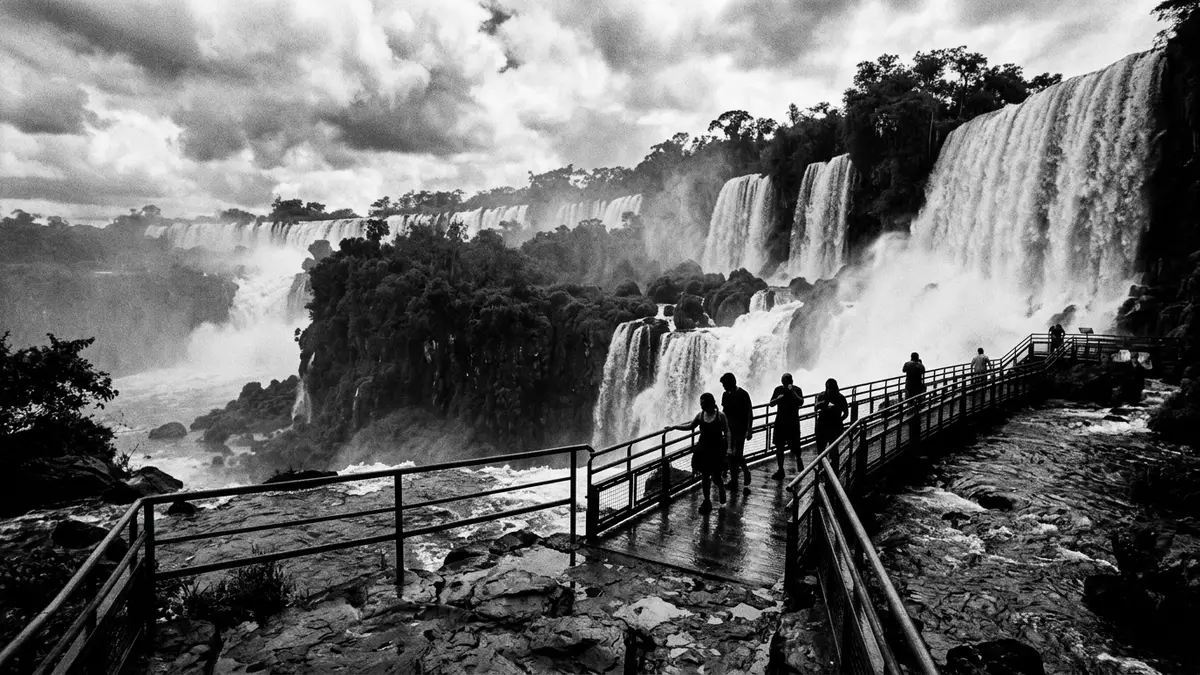
Cataratas do Iguacu, known in English as Iguazu Falls, form a sweeping front of waterfalls on the Iguacu River at the border between Brazil and Argentina near Foz do Iguacu in the state of Parana. The cascades occupy a basalt plateau protected on the Brazilian side inside Iguaçu National Park, a landscape where river, forest and rock meet in an intricate network of falling water.
A wide amphitheatre of falling water on the Iguacu River
Cataratas do Iguacu are part of the Iguacu River in southern Brazil and north-eastern Argentina, where the river drops from a basalt plateau into the valley of the Parana River. The waterfall front extends for roughly three kilometres along the river, forming a broad amphitheatre of cataracts that cut across the frontier between Parana State and Misiones Province.Across a width of almost three kilometres the Iguacu River drops vertically in a series of separate falls and rapids.
The waterfall system is made up of many individual drops, separated by islands and rocky ledges within the river channel. Together they form a curtain of water that narrows in places into a horseshoe-shaped central cataract, while elsewhere spreading into smaller parallel falls along the basalt edge.The central horseshoe cataract reaches around 72 m in height and extends for about 2,700 m, with sections of the waterfall system lying on both the Brazilian and Argentine sides of the frontier.
Iguaçu National Park and the Atlantic forest setting
On the Brazilian side, Cataratas do Iguacu lie inside Iguaçu National Park, a protected area in the far west of Parana State bordering Argentina across the Iguacu River.Iguaçu National Park was created by federal decree in 1939 and forms part of a wider belt of Atlantic forest that once covered large areas of southern and south-eastern Brazil.The park shares with Argentina’s Iguazu National Park one of the world’s largest waterfall systems within a remnant of highly endangered Atlantic forest, where dense vegetation reaches close to the riverbanks and escarpments.
The protected status of Iguaçu National Park reflects both its natural features and its biodiversity. The area around Cataratas do Iguacu includes subtropical forest with a mixture of broadleaf trees, vines and understorey plants, and provides habitat for a range of wildlife characteristic of the Atlantic forest region. The two parks on either side of the border, Brazilian Iguaçu and Argentine Iguazu, are recognised together as UNESCO World Heritage Sites inscribed in the 1980s under natural criteria for scenic value and conservation significance, giving Cataratas do Iguacu a formal place among major waterfall landscapes worldwide.Iguaçu National Park in Brazil was inscribed on the World Heritage List in 1986.
Foz do Iguacu and visiting the Brazilian side of the falls
The Brazilian gateway city for Cataratas do Iguacu is Foz do Iguacu, located in the far west of Parana State near the junction of the borders with Argentina and Paraguay.The municipality of Foz do Iguacu stands on the Brazilian side of the Iguacu River opposite the Argentine town of Puerto Iguazú, with roads from the urban area leading towards the park entrance on the riverward edge of the plateau.The administrator of Iguaçu National Park is based in Foz do Iguacu, underlining the city’s role as a hub for access and management.
Inside the Brazilian park, visitor infrastructure follows the river valley and the forest edge towards viewpoints that look across and down onto Cataratas do Iguacu. Walkways and viewing platforms provide vantage points over the series of waterfalls and the Iguacu River channel, while park roads link the entrance area with locations nearer the escarpment. From the Brazilian side, the broad sweep of the waterfall amphitheatre can be seen with the forest backdrop and with the line of the frontier following the course of the river through the falling water.
Visiting Cataratas do Iguacu: what travellers from Western Europe should know
- Cataratas do Iguacu lie near Foz do Iguacu in southern Brazil’s Parana State, with road access from the city towards the entrance of Iguaçu National Park on the Brazilian side.
- The terrain around the Brazilian viewpoints includes paved paths and sections with steps, and several lookout areas stand close to the escarpment above the Iguacu River.
- The Iguacu River forms the international border between Brazil and Argentina at Cataratas do Iguacu, with the Argentine side protected inside Iguazu National Park in Misiones Province.
- The official language is Portuguese and the currency is the Brazilian real.
- Entry requirements depend on your nationality; UK travellers can check the FCDO travel advice at gov.uk/foreign-travel-advice, Irish travellers the Department of Foreign Affairs at ireland.ie.
Searching for Cataratas do Iguacu on social platforms
These links open searches for Cataratas do Iguacu on each platform.
Frequently asked questions about Cataratas do Iguacu
Where are Cataratas do Iguacu?
Cataratas do Iguacu are on the Iguacu River at the frontier between Brazil’s Parana State and Argentina’s Misiones Province, near the Brazilian city of Foz do Iguacu.
What can visitors expect at Cataratas do Iguacu?
Visitors on the Brazilian side encounter a broad chain of waterfalls set within Iguaçu National Park, with forest surroundings, constructed viewpoints and paths overlooking the river gorge.
What makes Cataratas do Iguacu distinctive among waterfalls?
The falls are distinguished by their extensive amphitheatre-like layout, the number of separate cataracts within a single river system and their setting within protected Atlantic forest on an international frontier.


