
Castillo de los Tres Reyes del Morro and its harbour-facing walls
Published on 09/23/2026 at 08:54 | Editorial responsibility: Rafael Müller, Editor-in-Chief AD HOC NEWS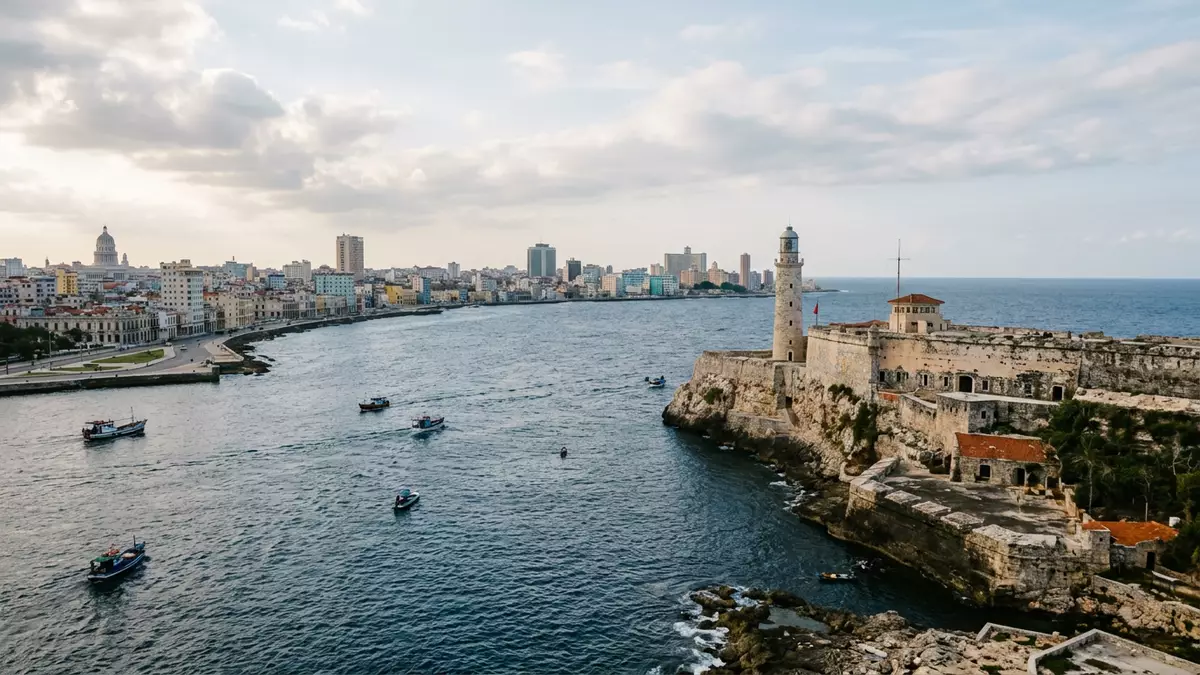
Castillo de los Tres Reyes del Morro occupies a rocky promontory at the entrance to Havana Bay. Its bastioned walls, sea-facing position and lighthouse form a powerful architectural composition, begun in 1589 under Philip II of Spain.
Castillo de los Tres Reyes del Morro above Havana Bay
The fortress rises across the water from Havana’s historic centre. Its walls follow the contours of the promontory, creating a broad military complex of ramps, terraces, parapets and angular bastions.
The site belongs to the Spanish colonial military architecture of the late sixteenth and early seventeenth centuries. Giovanni Battista Antonelli, an Italian engineer in Spanish service, is associated with its design. Italian engineer Battista Antonelli helped shape the fortress’s Renaissance military character.
From Philip II to the completed fortress
Construction began in 1589 during the reign of Philip II. Work continued into the early seventeenth century, and the fortress reached its completed form in 1630. Construction between 1589 and 1630 places Castillo de los Tres Reyes del Morro within the Spanish Empire’s fortified Caribbean ports.
The castle guarded the entrance to Havana’s harbour as part of a defensive system that included other fortifications around the bay. British forces captured Havana in 1762, and Spanish control returned under the Treaty of Paris in 1763. The fortress therefore carries a clear record of imperial rivalry in the Caribbean.
A lighthouse above Renaissance fortification
The lighthouse gives the fortress its most recognisable vertical feature. A lighthouse was installed at the castle in 1845, adding a maritime function to the heavy walls and watch positions of the military complex.
From the promontory, the fortress presents two distinct faces. Landward walls, moats and bastions express defensive architecture, while the lighthouse and open sea connect the site with Havana’s harbour history. The lighthouse installed in 1845 remains part of the castle’s visual identity.
Visiting Castillo de los Tres Reyes del Morro: what travellers from Western Europe should know
- Castillo de los Tres Reyes del Morro stands east of Havana’s historic centre, across the entrance to Havana Bay. Road transport reaches the promontory, and the site forms part of the Morro-Cabaña military complex.
- The fortress occupies elevated rocky ground. The approach includes sloping paths, masonry surfaces and historic defensive spaces arranged across different levels.
- The official language is Spanish and the currency is the Cuban peso.
Searching for Castillo de los Tres Reyes del Morro on social platforms
These links open searches for Castillo de los Tres Reyes del Morro on each platform.
Frequently asked questions about Castillo de los Tres Reyes del Morro
Where is Castillo de los Tres Reyes del Morro?
The fortress stands on a rocky promontory at the entrance to Havana Bay, across the water from Havana’s historic centre.
What can visitors expect at the fortress?
Visitors encounter bastioned walls, moats, ramps, terraces, maritime views and historic military spaces arranged across elevated ground.
What makes the castle distinctive?
Its Renaissance fortification and 1845 lighthouse occupy the same harbour-facing promontory, combining military architecture with a lasting maritime landmark.


