
Castillo de los Tres Reyes del Morro above Havana’s harbour channel
Published on 09/17/2026 at 15:59 | Editorial responsibility: Rafael Müller, Editor-in-Chief AD HOC NEWS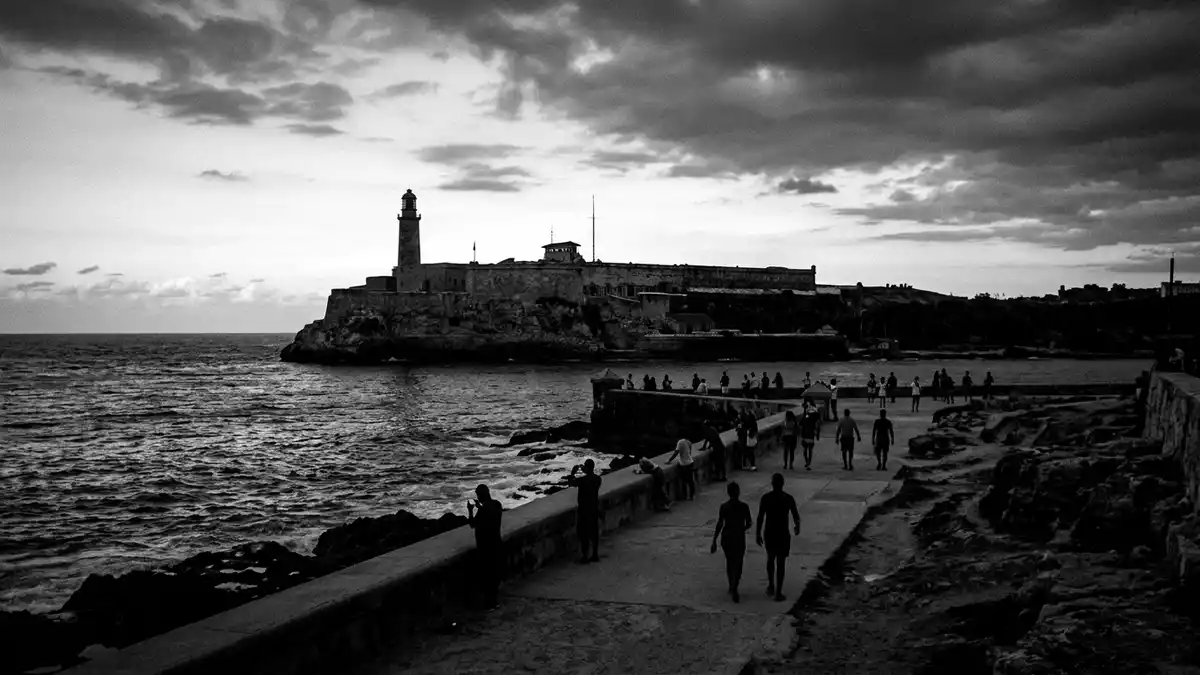
Castillo de los Tres Reyes del Morro is the stone fortress that commands the narrow entrance to Havana Bay, rising on the rock known as El Morro above the harbour channel of Havanna. Built under Spanish rule in the late sixteenth and early seventeenth century and attributed to the Italian military engineer Giovanni Battista Antonelli, it anchors Havana’s historic skyline with its bastioned walls and lighthouse.
Castillo de los Tres Reyes del Morro on the rock of El Morro
The fortress occupies a rocky promontory on the eastern side of the mouth of Havana harbour, facing the city across the water and controlling the main channel into the bay.Havana harbor The headland beneath it gives the site its short name “El Morro”, and the stone mass of the fort and lighthouse is visible from many points along the seafront. From the ramparts and terraces the view takes in the curve of the Malecón, the entrance channel and the spread of central Havana behind.
The structure forms part of the Morro-Cabaña military historic complex, together with the nearby San Carlos de la Cabaña fortress on the opposite side of the entrance channel.Morro-Cabaña Military Historic Park Its position at the harbour mouth made it a key element in the defensive ring of walls, batteries and forts that once encircled colonial Havana, and the rocky coastal setting still defines the experience of the place.
Spanish imperial fortress from the late sixteenth century
Castillo de los Tres Reyes del Morro was laid out in the late sixteenth century during the period when Havana became a principal gathering port for the Spanish treasure fleets crossing the Atlantic.Spanish colonial military architecture Construction began under King Philip II of Spain in 1589 and continued into the early decades of the seventeenth century, giving the fortress a late Renaissance military character with angular bastions and thick stone walls.constructed between 1589 and 1640 The full name, referring to the Three Kings, connects the site with the Magi of Christian tradition, who are the patrons of its chapel.
The design is attributed to Giovanni Battista Antonelli, an Italian military engineer working for the Spanish crown who prepared plans for several Caribbean fortifications.Bautista Antonelli The fortress was part of a wider Atlantic defence system intended to protect ships laden with gold, silver and other cargo passing through Havana. Its stone batteries and elevated position allowed artillery to cover the entrance channel and work together with other forts and harbour installations.
Walls, lighthouse and maritime museum
The plan of Castillo de los Tres Reyes del Morro follows the style of a bastioned fortress, with angular projecting works facing the sea and land, a deep ditch and thick masonry walls built of stone from the region.obra abaluartada Inside, barracks, magazines, a chapel and circulation routes are arranged around courtyards and along the inner sides of the ramparts. The sea-facing batteries look directly onto the channel that leads into the harbour, while landward defences were designed to resist attacks from the surrounding hills.
In the nineteenth century a lighthouse was added next to the fortress, giving the complex the familiar silhouette of a vertical tower rising beside the horizontal mass of the bastions.lighthouse added in 1844 In its present form Castillo de los Tres Reyes del Morro functions as a museum and heritage site, integrated into the Morro-Cabaña historic park and housing maritime and military displays in former casemates and rooms.fortification currently houses the Maritime Museum The stone pavements, gun positions and lookout points provide vantage points over the bay and illustrate the scale of Spanish colonial fortification in the Caribbean.
Visiting Castillo de los Tres Reyes del Morro: what travellers from Western Europe should know
- Castillo de los Tres Reyes del Morro stands on the eastern side of the entrance to Havana Bay, opposite central Havanna and reached across the harbour channel by road or tunnel.
- The fortress sits on a rocky headland above the sea, and visiting the ramparts and inner courtyards involves walking across uneven stone surfaces and climbing stairways.
- Castillo de los Tres Reyes del Morro lies near the San Carlos de la Cabaña fortress within the Morro-Cabaña military historic park, so the wider complex can be explored on the same visit.
- Cuba’s official language is Spanish and the currency is the Cuban peso.
- Entry requirements depend on your nationality; UK travellers can check the FCDO travel advice at gov.uk/foreign-travel-advice, Irish travellers the Department of Foreign Affairs at ireland.ie.
Searching for Castillo de los Tres Reyes del Morro on social platforms
These links open searches for Castillo de los Tres Reyes del Morro on each platform.Frequently asked questions about Castillo de los Tres Reyes del Morro
Where is Castillo de los Tres Reyes del Morro located?
Castillo de los Tres Reyes del Morro stands on the eastern side of the entrance to Havana Bay in Cuba, opposite central Havanna and guarding the harbour channel.
What can visitors expect at Castillo de los Tres Reyes del Morro?
Visitors encounter a Spanish colonial stone fortress with bastioned walls, a lighthouse tower, inner courtyards and exhibitions on maritime and military history within the Morro-Cabaña historic complex.
What makes Castillo de los Tres Reyes del Morro distinctive among Havana’s landmarks?
Its combination of late sixteenth-century Spanish defensive architecture, the rocky headland of El Morro and the later lighthouse gives Castillo de los Tres Reyes del Morro a defining profile at the entrance to Havana harbour.


