
Castillo de los Tres Reyes del Morro above Havana’s harbour channel
Published on 09/14/2026 at 07:41 | Editorial responsibility: Rafael Müller, Editor-in-Chief AD HOC NEWS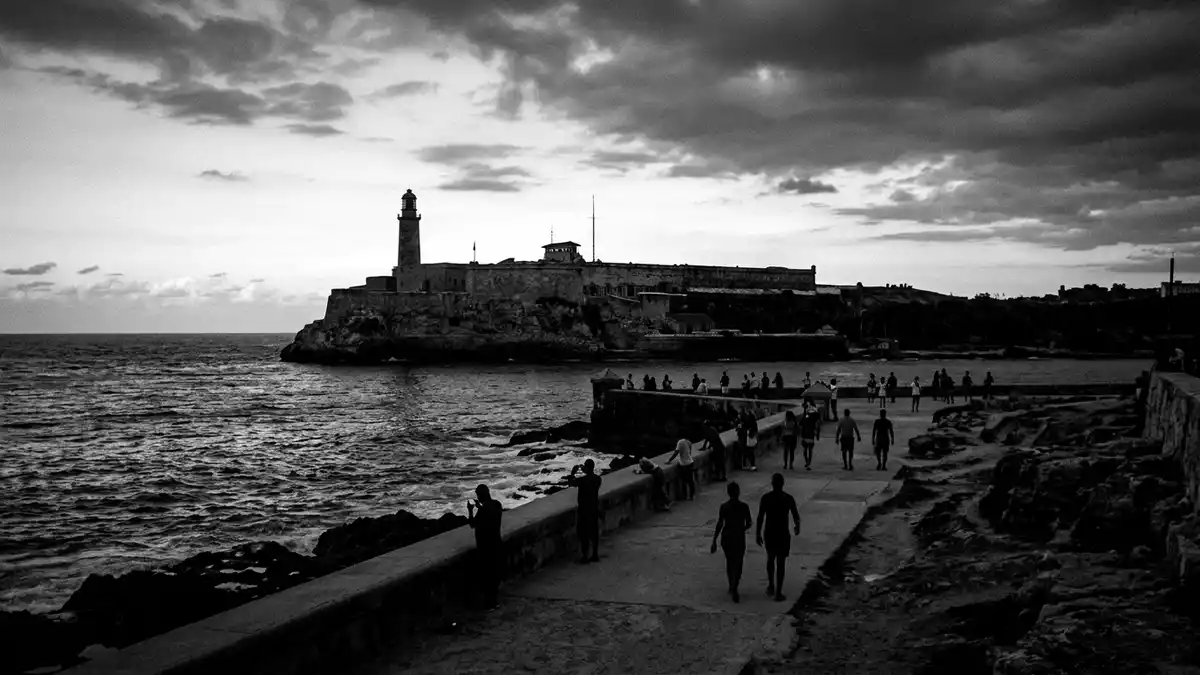
Castillo de los Tres Reyes del Morro in Havanna is the stone fortress that commands the narrow entrance to Havana Bay, rising on the rocky headland known as El Morro above the harbour channel. Built under Spanish rule between the late sixteenth and early seventeenth centuries and attributed to the Italian military engineer Giovanni Battista Antonelli, it anchors the historic skyline with bastioned walls, a lighthouse and views out over the Caribbean Sea.Built between 1589 and 1630
Stone ramparts on the rock of El Morro
The Castillo de los Tres Reyes del Morro occupies a rocky promontory at the mouth of the channel giving access to Havana Bay, a position that places masonry directly above the waterline and gives uninterrupted views towards the open sea.The fortress rises on a rocky promontory The exterior walls follow the contours of the rock, creating an outline that blends cut stone with natural elevations along the eastern side of the harbour entrance.Exterior walls blend with massive rocks
Approaching Castillo de los Tres Reyes del Morro from the city across the bay, the fortress appears as a layered composition of seaward ramparts, inner courtyards and defensive platforms climbing the rock. The stone faces are thick and relatively low compared with later fortifications, reflecting late Renaissance military architecture and the need to withstand artillery fire from ships. Looking back from the ramparts, Havana’s colonial core and later city districts spread around the bay, framed by the lighthouse that marks the harbour channel.The fortress guards the entrance to Havana harbour
From Spanish imperial stronghold to historic complex
Castillo de los Tres Reyes del Morro was conceived as part of the Spanish Empire’s Atlantic defence system when Havana developed into a key port for treasure fleets crossing from the Americas to Europe.Havana was a main gathering port for Spanish treasure fleets Construction began under the reign of Philip II of Spain around 1589 and extended into the early decades of the seventeenth century, giving the fortress its late sixteenth- and early seventeenth-century character.Construction began in 1589 under Philip II
In 1762, during the Seven Years’ War, Castillo de los Tres Reyes del Morro was taken by British forces after a prolonged siege, an episode that led to the occupation of Havana and ended with the Treaty of Paris in 1763.The fortress was taken by the British in 1762 Throughout the colonial period the fortress also functioned as a prison and as a key strong point in the wider defensive complex that protected the harbour and the city.El Morro functioned as a prison and strong-point In its present form Castillo de los Tres Reyes del Morro is integrated into the Morro-Cabaña military historic park and serves as a heritage site with museums focusing on maritime and military history.It forms part of the Parque Histórico Militar Morro-Cabaña
Lighthouse, courtyards and harbour views
The lighthouse added in the nineteenth century dominates the silhouette of Castillo de los Tres Reyes del Morro and is visible from a considerable distance out at sea.A lighthouse was added in 1844 Its vertical form rises above the lower mass of the ramparts, marking the harbour entrance and serving as a reference point for ships approaching the bay. Within the fortress, stone courtyards, galleries and gun platforms reveal the organisation of a colonial-era defensive work laid out to control naval traffic.
Visitors encounter the thick walls, embrasures and cannon placements that reflect late sixteenth- and early seventeenth-century military technology, along with interior spaces adapted for exhibitions about Havana’s maritime routes and conflicts. From the upper levels and the lighthouse surroundings, wide views open across the bay towards the colonial centre of Havanna and along the coastline, underlining the strategic siting of Castillo de los Tres Reyes del Morro at the threshold between city and sea.The castle’s elevated position provides views over the bay
Visiting Castillo de los Tres Reyes del Morro: what travellers from Western Europe should know
- Castillo de los Tres Reyes del Morro stands on the eastern side of the entrance to Havana Bay, opposite the colonial centre of Havanna, and is reached by road routes that loop around the harbour.
- The fortress occupies a rocky headland above the sea, with sloping approaches and stone steps inside the walls connecting different levels and ramparts.
- The official language is Spanish and the currency is the Cuban peso.
- Entry requirements depend on your nationality; UK travellers can check the FCDO travel advice at gov.uk/foreign-travel-advice, Irish travellers the Department of Foreign Affairs at ireland.ie.
Searching for Castillo de los Tres Reyes del Morro on social platforms
These links open searches for Castillo de los Tres Reyes del Morro on each platform.
Frequently asked questions about Castillo de los Tres Reyes del Morro
Where is Castillo de los Tres Reyes del Morro located?
Castillo de los Tres Reyes del Morro stands on the eastern side of the entrance to Havana Bay in Havanna, Cuba, on the rocky headland known as El Morro.
What can visitors expect when exploring the fortress?
Visitors encounter thick stone ramparts, inner courtyards and defensive platforms, together with museum spaces and wide views across the harbour towards the colonial centre of the city.
What makes Castillo de los Tres Reyes del Morro distinctive among Havana’s landmarks?
Its combination of late sixteenth- and early seventeenth-century bastioned walls, the prominent lighthouse and its commanding position above the harbour channel gives Castillo de los Tres Reyes del Morro a defining role in Havana’s historic skyline.


