
Castelvecchio, Verona’s fortress turned art museum
Published on 09/16/2026 at 14:45 | Editorial responsibility: Rafael Müller, Editor-in-Chief AD HOC NEWS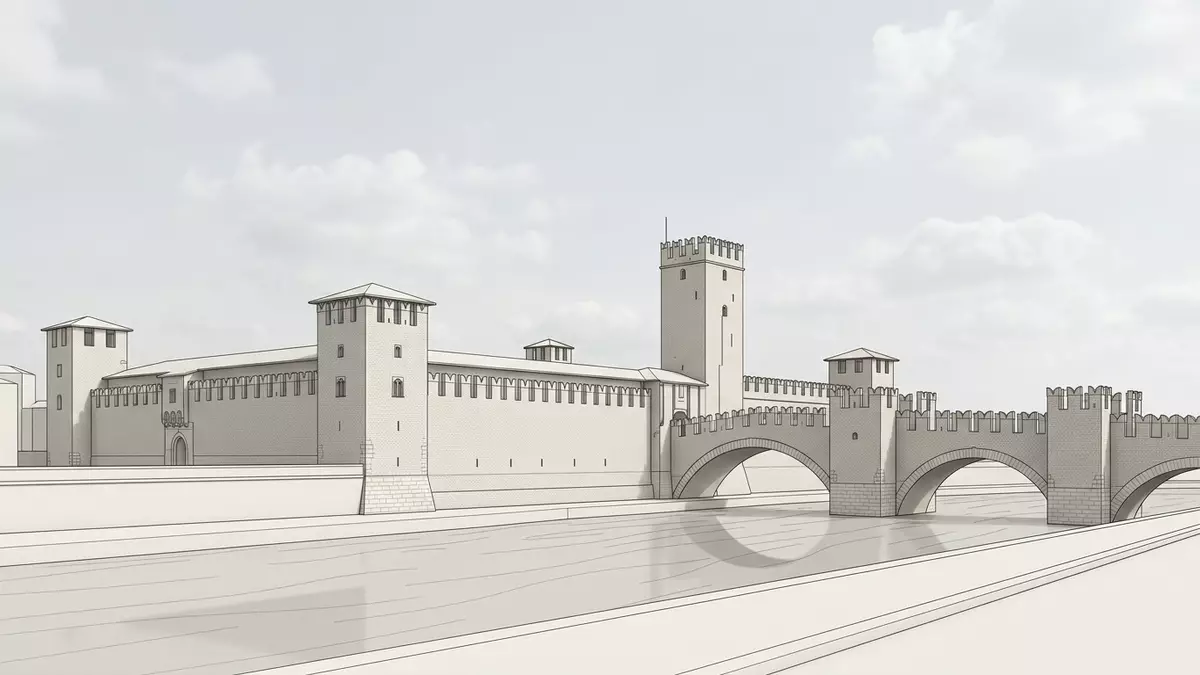
Castelvecchio in Verona is a medieval fortress on the right bank of the Adige River that has become the city’s principal civic art museum. Built under Cangrande II della Scala in the mid-fourteenth century, the castle’s brick ramparts and towers now frame galleries redesigned in the twentieth century by architect Carlo Scarpa, bringing centuries of Veronese history into one fortified complex.
A Scaliger stronghold on the Adige
Castelvecchio is the most significant military construction associated with the Scaliger, or Della Scala, dynasty, which governed Verona from 1262 to 1387 and reshaped the city’s fortifications along the Adige.Scaliger dynasty The fortress was built between 1354 and 1356 on the northern edge of the medieval city, under the rule of Cangrande II della Scala, who ordered a new walled compound facing the river.built between 1354 and 1356
The castle incorporates existing city walls and stands beside the fortified bridge known as the Scaliger Bridge, which carries battlements across the Adige and links the stronghold to the opposite bank.Scaliger Bridge across the Adige Within the perimeter, towers rise above inner courtyards and ranges of masonry buildings once used as barracks, armouries and stables. The ramparts and keep formed a defensive system controlling river crossings and access routes to Verona, giving Castelvecchio a strategic position as a military base rather than only a residence.
From fortress to civic museum
For centuries Castelvecchio served purely military purposes, including use as a weapons and munitions warehouse and, in the eighteenth century, as a Venetian military academy.military warehouse and academy In the nineteenth and early twentieth centuries it continued to house army facilities under French and Austrian administrations, with the robust stone and brick architecture adapted to changing garrisons while retaining its defensive character.
A civic transformation began in the 1920s, when Castelvecchio became the seat of Verona’s Civic Museum, hosting collections of local art inside the medieval walls.transformed into a civic museum in 1923 The museum presents sculpture, painting and objects from the Middle Ages through the eighteenth century, with works by Veronese and other Italian artists, as well as archaeological finds, ceramics, metalwork and historic city bells gathered in a sequence of rooms that still show traces of the fortress’s earlier use.collections of medieval to modern art
Carlo Scarpa’s layered architecture and displays
Between the late 1950s and the 1970s, architect Carlo Scarpa developed a widely admired renovation of the museum spaces, collaborating with director Licisco Magagnato to reconfigure how artworks interact with the historic structure.collaboration between Carlo Scarpa and Licisco Magagnato Scarpa’s project introduced carefully detailed walkways, staircases and display supports that sit within the existing stone and brick walls, framing sculptures and paintings while leaving views to battlements, towers and the inner courts.
Inside Castelvecchio, the galleries unfold through twenty-nine rooms, where medieval sculpture, Renaissance altarpieces and eighteenth-century canvases are set on plinths, panels and brackets designed as part of the building rather than separate furnishings.twenty-nine museum rooms Scarpa’s interventions include openings cut through existing walls, suspended stair flights and precisely aligned metal fittings that guide movement between halls, courtyards and the bridge, making Castelvecchio an example of a medieval fortress adapted into an exhibition structure without losing its layered masonry and fortified character.
Visiting Castelvecchio: what travellers from Western Europe should know
- Castelvecchio stands on the right bank of the Adige River along Corso Castelvecchio in central Verona, close to Corso Cavour and within walking distance of Piazza Bra and the Arena.
- Inside the fortress, movement between the museum rooms includes staircases and uneven stone floors, and access to the bridge involves outdoor walks along ramparts exposed to the weather.
- The official language is Italian and the currency is the euro.
- Verona’s main railway station, Verona Porta Nuova, lies south-west of Castelvecchio, with city streets linking the station area to the castle and its museum along the Adige.
Searching for Castelvecchio on social platforms
These links open searches for Castelvecchio on each platform.
Frequently asked questions about Castelvecchio
Where is Castelvecchio in Verona?
Castelvecchio is a medieval castle on the right bank of the Adige River along Corso Castelvecchio, close to Corso Cavour in central Verona.
What can visitors expect inside Castelvecchio?
Visitors encounter museum rooms arranged through a fortress of towers, courtyards and ramparts, with collections of sculpture, painting and historic objects presented within the stone and brick architecture.
What makes Castelvecchio distinctive among Veronese sites?
Castelvecchio combines a fourteenth-century Scaliger military complex and the fortified Scaliger Bridge with Carlo Scarpa’s twentieth-century museum design, uniting defensive walls and curated art displays in one riverside landmark.


