
Castelvecchio in Verona, a brick fortress turned art museum
Published on 09/04/2026 at 06:38 | Editorial responsibility: Rafael Müller, Editor-in-Chief AD HOC NEWS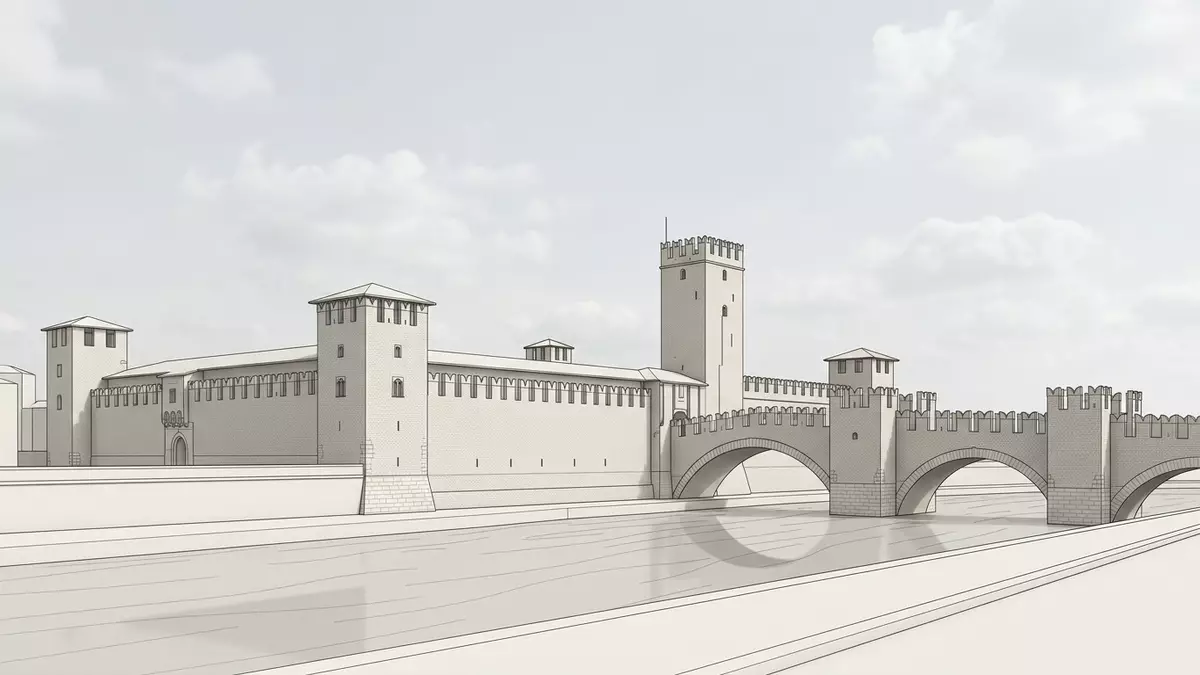
Castelvecchio in Verona is a medieval brick fortress on the Adige River that has become one of the city’s central places for art and architecture, combining Scaliger power with twentieth?century museum design. Built in the fourteenth century and later transformed into a civic museum, it offers a rare chance to walk through a fortified castle while viewing paintings and sculpture from the Middle Ages to the eighteenth century.
A Scaliger stronghold on the Adige
Castelvecchio stands on the western edge of Verona’s historic centre, facing the Adige along Corso Castelvecchio and anchored in brick and stone walls that still read clearly as a fortress. The castle’s name, meaning “old castle”, distinguishes it from later strongholds in the city and underlines its position as one of Verona’s major medieval landmarks.The Castelvecchio name reflects its role as a principal civil and military structure of the Middle Ages.
Construction of Castelvecchio began in 1354 and was completed in 1356 under the rule of Cangrande II della Scala, part of the Della Scala dynasty that controlled Verona in the fourteenth century.The fortress was built between 1354 and 1356 by Cangrande II della Scala, embedding his authority in a rectangular complex with towers and a high keep. The Scaliger Bridge, also known as the Castelvecchio Bridge, projects from the castle across the Adige as part of the same defensive system, forming a brick?arched link to the opposite bank.The Castelvecchio Bridge remains one of the most recognisable medieval structures in Verona.
From fortress to civic art museum
For centuries Castelvecchio served as a military installation under successive regimes, including Venetian, French and Austrian control, with its towers and barracks integrated into wider defensive networks around Verona.The castle’s long military use left a layered interior of courtyards, circulation routes and service spaces. In the twentieth century the municipality reshaped this fortified fabric into a museum dedicated to Veronese art and sculpture, giving the building a cultural role alongside its historical one.
Castelvecchio has housed a civic museum since 1923, with galleries that bring together paintings, sculpture, weapons, ceramics and other works from the Middle Ages to the eighteenth century.The fortress has served as a museum since 1923, turning its halls into exhibition spaces. The collection includes Italian and foreign paintings and medieval sculpture, and the layout follows a broadly chronological route through numerous rooms.The Castelvecchio Museum displays medieval, Renaissance and early modern works, aligning the castle’s military past with the artistic history of Verona and the Veneto.
Carlo Scarpa’s modern intervention
Between 1958 and 1974 the Venetian architect Carlo Scarpa carried out a far?reaching refurbishment of Castelvecchio, reworking the interiors and courtyards to accommodate art while respecting the medieval fabric.Carlo Scarpa’s restoration from 1958 to 1974 is widely studied in architectural history for the way it stages artworks within the fortress. Scarpa introduced carefully detailed walkways, display plinths and openings that frame views of both the collection and the surrounding city, embedding modern design elements into the brick and stone shell.
Castelvecchio’s present form combines the original fourteenth?century defensive layout, the twentieth?century museum programme and Scarpa’s interventions into a single spatial experience. Visitors move through courtyards, tower bases and galleries where Gothic sculpture, Renaissance painting and Scarpa’s concrete and metal details share the same sequence. The dialogue between the rough medieval walls and precise modern insertions has made Castelvecchio a reference point in discussions of museum architecture.The museum design by Carlo Scarpa is frequently highlighted as a key work of twentieth?century museology.
Visiting Castelvecchio: what travellers from Western Europe should know
- Castelvecchio stands along Corso Castelvecchio on the western side of Verona’s historic centre, beside the Adige River and linked to the opposite bank by the Castelvecchio Bridge.
- The fortress includes courtyards, interior staircases and tower levels, with stone paving and uneven surfaces that require steady footing as visitors move between the exhibition spaces.
- Verona lies in northern Italy; the official language is Italian and the currency is the euro.
Searching for Castelvecchio on social platforms
These links open searches for Castelvecchio on each platform.Frequently asked questions about Castelvecchio
Where is Castelvecchio located in Verona?
Castelvecchio stands beside the Adige River along Corso Castelvecchio on the western edge of Verona’s historic centre, close to the Castelvecchio Bridge.
What can visitors expect inside Castelvecchio?
Visitors encounter a sequence of courtyards, towers and galleries that house the city’s civic art museum, with works ranging from medieval sculpture to Renaissance and early modern painting.
What makes Castelvecchio distinctive among Italian castles?
Castelvecchio combines a fourteenth?century Scaliger fortress, a civic art museum established in 1923 and Carlo Scarpa’s mid?twentieth?century refurbishment, making its architecture and collection inseparable.


