Castelvecchio and the layered castle of Verona
Published on 09/12/2026 at 06:57 | Editorial responsibility: Rafael Müller, Editor-in-Chief AD HOC NEWS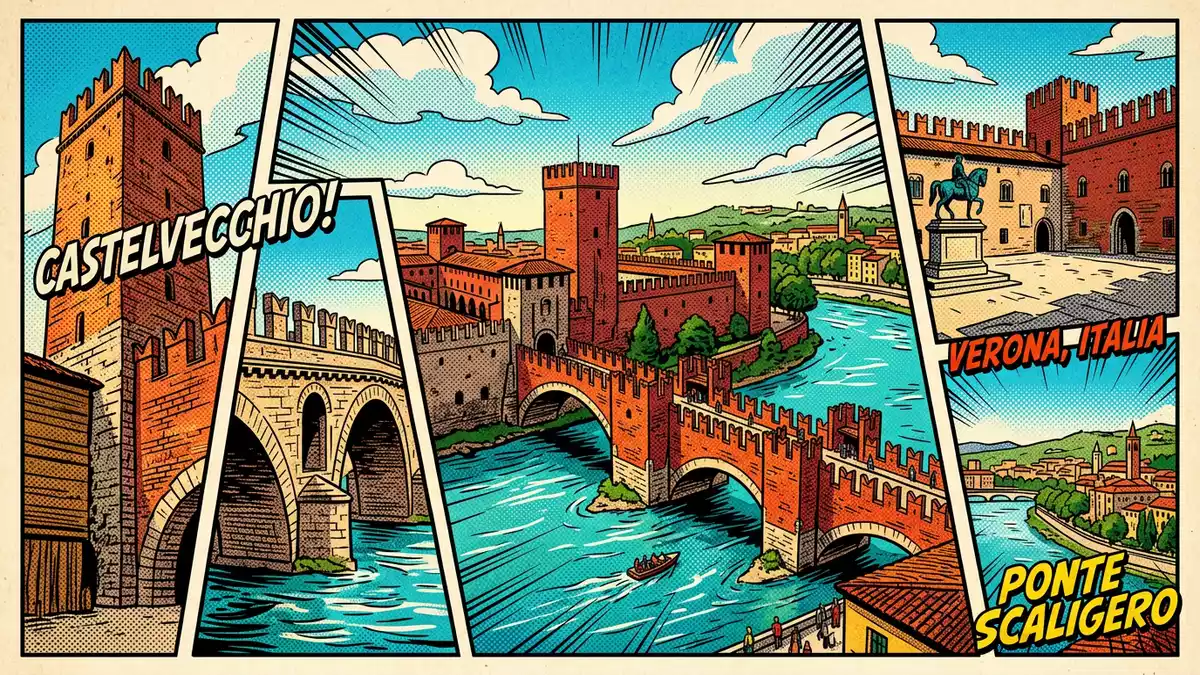
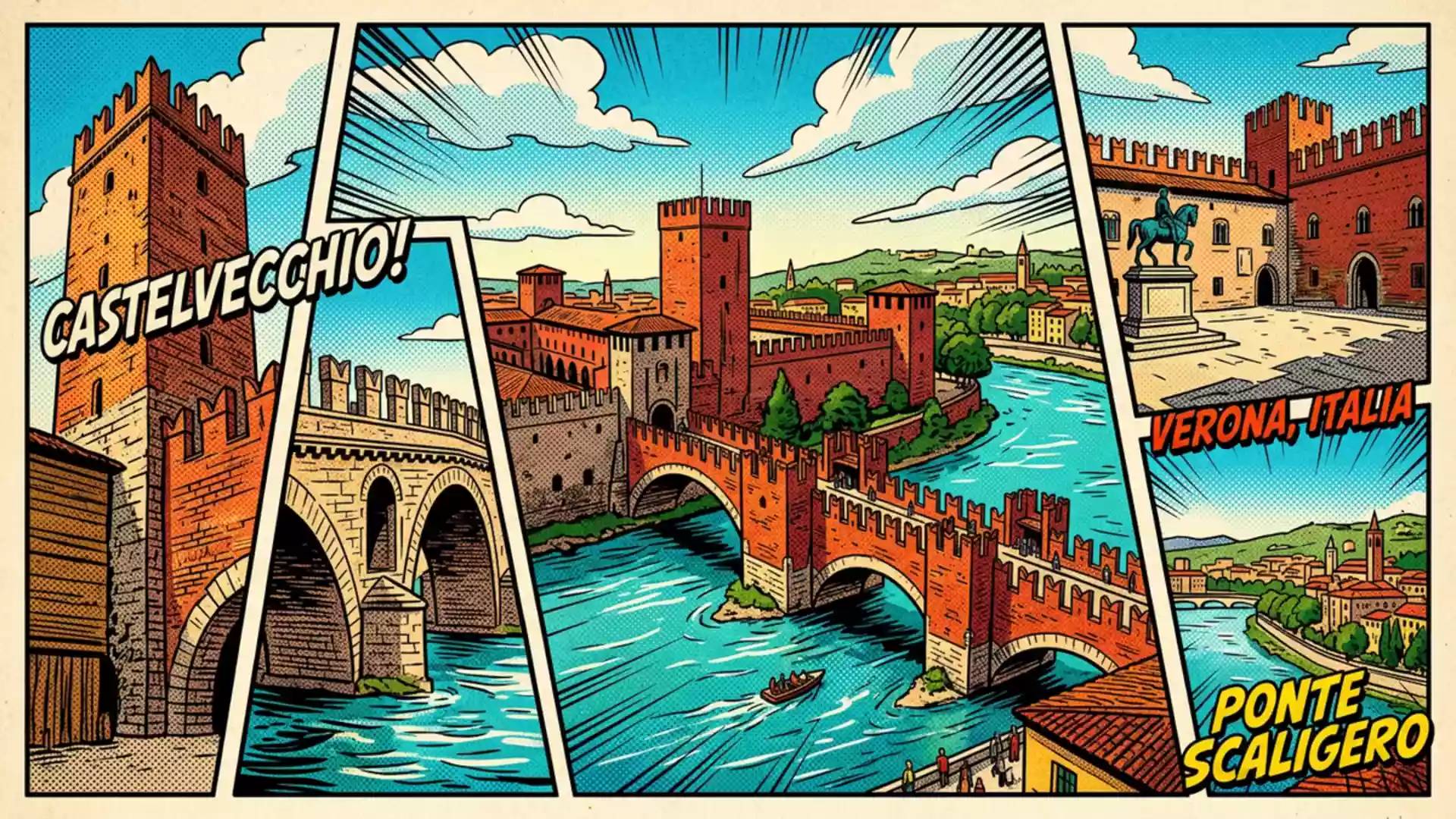
Castelvecchio in Verona is a fourteenth-century fortress by the Della Scala dynasty, with the Adige and Ponte Scaligero among its clearest landmarks. Its brick mass, towers and bridge make the city’s medieval power visible in one compact place.
The Scaliger fortress on the Adige
Castelvecchio was commissioned by Cangrande II della Scala and built in the mid-fourteenth century, with 1354 as the main starting date. The fortress belongs to the world of Scaliger Verona, when the Della Scala family shaped the city’s politics and skyline.
The building sits by the river and keeps a strongly defensive profile. Brick walls, crenellations and towers dominate the outer face, while the bridge extends that fortified language across the Adige.
Scarpa’s museum inside a medieval shell
Inside, the castle has a second life as the Castelvecchio Museum, which brings together Verona’s art and objects in rooms set within the old structure. The museum arrangement is closely associated with Carlo Scarpa, whose twentieth-century intervention made the interior part of the place’s identity.
The contrast between medieval masonry and Scarpa’s modern display forms the most distinctive part of the visit. Paintings, sculpture and weapons share the fortress with stairways, passages and carefully framed views through the building.
Ponte Scaligero and the river edge
The Ponte Scaligero is the companion structure most closely tied to Castelvecchio. Its red brick arches and battlements continue the castle’s language across the water and reinforce the fortress’s relationship with the river edge.
From the riverbank, the complex reads as a connected whole rather than a single block. The bridge, the towers and the main castle body give Verona one of its strongest surviving medieval ensembles.
Visiting Castelvecchio: what travellers from Western Europe should know
- The castle stands on Corso Castelvecchio in Verona, close to the Adige and within the historic centre. Urban buses and walking routes from the railway station reach the area.
- The site includes towers, bridges and masonry passages, so the terrain is vertical in places. Staircases and bridge-level changes are part of the experience.
- The official language is Italian and the currency is the euro.
- Castelvecchio combines a fortress, a bridge and a museum in one connected complex. The bridge and the brick walls are especially important to the overall reading of the place.
Searching for Castelvecchio on social platforms
These links open searches for Castelvecchio on each platform.
Frequently asked questions about Castelvecchio
Where is Castelvecchio?
Castelvecchio stands in Verona, on the edge of the historic centre near the Adige. Corso Castelvecchio is the main address associated with the complex.
What does a visit involve?
The place combines fortress architecture with museum rooms, bridge views and river-side masonry. Visitors encounter a building that reads as both military architecture and an art museum.
What makes Castelvecchio distinctive?
The mix of Scaliger brickwork, the bridge and Carlo Scarpa’s museum setting gives the complex its character. Medieval structure and modern display sit together inside one connected ensemble.