
Castelul Peles in Sinaia, a Neo-Renaissance royal mountain residence
Published on 09/07/2026 at 07:28 | Editorial responsibility: Rafael Müller, Editor-in-Chief AD HOC NEWS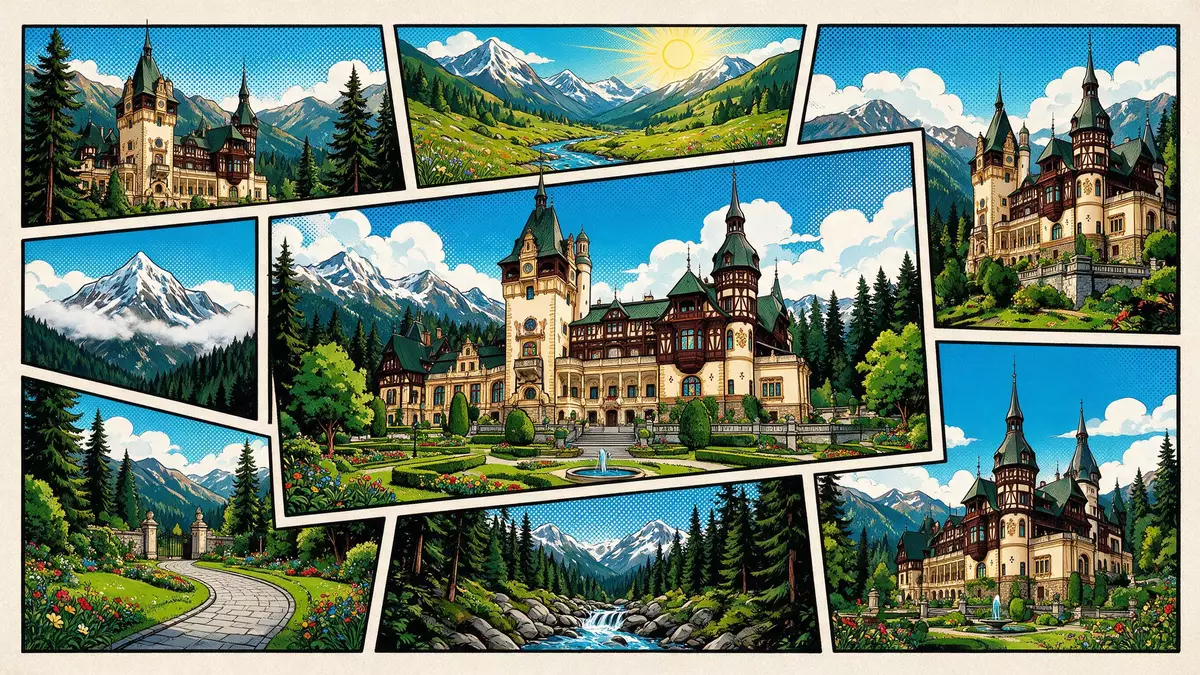
Castelul Peles in Sinaia is a Neo-Renaissance royal residence on a wooded slope of the Carpathian Mountains in Romania, combining elaborate architecture with a mountain landscape. Commissioned by King Carol I of Romania in the nineteenth century, it was built as a summer residence for the royal family and later became Muzeul National Peles, the National Peles Museum, housed in the same palace.
A royal palace raised in the Carpathians
Castelul Peles sits above Sinaia in Prahova County, on the historic route between Wallachia and Transylvania, with the forested Bucegi Mountains forming its backdrop.Royal Domain of Sinaia The building programme began in 1873 under Carol I, Romania’s first king, who chose the site within an existing royal estate at a time when railways were pushing into the mountain valleys.Prahova Valley residence The foundation stone was laid in the mid-1870s and an inaugural celebration for the castle took place in 1883, marking the completion of its first major phase of construction.foundation stone and inauguration
The overall palace reached its completed form in the early twentieth century, with work extending up to 1914 to refine the roofs, towers and interior suites.construction 1873–1914 During the decades of the Romanian monarchy, Castelul Peles served as an official summer residence where royal councils and diplomatic gatherings took place in the mountain air.royal state residence After the monarchy was abolished in 1947, the palace passed to state control and in the 1950s it became a museum, opening its richly furnished rooms and corridors to visitors.
Neo-Renaissance facades and a layered architectural history
Architecturally, Castelul Peles is rooted in German Neo-Renaissance, with steeply pitched roofs, towers and timber framing rising above stone walls on several levels.German Neo-Renaissance architecture The exterior composition combines masonry bases inspired by Italian Renaissance palaces with upper sections that make extensive use of carved wood, balconies and projecting bays.German and Italian styles Decorative details include coats of arms, sculpted figures on the facades and painted panels set into the timberwork, all arranged around courtyards and terraces that step with the slope.
The castle’s architectural lineage reflects several hands. Early plans were prepared by the Viennese architect Wilhelm von Doderer, followed by major work by the German architect Johannes Schultz, who shaped the first main body of the palace.Doderer and Schultz as architects Later extensions and rooflines were overseen by the Czech architect Karel Liman, while Charles Lecomte du Nouy contributed to elements of the decoration, bringing in further sculptors, painters and artisans.second construction phase under Liman The resulting ensemble has an irregular silhouette, with towers, chimneys and galleries framing views towards the mountains and down over the Prahova Valley.
Interiors layered with European styles and museum collections
Inside Castelul Peles, the decorative programme ranges across European historical styles, from German and Italian Renaissance wood panelling to Rococo, Baroque and Moorish-influenced halls.varied interior styles Visitors encounter corridors lined with carved timber, grand staircases, stained glass and ceilings studded with sculpted ornament, all arranged around thematic rooms that once hosted royal receptions. The museum collections include paintings, armour, textiles and decorative arts assembled during the reigns of Carol I and his successors, displayed in situ in salons, studies and galleries.royal summer residence and museum
Castelul Peles was an early adopter of technical modernity, incorporating electricity and central heating systems into its historicist setting.electric and heating systems Accounts of the building’s scale describe a palace with hundreds of rooms and suites, including grand halls, more intimate studies, and specialised spaces such as libraries and themed salons.room count and features Together the architecture and interiors give Muzeul National Peles the character of a lived-in royal residence preserved in place, combining mountain views with intricate craftsmanship.
Visiting Castelul Peles: what travellers from Western Europe should know
- Castelul Peles stands above the town of Sinaia in Prahova County in southern Romania, reached from the town by roads that climb into the Royal Domain on the mountain slope.
- The approach to the palace includes walking on inclined paths and stairways through landscaped grounds, with several level changes between the town, terraces and castle entrances.
- The castle lies within the Carpathian mountain environment, where weather can change quickly; surrounding forest, altitude and the open terraces give the site a marked seasonal character.
- Romania’s official language is Romanian and the currency is the Romanian leu.
- Entry requirements depend on your nationality; UK travellers can check the FCDO travel advice at gov.uk/foreign-travel-advice, Irish travellers the Department of Foreign Affairs at ireland.ie.
Searching for Castelul Peles on social platforms
These links open searches for Castelul Peles on each platform.Frequently asked questions about Castelul Peles
Where is Castelul Peles located?
Castelul Peles is in Sinaia in Prahova County, on the Royal Domain in the Carpathian Mountains of southern Romania, above the Prahova Valley.
What can visitors expect on a visit to Castelul Peles?
Visitors encounter a Neo-Renaissance palace with richly decorated interiors, landscaped terraces and mountain views, now organised as Muzeul National Peles, the National Peles Museum.
What makes Castelul Peles distinctive among European palaces?
The combination of German Neo-Renaissance architecture, layered European interior styles and its setting on a forested mountain slope gives Castelul Peles a distinctive character among royal residences.


