
Castel Sant'Angelo in Rom: from imperial tomb to layered fortress
Published on 09/08/2026 at 22:19 | Editorial responsibility: Rafael Müller, Editor-in-Chief AD HOC NEWS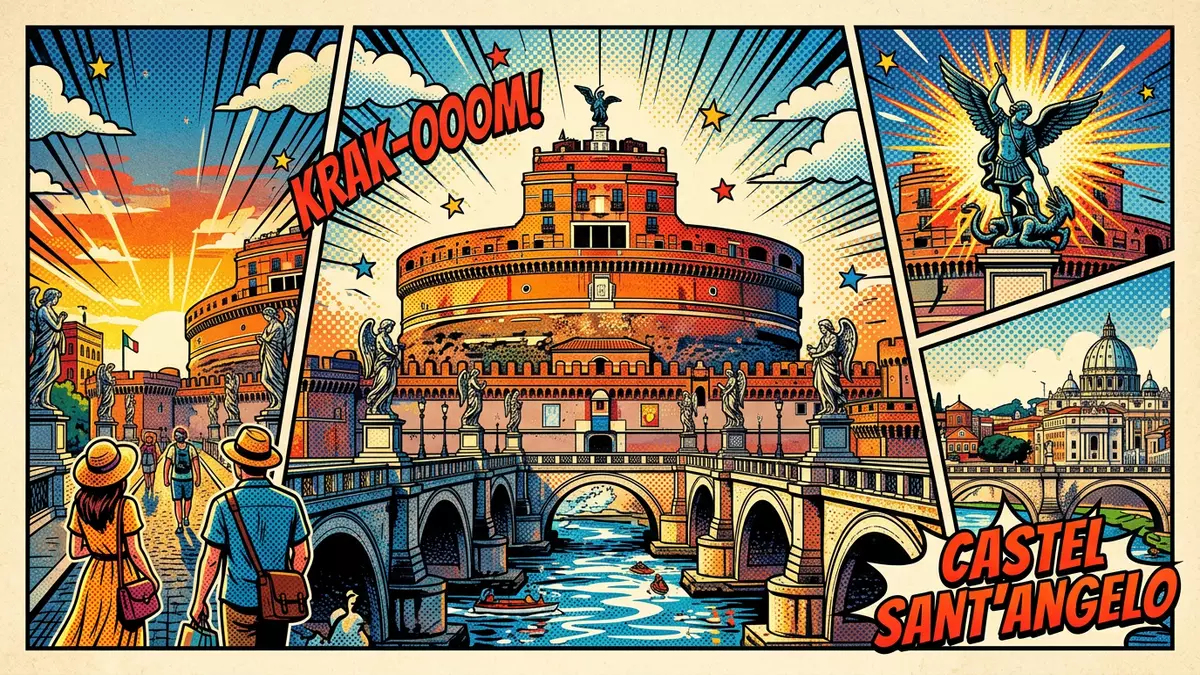
Castel Sant'Angelo in Rom is an ancient imperial mausoleum turned fortress and museum, where a massive circular core rises from a square base on the right bank of the Tiber. Built for Emperor Hadrian in the second century AD and reworked for papal defence in later centuries, it condenses nearly two thousand years of Roman history into one fortified volume of stone.
Hadrian’s mausoleum on the Tiber
Castel Sant'Angelo began life as the Mausoleum of Hadrian, a dynastic tomb conceived by the emperor during his reign in the early second century ADMausoleum of Hadrian. Construction started under Hadrian and was completed around 139 AD, a year after his death, under Antoninus Piuscompleted in 139 AD. The mausoleum stood in the area known as Ager Vaticanus, outside the ancient centre, facing the river and aligned with a bridge that led back towards the Campus Martius.
The original complex combined a powerful square podium with a towering cylindrical drum, clad in fine marble and crowned by a superstructure that gave it a monumental profile against the Roman skysquare base and lofty cylinder. Inside, the radial plan housed burial chambers for Hadrian and other members of the Antonine dynasty, turning the structure into the principal imperial tomb of its ageburial place of Antonine emperors. The bridge leading to it, Pons Aelius, corresponds to the present-day Ponte Sant'Angelo, which still guides travellers across the Tiber towards the base of the monument.
From tomb to fortress and papal stronghold
By late antiquity, the building’s role shifted from funerary monument to part of Rome’s defences, as it was incorporated into the Aurelian Walls that encircled the cityincorporated into Aurelian Walls. Thickened walls, battlements and courtyards gradually transformed the mausoleum into a castellum on the river, guarding the bridge and watching over approaches to the Vatican districtfortified to control river crossing. Over centuries, successive rulers and popes added defensive layers, towers and parapets, giving the building its squat, massive outline that visitors recognise.
In the Middle Ages and Renaissance, popes adapted Castel Sant'Angelo as a refuge and residence, threading a long elevated corridor, the Passetto di Borgo, between the Vatican and the fortress to ensure a protected link between palace and strongholdPassetto di Borgo. Within the thick radial walls and internal courtyards they installed storerooms, soldiers’ quarters, prison cells and ceremonial rooms, reusing the ancient core while overlaying it with papal architecture and decorationpapal refuge and adaptation. The resulting complex is an interlocking sequence of defensive platforms and interior chambers that track the building’s change from tomb to citadel.
A layered museum above the river
Since the twentieth century, Castel Sant'Angelo has functioned as a national museum, opening its internal ramps, halls and papal apartments to visitors while preserving the fortifications that surround themmuseum transformation in 1925. Approaching from the riverside lungotevere, visitors pass the angular bastions that frame the square base and then climb through concentric levels, moving from ancient Roman masonry to later brickwork and stuccoed interiorsconcentric internal arrangement. The museum route traces many of the building’s lives in sequence, making its history readable in the fabric itself.
At the summit, terraces and loggias overlook the Tiber and the line of Ponte Sant'Angelo, with Rom’s domes and rooftops spreading beyond. Inside, visitors encounter a mix of bare Roman stone, military architecture and Renaissance decoration, including chapels and reception rooms that once served papal dignitariesblend of Roman and Renaissance elements. The building’s layered character, from its imperial core to its later museum displays, makes each level a different chapter of Rome’s story, stacked above the river in stone and brick.
Visiting Castel Sant'Angelo: what travellers from Western Europe should know
- Castel Sant'Angelo stands on Lungotevere Castello on the right bank of the Tiber in Rom, reached on foot across Ponte Sant'Angelo from the historic centre.
- The complex rises through multiple internal levels, with long ramps and staircases inside the fortress and exposed terraces above the river, so movement involves climbing through substantial elevation.
- The monument lies close to the Vatican area, linked historically by the Passetto di Borgo, and can be combined with a walk between Saint Peter’s Basilica and the Tiber embankment.
- Italian is the official language and the currency is the euro.
Searching for Castel Sant'Angelo on social platforms
These links open searches for Castel Sant'Angelo on each platform.
Frequently asked questions about Castel Sant'Angelo
Where is Castel Sant'Angelo located in Rom?
Castel Sant'Angelo stands on Lungotevere Castello on the right bank of the Tiber, close to Ponte Sant'Angelo and within walking distance of the Vatican district.
What can visitors expect inside Castel Sant'Angelo?
Visitors ascend through internal ramps, courtyards, military corridors and decorated rooms, finishing on terraces that overlook the Tiber and Rom’s skyline.
What makes Castel Sant'Angelo distinctive among Rom’s monuments?
It combines Hadrian’s second-century imperial mausoleum with later fortifications, papal apartments and a museum, all contained within one compact fortress above the river.


