
Castel Sant'Angelo in Rom: from Hadrian’s tomb to papal fortress
Published on 09/15/2026 at 11:54 | Editorial responsibility: Rafael Müller, Editor-in-Chief AD HOC NEWS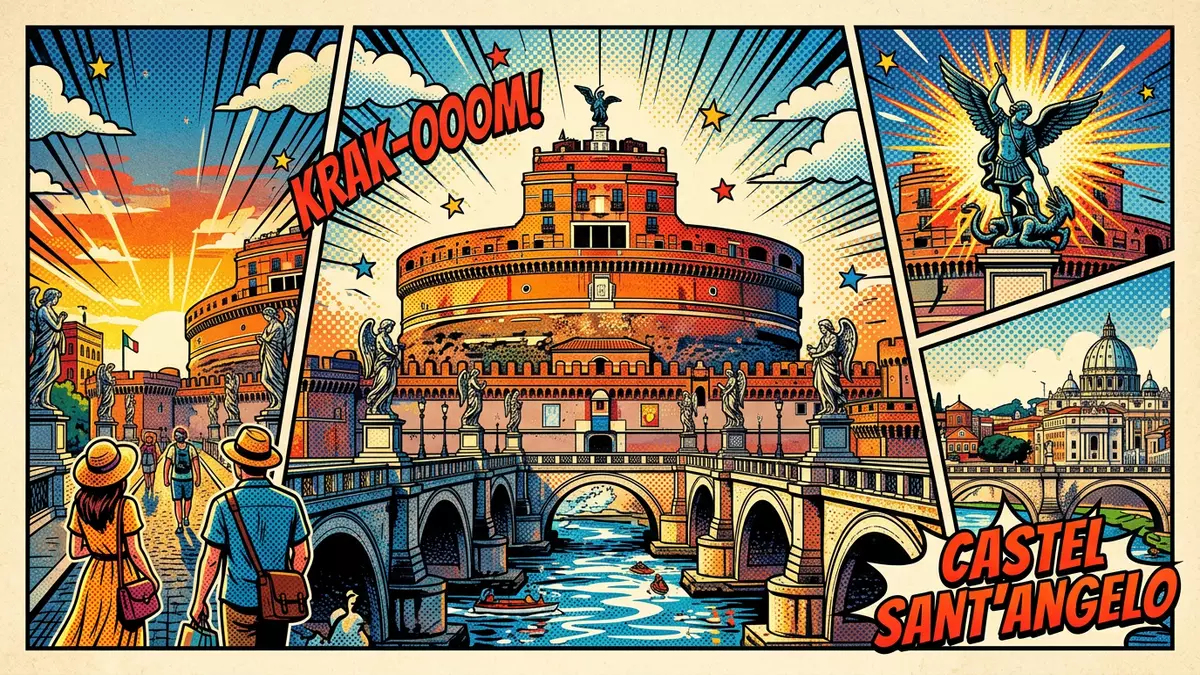
Castel Sant'Angelo in Rom is a massive cylindrical stronghold on the right bank of the Tiber, born as Emperor Hadrian’s mausoleum and later reshaped into a papal fortress and museum. Its long life, from the Roman Empire through the Renaissance to modern Italy, is written into terraces, courtyards and bastions stacked above the river.
From imperial mausoleum to guardian of the Tiber
Castel Sant'Angelo began as the burial monument of Publius Aelius Hadrianus, the Roman emperor better known simply as Hadrian, who ordered a grand tomb for himself and his family on the Vatican side of the Tiber in the second century.tomb of Emperor Hadrian The core of the structure was completed under his successor Antoninus Pius, and Hadrian’s ashes were placed inside in 139 AD, initiating its role as a dynastic mausoleum for several Antonine and later emperors up to Caracalla.Hadrian's ashes were placed inside in 139 AD
The mausoleum stood just outside the ancient city, connected to the Campus Martius by a bridge across the Tiber known in Latin as Pons Aelius, which corresponds to today’s Ponte Sant'Angelo with its aligned approach to the castle.Pons Aelius bridge In late antiquity the building’s strategic riverside position brought it into the defensive system of Rome, when the Aurelian Walls enclosed this area and the former tomb started to function as a fortified stronghold guarding a key crossing of the Tiber.incorporated into the Aurelian Walls
Papal fortress, corridor and apartments
During the Middle Ages Castel Sant'Angelo evolved from an imperial tomb into a fortress associated with the rulers of Rome, and eventually passed firmly into papal hands after the return of the papacy from Avignon in the late medieval period.passed permanently into papal hands Thick outer walls, battlements and internal courtyards were added, turning the once smooth Roman cylinder into a multi-level citadel that could control the river approach to the Vatican area and shelter the pope during sieges.
In 1277 Pope Nicholas III of the Orsini family ordered a protected passage, the Passetto di Borgo, linking the Vatican palaces with the fortress so that the papal court could reach safety inside Castel Sant'Angelo without exposing itself on the streets.Passetto di Borgo corridor Later popes expanded the stronghold with towers, storerooms and richly decorated apartments, particularly in the Renaissance, when figures such as Paul III commissioned sumptuous rooms with frescoes and stucco work for ceremonial use inside the castle.Renaissance papal residence
Castle, prison and museum above the river
For centuries Castel Sant'Angelo served not only as a refuge but also as a prison and tribunal of the Papal States, with cells and guardrooms fitted into the thick masonry of the former mausoleum and its later fortifications.tribunal and prison of the Papal States After Italian unification in the nineteenth century its role as a papal stronghold faded, and in the early twentieth century restoration campaigns prepared the building for a new life as a museum.
A national museum was formally established inside Castel Sant'Angelo in 1925, and its collections bring together paintings, sculpture, decorative arts and weapons alongside the architecture itself.establishment of the National Museum in 1925 Visitors move through superimposed layers, from the ancient cylindrical core that once housed imperial ashes, through fortified corridors and courtyards, up to terraces with views over Rom, the Tiber and the line of Ponte Sant'Angelo and St Peter’s dome beyond.
Visiting Castel Sant'Angelo: what travellers from Western Europe should know
- Castel Sant'Angelo stands on the right bank of the Tiber in Rom, close to the Vatican quarter, reached on foot across Ponte Sant'Angelo from the historic centre.
- The interior climbs through multiple levels with stone stairways and passages, and the upper terrace requires ascending several flights inside the fortress.
- The official language is Italian and the currency is the euro.
- Entry requirements depend on your nationality; UK travellers can check the FCDO travel advice at gov.uk/foreign-travel-advice, Irish travellers the Department of Foreign Affairs at ireland.ie.
Searching for Castel Sant'Angelo on social platforms
These links open searches for Castel Sant'Angelo on each platform.
Frequently asked questions about Castel Sant'Angelo
Where is Castel Sant'Angelo in Rom?
Castel Sant'Angelo stands on the right bank of the Tiber in Rom, next to Ponte Sant'Angelo and within walking distance of the Vatican area and the historic centre.
What can visitors expect inside Castel Sant'Angelo?
Inside Castel Sant'Angelo visitors encounter superimposed levels of Roman masonry and later fortifications, papal apartments and museum rooms, leading up to an open terrace above the river.
What makes Castel Sant'Angelo distinctive among Rom’s monuments?
Castel Sant'Angelo is distinctive as Hadrian’s former imperial mausoleum rebuilt over centuries into a papal fortress, prison and museum, combining ancient Roman structure with Renaissance and Baroque additions.


