
Castel Sant'Angelo, from imperial tomb to papal fortress
Published on 09/04/2026 at 06:03 | Editorial responsibility: Rafael Müller, Editor-in-Chief AD HOC NEWS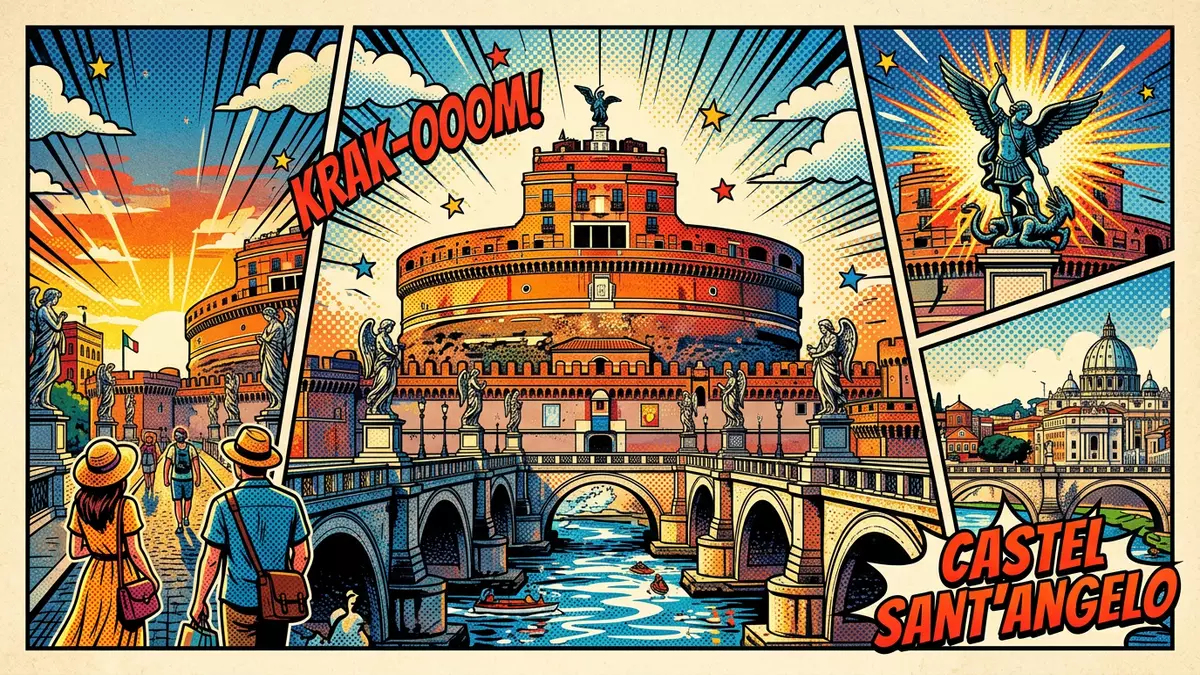
Castel Sant'Angelo on the right bank of the Tiber in Rom is one of the clearest places to see Rome’s power compressed into a single building, shifting from an imperial tomb to a papal fortress and museum over nearly two millennia. Built as the mausoleum of Emperor Hadrian in the second century and reshaped in the Middle Ages and the Renaissance, it stands between the river and the Vatican as a solid cylinder wrapped in fortifications.
From Hadrian’s mausoleum to fortified citadel
The structure began life as the Mausoleum of Hadrian, commissioned by Emperor Hadrian in the second century AD as a dynastic tomb for himself and his family on the Ager Vaticanus, then a suburban area beyond the ancient city.Emperor Hadrian Construction is dated to the years around 123 AD, with completion under Antoninus Pius in 139 AD, giving the monument a firm place in the Roman imperial period.135–139 AD Rising beside the river, it was once among the tallest structures in Rome, its original circular core clearly distinguishable even within later masonry.Mausoleum of Hadrian
In plan, the monument is a vast cylinder encased within a larger square footprint, each corner of the square guarded by projecting defensive works described as barbicans.circle surrounded by a square The Roman core provided thick masonry and internal chambers, while medieval and Renaissance builders added walls, battlements and courtyards, turning a tomb into a heavily fortified citadel protecting the river crossing and the approach to the Vatican.fortified the mausoleum Within this envelope, halls, chapels, apartments and prison cells were inserted, giving the building layered functions that can still be traced through its interior.
Papal fortress, residence and passage to the Vatican
By the Middle Ages the mausoleum had been firmly integrated into Rome’s defensive system, serving as a fortress within the Aurelian Walls and as a stronghold for the Papal States.fortress in 401 AD Over the centuries popes adapted the structure as a refuge, court and prison, reshaping its profile with towers, ramparts and bastions to face threats from both the city and the river. The position opposite the Borgo district and close to St Peter’s Basilica made its control of the bridge especially valuable.stands at the other end of Sant'Angelo Bridge
One of the most striking elements of this papal phase is the Passetto di Borgo, a fortified elevated passage running along the Vatican walls that links the Apostolic Palace directly to Castel Sant'Angelo.Passetto di Borgo This corridor gave popes a secure route to the fortress during unrest, embedding the castle in the fabric of papal Rome. Inside, Renaissance popes decorated apartments with frescoes, stuccoes and rich heraldic symbols, creating suites that contrast with the stark military sections of the complex.sumptuous rooms were decorated
A layered museum on the Tiber
In the modern era Castel Sant'Angelo has taken on a museum role while preserving its earlier layers, forming the Museo Nazionale di Castel Sant'Angelo inside the historic shell.Museo Nazionale di Castel Sant’Angelo Visitors move through spaces that once formed an imperial mausoleum, then a fortress and residence, now used to display art, military objects and historical material related to the castle and Rome. The museum organisation reflects the building’s chronology: Roman foundations, medieval defences, Renaissance rooms and later adaptations sit in sequence rather than being separated into distinct buildings.chronological evolution
The monument’s position at Lungotevere Castello, 50, directly beside the Tiber and guarding Ponte Sant'Angelo, situates it between the historic centre and the Vatican area, with the Borgo and Prati districts nearby.Lungotevere Castello, 50 The bridge itself carries statues and leads straight towards the castle’s entrance, emphasising the link between river, road and fortified mass. From the upper levels the view extends across Rome’s rooftops and towards St Peter’s dome, tying the building’s story back to the imperial and papal city it has watched for centuries.
Visiting Castel Sant'Angelo: what travellers from Western Europe should know
- Castel Sant'Angelo stands on Lungotevere Castello on the right bank of the Tiber, opposite Ponte Sant'Angelo and a short walk from St Peter’s Basilica in the Vatican area.
- The approach from the bridge leads directly into the fortified complex, and movement inside the castle involves staircases and ramps between multiple levels and enclosed courtyards.
- The monument lies within Rom, where the official language is Italian and the currency is the euro.
Searching for Castel Sant'Angelo on social platforms
These links open searches for Castel Sant'Angelo on each platform.
Frequently asked questions about Castel Sant'Angelo
Where is Castel Sant'Angelo in Rom?
Castel Sant'Angelo stands on Lungotevere Castello on the right bank of the Tiber, guarding Ponte Sant'Angelo near the Vatican and the Borgo district.
What should visitors expect inside Castel Sant'Angelo?
Visitors move through Roman foundations, fortified medieval sections and decorated Renaissance apartments, with staircases, courtyards and exhibition rooms arranged across several levels.
What makes Castel Sant'Angelo distinctive among Roman monuments?
It combines Hadrian’s second-century mausoleum, later papal fortifications and a modern museum in one cylindrical complex, linking the riverfront directly to the Vatican through the Passetto di Borgo.


