
Castel Sant'Angelo and its layered Roman history
Published on 09/24/2026 at 10:06 | Editorial responsibility: Rafael Müller, Editor-in-Chief AD HOC NEWS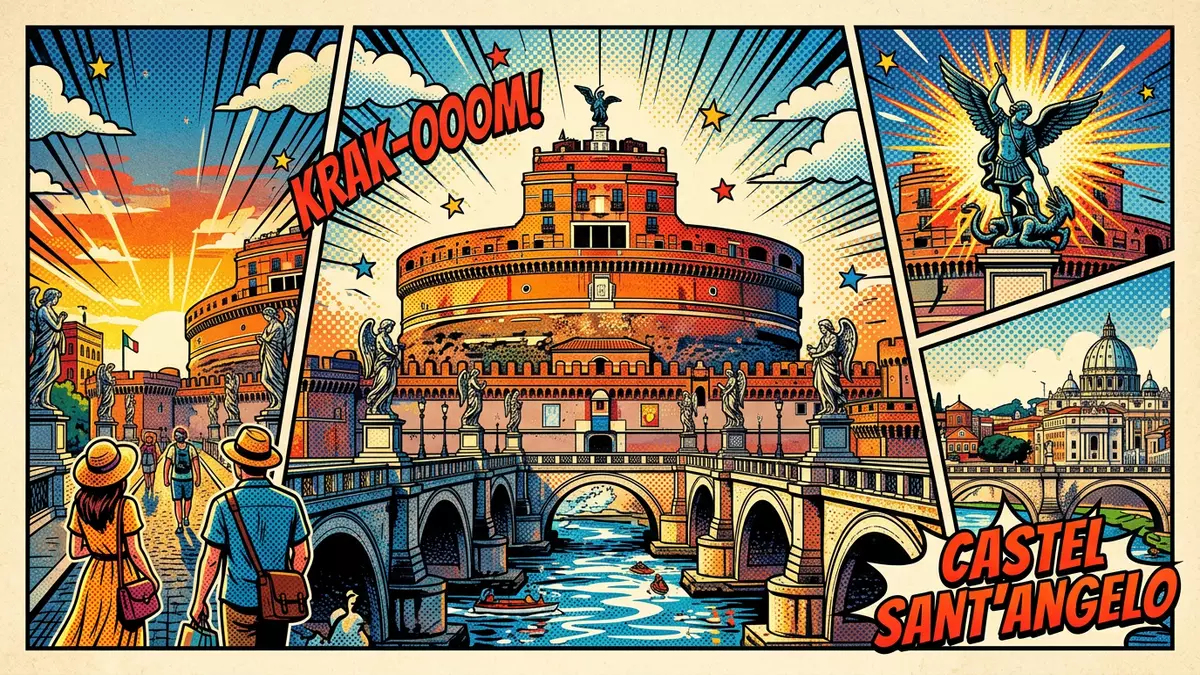
Castel Sant'Angelo rises beside the Tiber as a massive cylindrical building with a history written into its changing functions. Emperor Hadrian commissioned the structure as a dynastic mausoleum, and construction began in 135 AD before completion in 139 AD.
Its visible form carries Roman funerary architecture, medieval fortification and Renaissance interiors in one compact monument. The same building has served as an imperial tomb, a fortress, a papal residence, a prison and a museum.
Castel Sant'Angelo began as Hadrian's mausoleum
The monument stands on the right bank of the Tiber, close to Ponte Sant'Angelo. Its original Roman identity was the Mausoleum of Hadrian, a monumental tomb for the emperor and his family.
Hadrian ruled the Roman Empire from 117 to 138 AD. the original mausoleum was built in the second century AD and became a burial place for members of the imperial household.
The building’s principal mass is a tall cylinder enclosed by a square outer fortress. Ancient access connected the tomb with Campo Marzio through the bridge now known as Ponte Sant'Angelo.
From imperial tomb to papal fortress
Castel Sant'Angelo became part of Rome’s defensive system in the fifth century. Its thick masonry and elevated position gave the former mausoleum a new military character.
The medieval castle passed through periods of conflict and changing ownership before entering the sphere of the papacy. Its rooms then included defensive spaces, apartments and prison cells.
The castle's long history records the transition from imperial burial monument to fortified papal complex. The Passetto di Borgo connected Castel Sant'Angelo with the Vatican area.
The papal apartments contain Renaissance decoration, including rooms associated with the rebuilding and embellishment of the fortress. These interiors contrast with the heavy exterior walls and the monument’s earlier funerary purpose.
The angel above the cylindrical fortress
A bronze statue of the Archangel Michael stands above the monument. The angel gives Castel Sant'Angelo its name and forms a clear vertical accent above the broad masonry cylinder.
The statue refers to the medieval legend that Michael appeared above the castle during a plague in Rome. The monument’s name changed from Hadrian’s mausoleum to Castel Sant'Angelo as its religious and military associations developed.
Inside, the route passes through vaulted passages, courtyards, chambers, papal rooms and prison spaces. The building’s circular core remains legible beneath later adaptations.
Hadrian’s mausoleum became a museum in 1925. Its collections and rooms present the monument as a sequence of Roman, medieval, papal and national histories.
Visiting Castel Sant'Angelo: what travellers from Western Europe should know
- Castel Sant'Angelo is at Lungotevere Castello beside the Tiber and Ponte Sant'Angelo. Rome’s riverfront roads and bridges define the approach.
- The monument contains steep passages, stairs, courtyards and enclosed historic rooms. The route includes substantial changes in level.
- The official language is Italian and the currency is the euro.
Searching for Castel Sant'Angelo on social platforms
These links open searches for Castel Sant'Angelo on each platform.
Frequently asked questions about Castel Sant'Angelo
Where is Castel Sant'Angelo?
Castel Sant'Angelo stands on Rome’s right bank of the Tiber, beside Ponte Sant'Angelo and near the Vatican district.
What can visitors expect inside?
The interior contains Roman remains, fortress passages, courtyards, prison spaces, papal apartments and museum displays.
What makes Castel Sant'Angelo distinctive?
Its cylindrical Roman mausoleum survives within a later fortress, while the Archangel Michael crowns the upper structure.


