Casco Viejo, where Panama-Stadt’s history meets the Pacific
Published on 09/12/2026 at 11:53 | Editorial responsibility: Rafael Müller, Editor-in-Chief AD HOC NEWS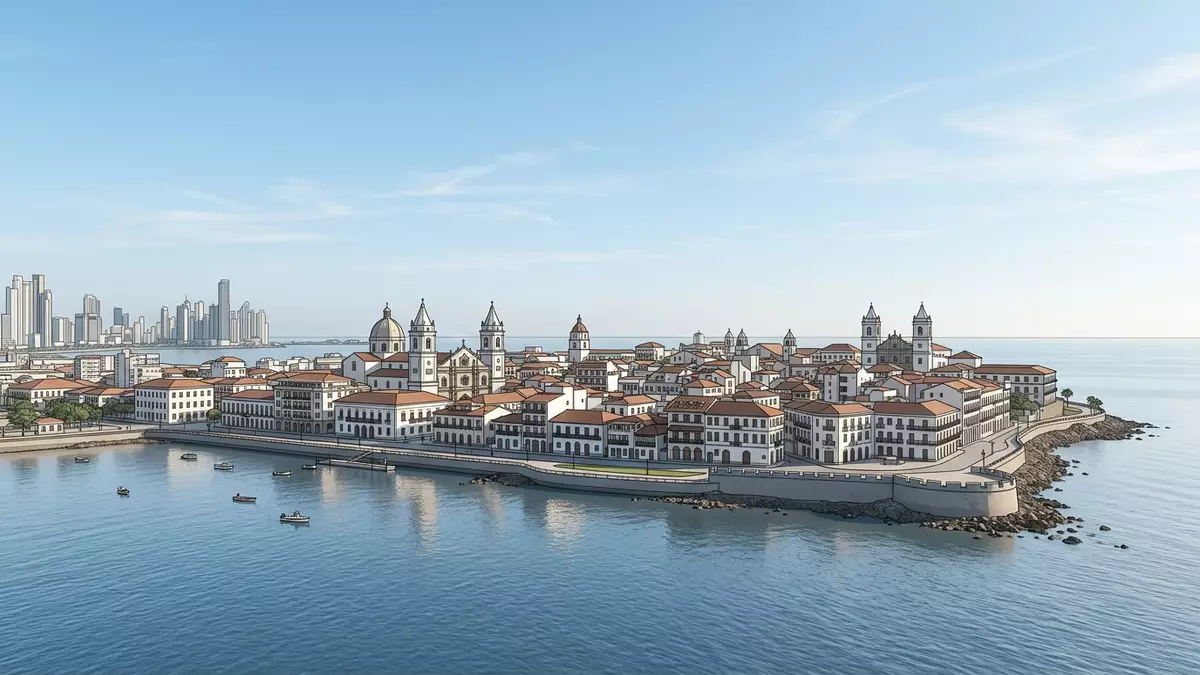
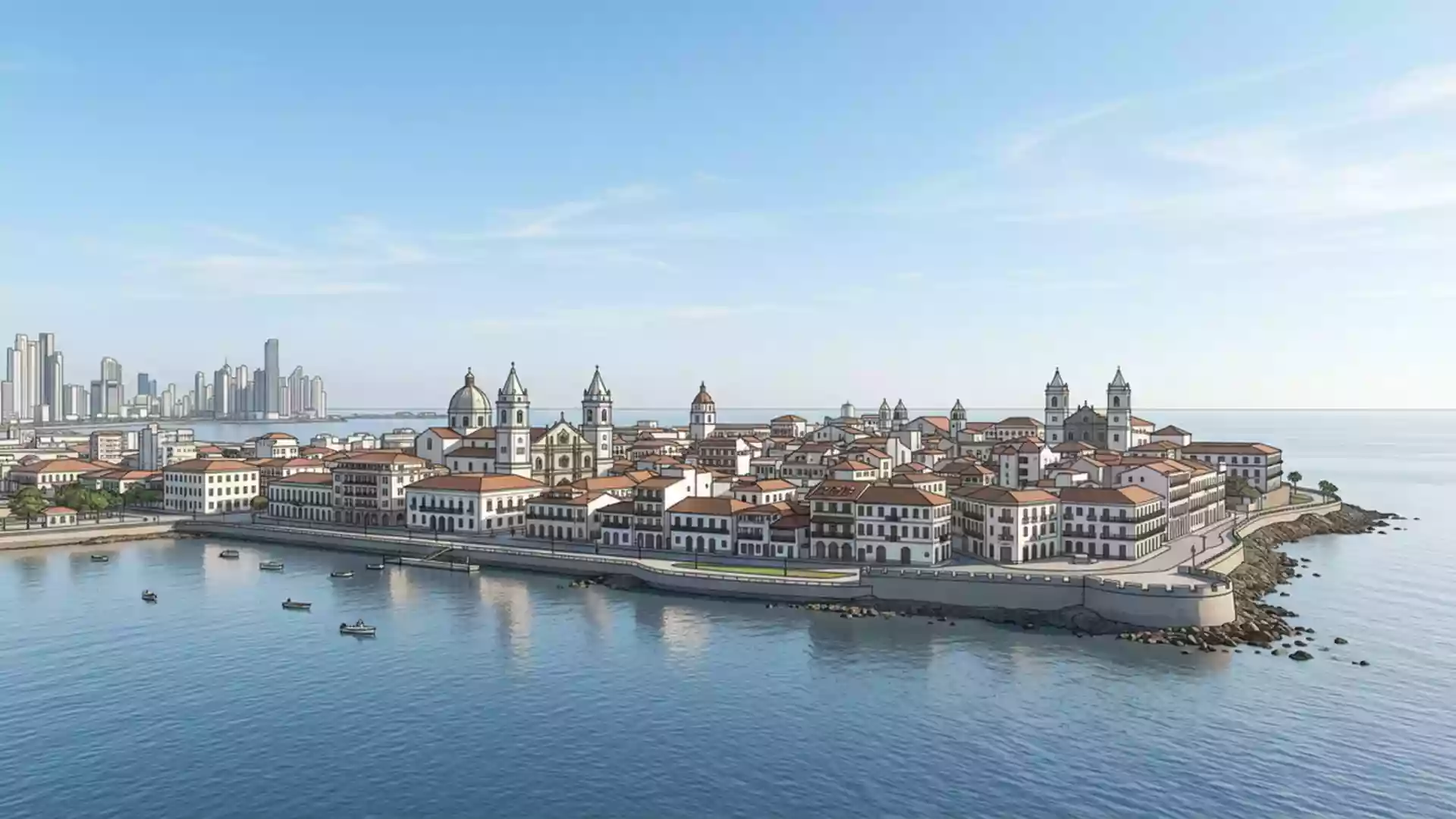
Casco Viejo is the historic quarter of Panama-Stadt, laid out as a compact peninsula district after the destruction of the earlier city, Panamá Viejo, in the seventeenth century. Set between the bay and Ancon Hill, it condenses centuries of Panamanian history into a grid of stone churches, plazas and balconied houses framed by the Pacific shoreline.
A seventeenth-century city rebuilt by the sea
Casco Viejo, also known as Casco Antiguo or San Felipe, was founded in 1673 as the new seat of Panama City after pirates under Henry Morgan destroyed Panamá Viejo in 1671.Founded in 1673 The quarter occupies a small peninsula on the southwestern edge of present-day Panama City, with streets running roughly at right angles and blocks that still reflect its seventeenth-century grid plan.Rectangular grid plan
In 1997 Casco Viejo, together with the archaeological site of Panamá Viejo, was inscribed on the UNESCO World Heritage List as the “Archaeological Site of Panamá Viejo and the Historic District of Panamá”.World Heritage inscription in 1997 The historic centre within Casco Antiguo occupies around 22 hectares of land in the San Felipe borough, within a wider national heritage zone that includes additional surrounding streets.Historic Centre of Panama City within Casco Antiguo
Streets, plazas and landmark buildings
Casco Viejo’s streets are narrow and usually paved with cobblestones, lined with houses and civic buildings that combine Spanish and French colonial influences with neoclassical facades.Blend of French, Spanish and neoclassical architecture Balconies with metal railings overlook the pavements, and many buildings rise to several storeys, creating a canyon-like effect in some parts of the district.
Several plazas punctuate the grid. Plaza de la Independencia, also known as Plaza Catedral or Plaza Mayor, forms one of the principal open spaces and is flanked by the Cathedral Basilica Santa Maria la Antigua de Panama, government buildings, hotels and the Interoceanic Museum of Panama.Plaza de la Independencia and surrounding buildings Other named plazas, including Plaza Herrera, Plaza Bolívar and Plaza de Francia, give rhythm to a walk through the quarter, each framed by churches or former mansions that mark different phases in the city’s colonial and republican past.Main plazas of Casco Viejo
A living historic district on the Pacific Bay
The peninsula of Casco Viejo projects into the Bay of Panama near the Pacific entrance to the Panama Canal, so that several streets end with views over the water and towards the modern high-rise skyline beyond.Promontory jutting into the bay Within its compact area stand national institutions such as the country’s main canal museum and its national theatre, alongside residential buildings and restored facades.
The historic centre has been incorporated as a component part of the “Colonial Transisthmian Route of Panamá”, a serial World Heritage property that links Casco Viejo with Panamá Viejo, the Caribbean fortress of San Lorenzo and sections of the colonial Camino de Cruces road.Colonial Transisthmian Route of Panamá This designation underlines the way the quarter forms part of a wider landscape of colonial routes across the isthmus, while remaining a lived-in neighbourhood where everyday life unfolds among arcades, plazas and historic churches.
Visiting Casco Viejo: what travellers from Western Europe should know
- Casco Viejo occupies a small peninsula on the southwestern edge of Panama-Stadt, within the San Felipe borough, and is reached easily by road from the modern city districts.
The historic centre lies several kilometres southwest of the ruins of Panamá Viejo. - The district’s streets are narrow and often paved with cobblestones, with pavements and occasional stairways; walking involves short gradients and frequent crossings at junctions.
- Named plazas such as Plaza de la Independencia, Plaza Herrera and Plaza Bolívar provide open spaces within the grid, with benches and shaded areas under trees.
- The official language is Spanish and the currency is the Panamanian balboa, which circulates alongside the United States dollar.
- Entry requirements depend on your nationality; UK travellers can check the FCDO travel advice at gov.uk/foreign-travel-advice, Irish travellers the Department of Foreign Affairs at ireland.ie.
Searching for Casco Viejo on social platforms
These links open searches for Casco Viejo on each platform.
Frequently asked questions about Casco Viejo
Where is Casco Viejo?
Casco Viejo is the historic district of Panama-Stadt, occupying a small peninsula on the southwestern side of the city within the San Felipe borough.
What can visitors expect on a visit?
Visitors encounter cobbled streets, plazas framed by colonial churches and civic buildings, and a compact grid of stone houses and restored facades beside the Bay of Panama.
What makes Casco Viejo distinctive?
Casco Viejo is distinctive as a seventeenth-century planned quarter rebuilt after the loss of Panamá Viejo, recognised as part of a UNESCO World Heritage site and integrated into the Colonial Transisthmian Route of Panamá.