
Casco Viejo, where Panama-Stadt meets the Pacific past
Published on 09/07/2026 at 20:52 | Editorial responsibility: Rafael Müller, Editor-in-Chief AD HOC NEWS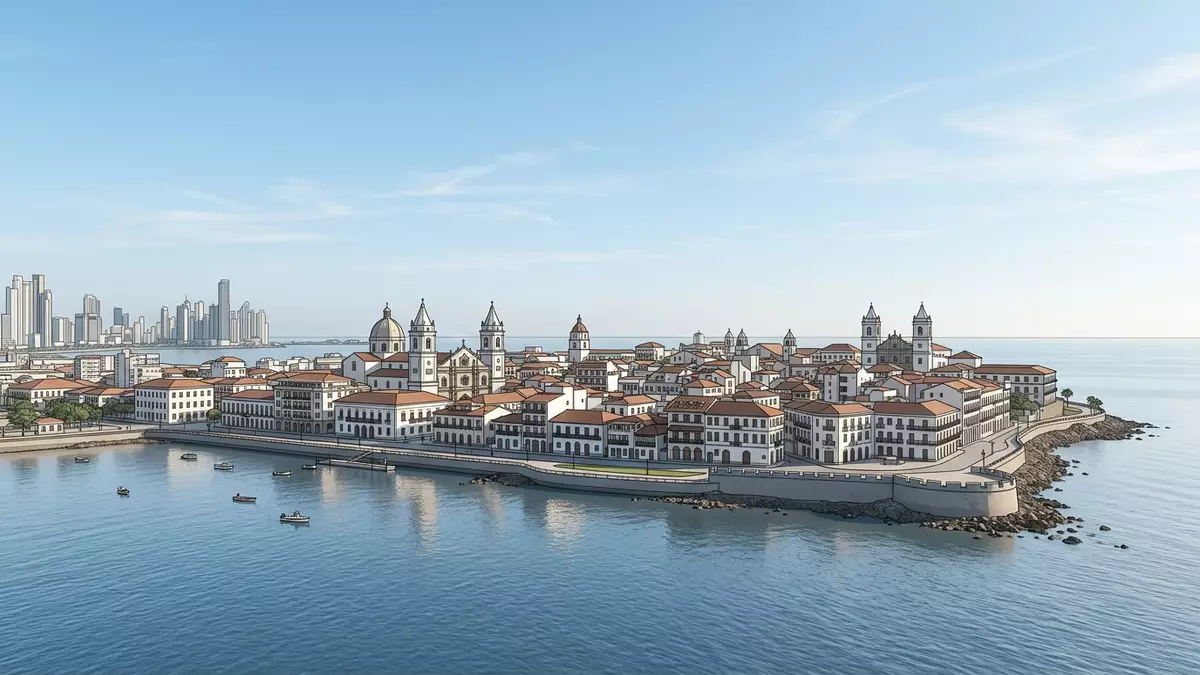
Casco Viejo is the historic heart of Panama-Stadt, a compact district set on a low peninsula where colonial streets and plazas look out across the Pacific and the wider bay of Panama.
A planned seventeenth-century city on a peninsula
Casco Viejo, also known as Casco Antiguo and San Felipe, forms the second site of Panama City on the Pacific coast of Panama. The district was founded in 1673 after the near-total destruction of the original settlement at Panamá Viejo in 1671, when that earlier city was attacked and burned by forces led by the English privateer Henry Morgan.Founded in 1673 after The new city was laid out on a small rocky headland, projected into the bay and surrounded by defensive walls along the seaward edges.historic colonial district
The urban plan follows a regular grid, with straight streets intersecting at right angles and opening into plazas that still structure the neighbourhood. This planned layout reflects seventeenth-century Spanish colonial town-making and remains legible in the way the streets run towards key squares such as Plaza de la Independencia and Plaza de Francia.rechteckiges Planquadrat The peninsula position places Casco Viejo between the mouth of the Panama Canal to the west and the modern high-rises of Panama-Stadt to the east, giving the district a visible contrast between older stone fabric and contemporary glass towers along the shoreline.walled peninsula
Layers of architecture from colonial to republican
Three centuries of building in Casco Viejo have left a dense mix of styles, from seventeenth and eighteenth-century colonial churches to nineteenth and early twentieth-century republican townhouses and public buildings.Architectural Eras Much of the architecture is built in masonry, with rendered facades, arcades at street level and balconies facing narrow lanes. Spanish influence appears in the layout of the plazas and the positioning of churches, while later French and American currents are visible in neoclassical fronts and ironwork.
Key monuments include the Metropolitan Cathedral on Plaza de la Independencia, with its twin bell-towers and broad stone front, and the Iglesia de la Merced, which incorporates an older stone portal brought from the previous city at Panamá Viejo.Signature Monuments Civic buildings such as the Palacio Bolívar and the Teatro Nacional line the streets around Plaza Bolívar and Plaza Herrera, adding theatres and governmental offices to the religious landscape. Many houses are two or three storeys high, with shuttered windows and balconies above street-level colonnades, creating tight urban canyons where stone and stucco surfaces frame views towards the bay.mix of centuries-old churches
UNESCO protection and a compact walkable district
Casco Viejo was inscribed as a UNESCO World Heritage Site in 1997, recognised together with the Salón Bolívar for the historical and architectural value of its preserved grid and building stock.UNESCO World Heritage Site The core historic area of San Felipe covers several dozen hectares, with buffer zones including parts of Santa Ana and El Chorrillo.San Felipe core + Santa Ana The regular grid and modest scale make Casco Viejo a district that can be crossed on foot, moving from square to square along cobbled streets.
The neighbourhood sits on the south side of Panama-Stadt, between the entrance channel of the Panama Canal and the older coastal quarters, and is subdivided into sectors such as San Felipe and Santa Ana.subdivided into four sectors From the seaward edges, the view opens towards the Pacific entrance to the isthmus and the causeways that run along the bay. Within the walls, four main plazas — Plaza de la Independencia, Plaza Herrera, Plaza Bolívar and Plaza de Francia — structure movement and provide open space amid dense blocks of historic buildings.four main plazas
Visiting Casco Viejo: what travellers from Western Europe should know
- Casco Viejo lies on a peninsula at the south-western edge of Panama-Stadt, facing the bay; it is reached by road from the wider city and sits west of the modern downtown high-rises.
- Many streets in Casco Viejo are narrow and paved, with kerbs and steps between different levels; exploring the district involves walking along short slopes and stairways around the plazas.
- The official language is Spanish and the currency is the Panamanian balboa, used alongside the United States dollar in everyday transactions.
- Casco Viejo stands near the coastal road that leads towards the entrance of the Panama Canal, with coastal views from the sea-facing edges across the bay and towards the causeway.
Searching for Casco Viejo on social platforms
These links open searches for Casco Viejo on each platform.
Frequently asked questions about Casco Viejo
Where is Casco Viejo and what kind of place is it?
Casco Viejo is the historic district of Panama-Stadt in Panama, built on a small peninsula on the Pacific side of the isthmus and laid out as a planned colonial town.
What can a visitor expect on a walk through Casco Viejo?
A walk through Casco Viejo passes stone churches, colonnaded townhouses, government buildings and plazas, along narrow paved streets that open towards the bay and the skyline of modern Panama-Stadt.
What makes Casco Viejo distinctive among historic districts?
Casco Viejo combines a seventeenth-century grid, colonial and republican architecture and a peninsula setting beside the approach to the Panama Canal, and carries UNESCO World Heritage status recognising its preserved urban fabric.


