
Casco Viejo’s plazas, churches and sea wall
Published on 09/14/2026 at 22:26 | Editorial responsibility: Rafael Müller, Editor-in-Chief AD HOC NEWS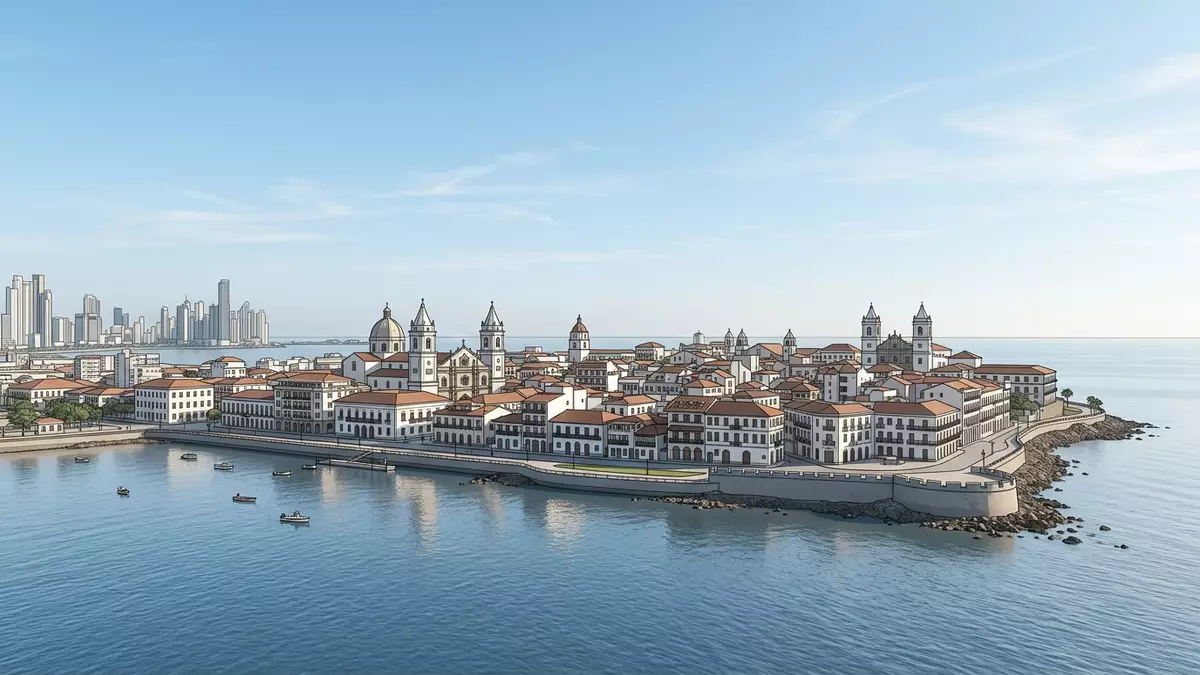
Casco Viejo in Panama-Stadt is the historic district built after the original city was moved in 1673. Its grid, plazas and churches make the quarter feel compact and legible at street level.
Casco Viejo’s 1673 street grid
The district’s layout follows a regular street plan that began after the relocation of the colonial capital in 1673 reconstruction. Casco Viejo sits on a peninsula at the foot of Ancón Hill, with the Pacific side shaping its edge.
The street system gives the area its strongest visual order. A central square, long blocks and the surviving civic core sit within the historic district recognised by UNESCO.
Plazas, cathedral and church fronts
Plaza de la Independencia, also known as Plaza Catedral, is the square most closely associated with Casco Viejo. The Metropolitan Cathedral fronts it, and the square remains the district’s clearest open space.
Several churches and civic buildings frame the old quarter’s streets. The architectural mix includes Spanish colonial fabric and later layers that sit within the same urban plan, described in the heritage record as part of the historic centre of Panama City.
The Pacific edge and the old walls
Casco Viejo’s western and southern edges meet the bay and the seawall line. That edge gives the district a sharper boundary than many old quarters, with promenades, fortification remnants and a direct relationship to the water.
The heritage listing places the historic centre within a protected monuments group that includes the original walled quarter and its adjacent esplanade. That framework helps explain why the district reads as a defined historic ensemble rather than a loose neighbourhood.
Visiting Casco Viejo: what travellers from Western Europe should know
- Casco Viejo lies in Panama-Stadt, on the Pacific side of the isthmus. It is reached by road through the city centre, with the old quarter set apart from the modern high-rise district.
- The district is easiest to experience on foot. Its streets are compact, and the historic grid gathers the main plazas, churches and civic buildings into a small area.
- The terrain is mostly level, but the peninsula edges and seawall walks create a clear change between streets and waterfront edges.
- English is widely understood in visitor-facing places, and the local currency is the Panamanian balboa, alongside the US dollar.
- Entry requirements depend on your nationality; UK travellers can check the FCDO travel advice at gov.uk/foreign-travel-advice, Irish travellers the Department of Foreign Affairs at ireland.ie.
Searching for Casco Viejo on social platforms
These links open searches for Casco Viejo on each platform.
Frequently asked questions about Casco Viejo
Where is Casco Viejo?
Casco Viejo is the historic district of Panama-Stadt, set on a peninsula on the Pacific side of the city. It lies southwest of the modern high-rise centre.
What does a visit involve?
It means moving between a small number of plazas, churches and waterfront edges on foot. The district is compact and reads as a historic centre rather than a spread-out neighbourhood.
What makes Casco Viejo distinctive?
Its 1673 street grid, cathedral square and seawall edge define the place. The district combines colonial urban form with later architectural layers inside one historic ensemble.


