
Casco Historico de Toledo, hilltop city of stone and three faiths
Published on 09/18/2026 at 22:19 | Editorial responsibility: Rafael Müller, Editor-in-Chief AD HOC NEWS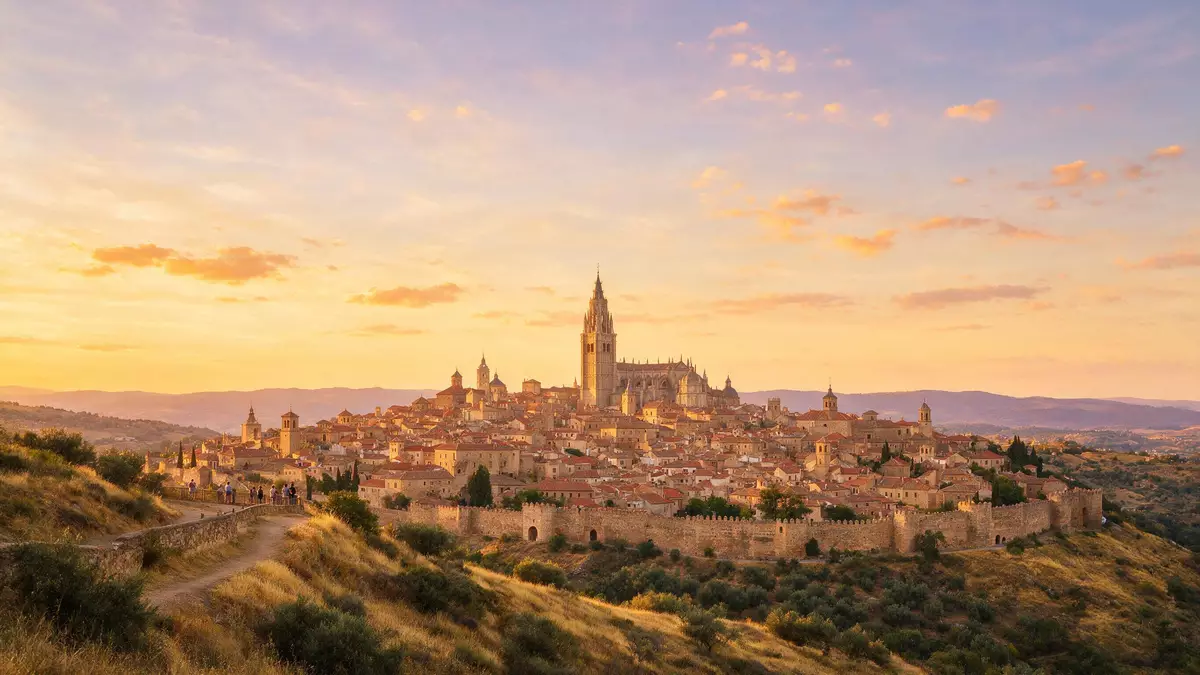
Casco Historico de Toledo, the historic centre of Toledo in central Spain, occupies a rocky hill within a sweeping bend of the Tagus River where centuries of Christian, Muslim and Jewish presence left a dense city of stone. Its compact old town, recognised as the Historic City of Toledo on the UNESCO World Heritage List since 1986, preserves an urban fabric shaped by over two millennia of power, belief and craftsmanship.
A hilltop city wrapped in river and walls
The historic quarter of Toledo stands on a steep promontory almost encircled by the Tagus, a geography that gives the old city both its defensive stance and its striking silhouette of towers and roofs rising above the water. Medieval and earlier fortifications trace the edge of this hill, forming walls and gates that still define the boundary between the historic core and the newer districts spread across the surrounding plain.Historic City of Toledo
Within the Casco Historico de Toledo, streets climb and fall along the contours of the rock, often narrowing to lanes that thread between solid masonry façades. Larger axes converge on key spaces such as the Plaza de Zocodover, which has long formed a central square for markets and gatherings, while other routes lead towards the Alcázar fortress on the north-eastern height and the cathedral nearer the heart of the hill.historic centre of Toledo
Layers of power and faith in stone
Toledo’s position on the Iberian plateau made it a political centre long before its streets acquired their current form, and that history is compressed into the Casco Historico. The city served as a Roman municipium under the name Toletum, later became the capital of the Visigothic Kingdom, then a stronghold of the Emirate of Córdoba, and in the sixteenth century a seat of royal power under Charles V.more than 2,000 years of history
This succession of rulers and communities produced a cityscape where major Christian, Jewish and Islamic monuments stand within walking distance of one another. The Gothic cathedral of Santa María, begun in the thirteenth century and extended over subsequent centuries, rises with flying buttresses and tracery near the centre of the hill, while the Alcázar crowns the skyline as a massive fortress and palace.Gothic cathedral Santa María In nearby streets, former synagogues and mosques preserve Mudéjar brickwork and horseshoe arches, their structures adapted over time but still carrying inscriptions, domes and ornamental detail that speak to the quarter’s role as a “city of three cultures”.meeting of Christian, Muslim and Jewish cultures
Urban fabric, architectural styles and recognition
Walking through the Casco Historico de Toledo reveals a patchwork of architectural styles layered along the same lanes and around the same small plazas. Romanesque churches stand close to later Gothic and Renaissance façades, while Mudéjar elements appear in towers, portals and cloisters where brick patterns and carved stone sit beside plaster surfaces. Baroque interiors and civic buildings complete this sequence, creating an ensemble in which changes of style are visible from corner to corner without losing the sense of a continuous stone city.Romanesque, Gothic, Mudéjar, Renaissance and baroque elements
The historic centre was formally recognised within Spain as a protected monument in the twentieth century, and in 1986 the Historic City of Toledo was inscribed on the UNESCO World Heritage List for the way its streets, monuments and domestic buildings together reflect continuous urban history over roughly twenty centuries.UNESCO documentation on Toledo This status supports conservation of the cityscape, from major landmarks such as the cathedral and Alcázar to quieter quarters including the former Jewish district on the south-western side of the hill, where gardens and smaller houses follow the same narrow lanes and stone terraces.
Visiting Casco Historico de Toledo: what travellers from Western Europe should know
- Casco Historico de Toledo forms the historic centre of Toledo in the Castilla-La Mancha region of central Spain, on a hill almost encircled by the Tagus River; rail services link Madrid with Toledo’s railway station below the old town.
- The terrain within the historic centre is steep and irregular, with stone-paved streets, stairways and slopes that demand sure footing and a readiness for uphill and downhill walking.
- The Tagus River lies below the walls, and viewpoints from the southern and western edges of the Casco Historico de Toledo look across the water to surrounding hills and later neighbourhoods.
- The official language is Spanish and the currency is the euro.
- Entry requirements depend on your nationality; UK travellers can check the FCDO travel advice at gov.uk/foreign-travel-advice, Irish travellers the Department of Foreign Affairs at ireland.ie.
Searching for Casco Historico de Toledo on social platforms
These links open searches for Casco Historico de Toledo on each platform.
Frequently asked questions about Casco Historico de Toledo
Where is Casco Historico de Toledo located?
Casco Historico de Toledo is the historic centre of Toledo in the Castilla-La Mancha region of central Spain, occupying a hill within a bend of the Tagus River.
What should visitors expect when walking through the historic centre?
Visitors encounter steep, stone-paved streets, enclosed squares and a concentration of monuments including the cathedral, the Alcázar, former synagogues and churches set among tightly packed houses.
What makes Casco Historico de Toledo distinctive among Spanish historic cities?
It combines a hilltop setting wrapped by a river, a long history as a Roman, Visigothic, Islamic and royal centre, and closely interwoven Christian, Muslim and Jewish architectural heritage within a compact walled quarter.


