
Casco Historico de Toledo, hilltop city of stone and faiths
Published on 09/08/2026 at 16:27 | Editorial responsibility: Rafael Müller, Editor-in-Chief AD HOC NEWS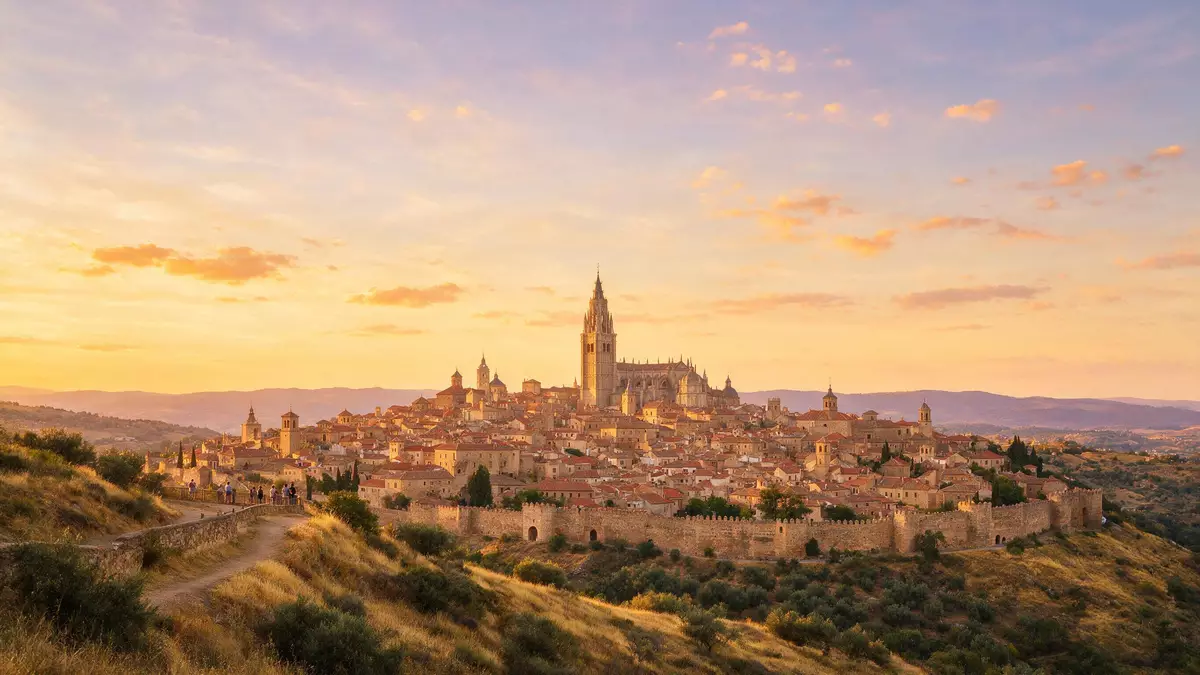
Casco Historico de Toledo, the historic centre of Toledo in central Spain, gathers centuries of architecture on a rocky hill almost encircled by a bend of the Tagus River. Within medieval walls, churches, synagogues and former mosques stand close together along narrow streets, reflecting the city’s long role as a meeting place of Christian, Muslim and Jewish cultures recognised by UNESCO in 1986.
Hilltop contours between river and walls
The defining setting of Casco Historico de Toledo is its hilltop location inside a loop of the Tagus River, which leaves steep slopes falling from the old town towards the water. The UNESCO World Heritage inscription for the Historic City of Toledo highlights this dramatic position on a rock skirted by the river and the way the historic area covers about 260 ha within its boundaries.Historic City of Toledo Medieval fortifications follow the contours of the hill, forming walls and gates that enclose the quarter and separate it from the newer districts spreading across the surrounding plateau.
Inside the walls, the urban fabric remains compact, with short streets climbing and descending along the slope and opening into small plazas. Many routes converge roughly towards the centre, where the Gothic cathedral stands above surrounding roofs and marks a high point of the stone skyline.Toledo’s historic centre On the northeastern side of the hill, the Alcázar fortress occupies a prominent terrace near the Plaza de Zocodover, giving the quarter a second large mass of masonry that balances the cathedral.
Layers of civilisations in stone
Casco Historico de Toledo condenses more than two millennia of urban history into its streets, from the period when Toledo was a Roman municipium, through Visigothic rule, Islamic governance under the Emirate of Córdoba and later Christian monarchies including Charles V in the sixteenth century.El Greco’s beloved city This long sequence of powers left an array of churches, mosques, synagogues, palaces and defensive works in the same compact area.
The historic centre has been formally protected for decades, declared a national monument in 1940 and inscribed on the World Heritage List in 1986 under the title “Historic City of Toledo”.national monument and UNESCO listing Within the Casco Historico de Toledo, numerous individual buildings are registered as “Bien de Interés Cultural”, forming a catalogue of Spanish cultural heritage sites that includes religious complexes such as the monastery of San Juan de los Reyes and major churches associated with different periods.protected monuments in the old town
Christian, Muslim and Jewish monuments on shared streets
One of the most distinctive aspects of Casco Historico de Toledo is the way Christian, Muslim and Jewish heritage appears side by side within walking distance. The Gothic cathedral of Toledo rises near the centre, with multiple naves and chapels forming a major ecclesiastical complex, while the Alcázar has served over centuries as a fortress and representative building overlooking the Plaza de Zocodover.cathedral, Alcázar and Plaza de Zocodover In the south?western parts of the quarter, former synagogues such as Santa María la Blanca and El Tránsito, now linked with Jewish heritage museums, stand near monasteries and churches, marking the area often associated with the historic Jewish Quarter.
Mosque buildings adapted over time into churches, including sites like Cristo de la Luz and El Salvador, further show the layered history of the streets and squares.legacy of three cultures Together with a network of smaller parish churches, civic buildings and stone houses lining the lanes, these monuments explain why the historic centre is frequently associated with the idea of Toledo as a “City of Three Cultures”, where overlapping communities left enduring structures rather than erasing one another’s presence.
Visiting Casco Historico de Toledo: what travellers from Western Europe should know
- Casco Historico de Toledo lies in Toledo, in the Castilla-La Mancha region of central Spain, on a hill almost encircled by the Tagus River; rail services link Madrid with Toledo’s station below the historic centre.
- Within the old town, streets are narrow and follow steep gradients, and stairways and short climbs connect different levels, so moving between monuments involves frequent changes of height over stone surfaces.
- Several major landmarks sit close together inside the walls, including the Alcázar near Plaza de Zocodover, the cathedral near the centre of the quarter and former synagogues and monasteries towards the south?western side.
- The official language is Spanish and the currency is the euro.
Searching for Casco Historico de Toledo on social platforms
These links open searches for Casco Historico de Toledo on each platform.
Frequently asked questions about Casco Historico de Toledo
Where is Casco Historico de Toledo located?
Casco Historico de Toledo is the historic centre of Toledo in Castilla-La Mancha, central Spain, occupying a rocky hill almost encircled by a bend of the Tagus River.
What should visitors expect when walking through the quarter?
Visitors encounter steep, narrow streets paved in stone, enclosed by medieval walls and lined with churches, synagogues, former mosques and civic buildings that reflect many historical periods.
What makes Casco Historico de Toledo distinctive among Spanish old towns?
Its combination of hilltop setting above the Tagus, dense concentration of protected monuments and visible coexistence of Christian, Muslim and Jewish architecture within a compact walled area gives the quarter a distinctive character.


