Carlsbad Caverns National Park and the fossil reef beneath New Mexico
Published on 09/11/2026 at 12:19 | Editorial responsibility: Rafael Müller, Editor-in-Chief AD HOC NEWS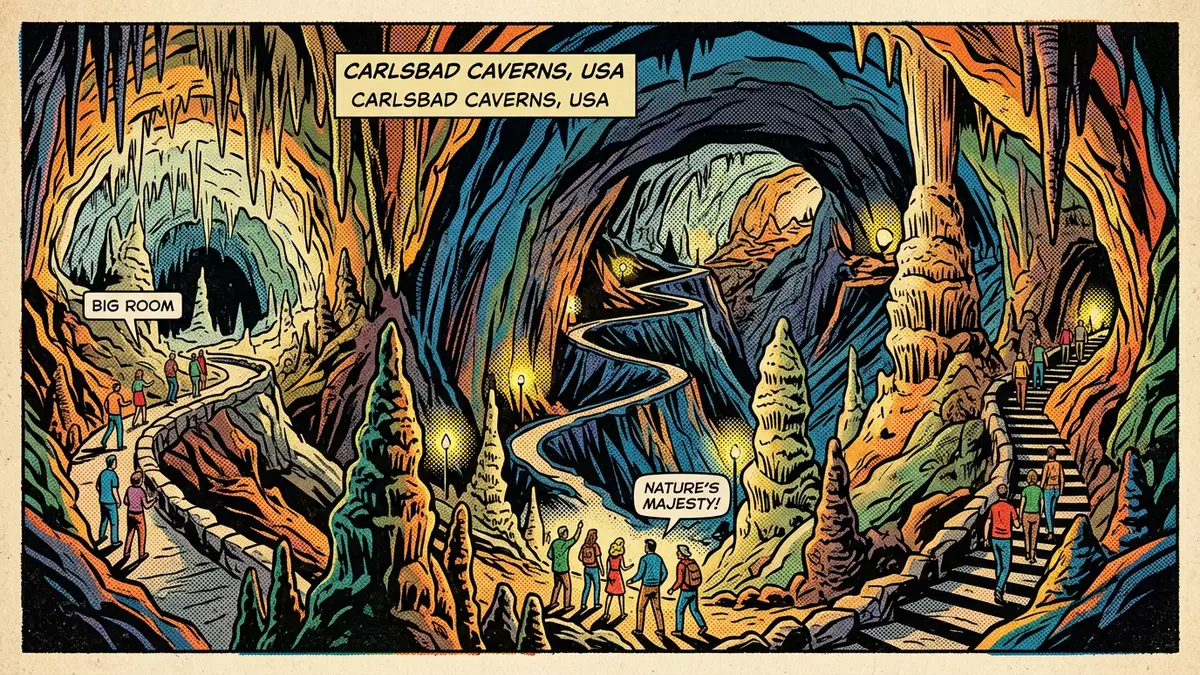
Carlsbad Caverns National Park in south-eastern New Mexico takes visitors beneath the desert into chambers shaped within a fossil reef from the Permian period. The park centres on Carlsbad Cavern itself, part of a network of limestone caves that reveal how an ancient sea, a reef and later underground water reshaped this corner of the Guadalupe Mountains.
A Permian reef turned mountain landscape
Carlsbad Caverns National Park lies within the Guadalupe Mountains, a limestone range that preserves the Capitan Reef, a fossil reef from the Permian period when this region formed the margin of an inland sea.Carlsbad Caverns National Park preserves a portion of the Capitan Reef The Capitan Limestone associated with this reef reaches a thickness of around 230 m (750 ft), and much of the cave system lies within this soluble rock.The Capitan Limestone is about 750 feet thick
The wider park landscape combines limestone and dolomite uplands with the lower-lying Permian Basin, an arrangement that reflects the ancient transition from shallow-water reef to deeper basin deposits.Carlsbad Caverns National Park is located within the Guadalupe Mountains This setting means that the park not only showcases caves but also exposed cliff faces where layers from the former reef and adjoining basin can be traced across the landscape.
Caverns shaped by sulphur-rich waters
The caves of Carlsbad Caverns National Park formed in an unusual way compared with many limestone caves in Europe. Instead of being carved primarily by rainwater descending from the surface, they developed where hydrogen sulphide rising from deeper petroleum-bearing rocks mixed with oxygenated groundwater and produced sulphuric acid that dissolved the reef limestone from below.An aggressive sulphuric acid bath dissolved the limestone from the bottom upward As the acidic water enlarged passageways and chambers, the overlying rock eventually drained, leaving large voids that later became decorated by mineral deposits.
Deep within these chambers, most formations are made of calcite, the same mineral as the limestone walls, though gypsum and other minerals also appear in some areas.Most speleothems in Carlsbad Caverns are made of calcite Rain and snowmelt seeping from the surface dissolve calcium carbonate and then redeposit it in the caves as stalactites, stalagmites, flowstone and many other forms when the water drips or flows and carbon dioxide escapes.
Decorative formations on a monumental scale
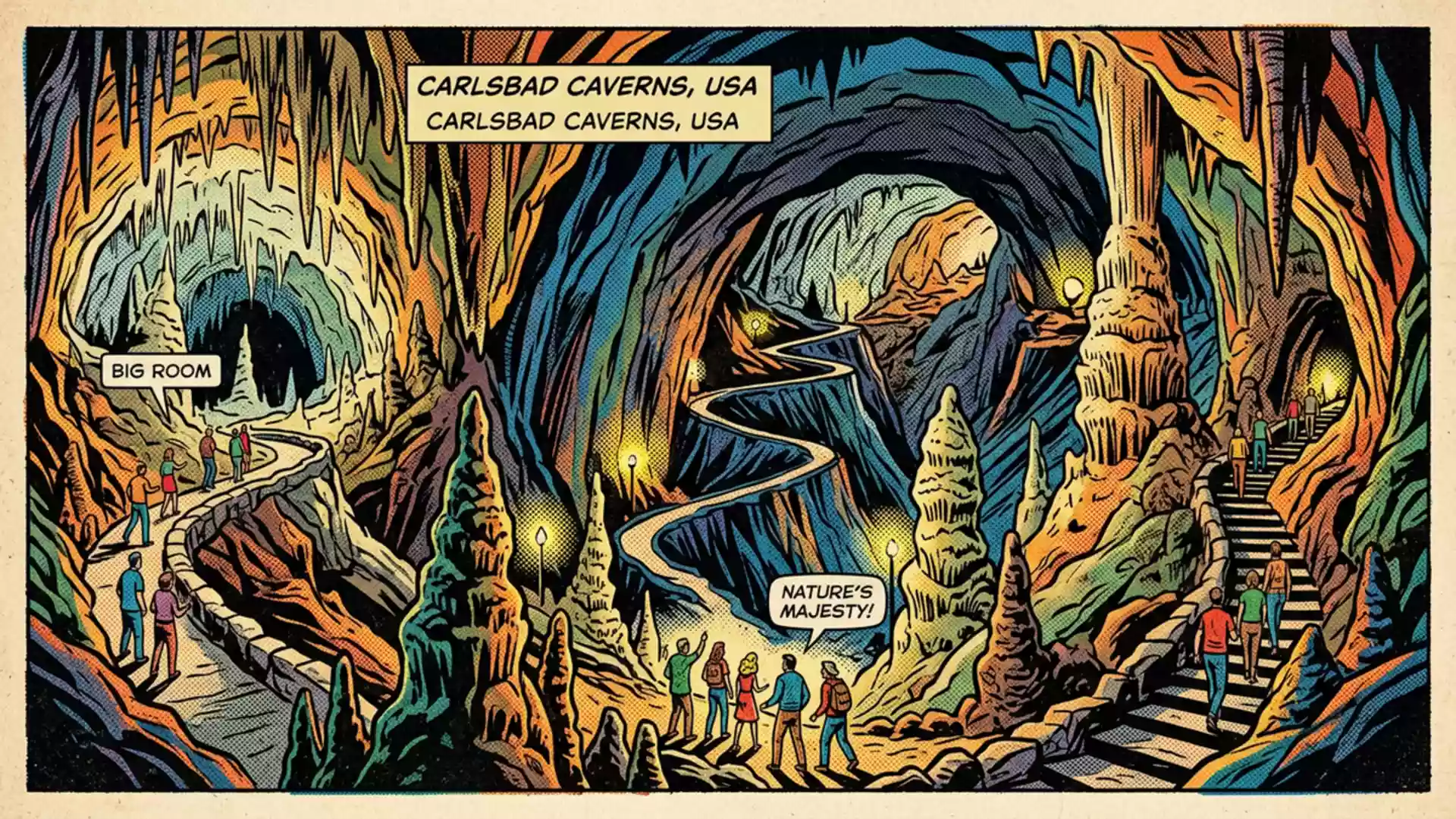
Carlsbad Caverns National Park protects more than 100 known limestone caves, including Carlsbad Cavern and the deeper Lechuguilla Cave, which are noted internationally for the size of their chambers and the range of formations they contain.More than 120 limestone caves lie within the park Within Carlsbad Cavern, stalactites, stalagmites, flowstone, cave pools and other mineral features occupy large galleries that can be reached by paths and illuminated routes laid out by the National Park Service.
Lechuguilla Cave, discovered in the twentieth century, extends beneath the same reef complex and contains rare gypsum formations, calcite growths and bacterially influenced deposits sometimes described as biothems.Lechuguilla Cave exhibits rare gypsum speleothems and biothems These underground features contribute to Carlsbad Caverns National Park being recognised as an area where geological processes and mineral deposition can be studied in caves that retain their natural character.
Visiting Carlsbad Caverns National Park: what travellers from Western Europe should know
- Carlsbad Caverns National Park lies south of the city of Carlsbad in south-eastern New Mexico, and the main visitor access road branches from a highway leading out of the city.
- The terrain around the natural entrance includes a paved path that descends through desert slopes into the mouth of the cave before reaching underground routes.
- Within the developed sections of Carlsbad Cavern, walking routes follow constructed paths through large chambers, with changes in gradient that require steady footing over extended distances underground.
- The surrounding landscape forms part of the Guadalupe Mountains, where elevations rise well above the plains, and vantage points near the surface facilities look out over the nearby desert.
- The official language is English and the currency is the United States dollar. Entry requirements depend on your nationality; UK travellers can check the FCDO travel advice at gov.uk/foreign-travel-advice, Irish travellers the Department of Foreign Affairs at ireland.ie.
Searching for Carlsbad Caverns National Park on social platforms
These links open searches for Carlsbad Caverns National Park on each platform.
Frequently asked questions about Carlsbad Caverns National Park
Where is Carlsbad Caverns National Park?
Carlsbad Caverns National Park lies in south-eastern New Mexico in the United States, in the Guadalupe Mountains south of the city of Carlsbad.
What should visitors expect during a visit?
Visitors encounter a desert landscape at the surface and then follow constructed paths through extensive underground chambers filled with limestone formations and mineral deposits.
What makes Carlsbad Caverns National Park distinctive?
The park combines a preserved Permian fossil reef, caves formed by sulphuric acid dissolution and a wide variety of calcite and gypsum formations that attract both travellers and geologists.