
Cape Coast Castle and the weight of stone above the Atlantic
Published on 08/15/2026 at 14:16 | Editorial responsibility: Rafael Müller, Editor-in-Chief AD HOC NEWS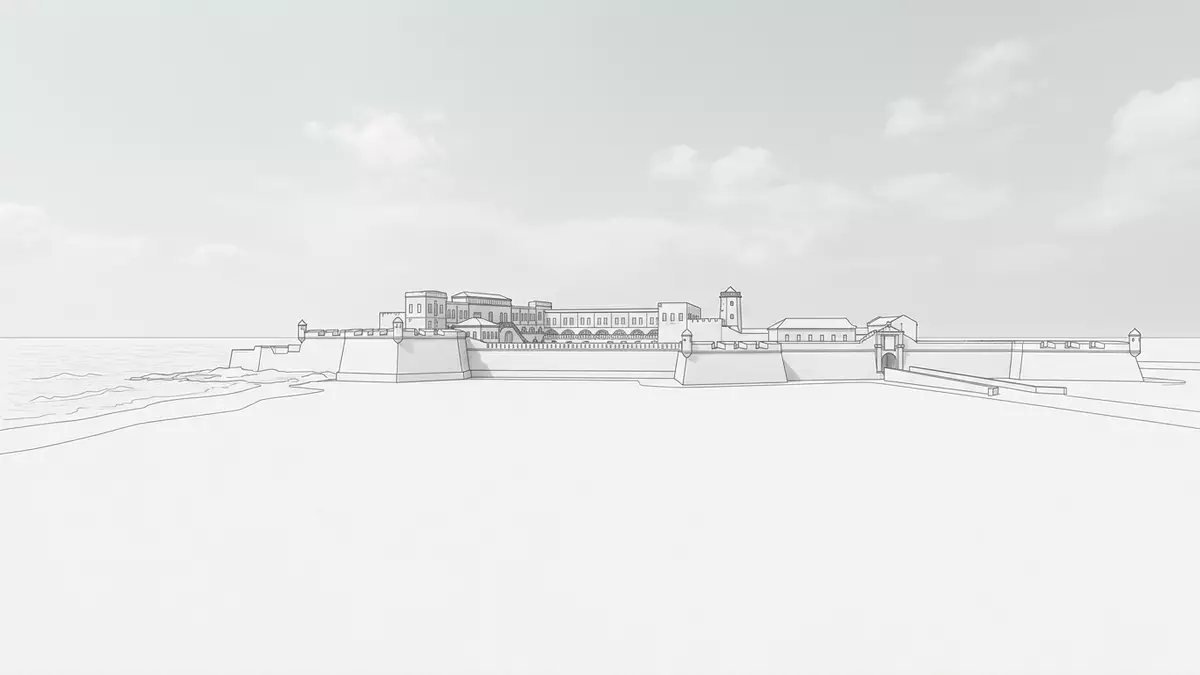
Cape Coast Castle on Ghana’s Atlantic shoreline is a coastal fortress where thick stone walls, ocean surf and buried dungeons occupy the same compact headland. Built as a European trading post in the seventeenth century and reshaped into a British stronghold by the late eighteenth century, it later became a museum that confronts the history of the transatlantic slave trade.
From timber fort to Atlantic stronghold
The site at Cape Coast began as a Portuguese trading post in the sixteenth century, known as Cabo Corso, or “Short Cape”, marking its position on the Gulf of Guinea.Portuguese trading post In 1653 the Swedish Africa Company constructed a timber fort on the rocky shore and named it Carolusborg after Charles X Gustav of Sweden, establishing a base for trade in timber and gold.timber fort named Carolusborg
Control of the fort shifted between European powers during the seventeenth century, with Danish and Dutch periods before an English fleet under Captain Robert Holmes captured it in 1664 and folded it into the expanding British presence on the Gold Coast.British control from 1664 By around 1700 the earlier fort had been rebuilt in stone as Cape Coast Castle, with ramparts, bastions and batteries facing the Atlantic swells and the harbour below.rebuilt as a stone castle
Dungeons, the “Door of No Return” and colonial rule
During the eighteenth century Cape Coast Castle became one of the principal depots in British transatlantic slave trading operations on the Gold Coast, with enclosed dungeons beneath the courtyard holding large numbers of captives before embarkation.principal depot in the slave trade Stone vaults under the seaward side lead towards the “Door of No Return”, a narrow opening facing the surf through which people were forced out to waiting ships bound chiefly for the Americas.Door of No Return towards the Atlantic
Above these lower chambers the castle’s upper levels housed chapels, administrative rooms and accommodation that later served as the headquarters of British colonial government in the Gold Coast from the early nineteenth century until 1877, when the capital shifted to Accra.headquarters of British administration After Britain abolished its slave trade in 1807, Cape Coast Castle continued as an administrative and educational centre, with castle schools and government offices occupying the same stone structures that had once overseen the trade in enslaved Africans.castle schools and government uses
Restoration, UNESCO status and the coastal setting
In the 1920s the British Public Works Department undertook substantial restoration of Cape Coast Castle, stabilising its masonry and altering some sea-facing defences, and after Ghana’s independence in 1957 the site passed to the Ghana Museums and Monuments Board.restoration and transfer to Ghana Cape Coast Castle opened as a museum in 1974, forming part of Ghana’s network of coastal forts and castles that interpret the history of trade, colonialism and slavery along this stretch of shoreline.opened as a museum in 1974
The fortress belongs to the UNESCO World Heritage listing “Forts and Castles, Volta, Greater Accra, Central and Western Regions”, which groups Cape Coast Castle with other coastal strongholds such as Elmina Castle.UNESCO World Heritage listing From the main courtyard and battery terraces the view runs across fishing boats, breakers and the low town of Cape Coast, setting the heavy stone mass of the castle against the open Atlantic and the everyday life of Ghana’s Central Region.
Visiting Cape Coast Castle: what travellers from Western Europe should know
- Cape Coast Castle stands on a rocky headland above the Atlantic in the town of Cape Coast in southern Ghana, reached over the coastal highway linking Accra and Takoradi.
- Exploring the interior involves climbing staircases between levels and descending into enclosed dungeons and vaulted chambers, where floors and passages can be uneven underfoot.
- The town of Cape Coast spreads around the base of the headland, with fishing beaches and harbour structures lying immediately to the east and west of the castle walls.
- The official language is English and the currency is the Ghanaian cedi.
- Entry requirements depend on your nationality; UK travellers can check the FCDO travel advice at gov.uk/foreign-travel-advice, Irish travellers the Department of Foreign Affairs at ireland.ie.
Searching for Cape Coast Castle on social platforms
These links open searches for Cape Coast Castle on each platform.
Frequently asked questions about Cape Coast Castle
Where is Cape Coast Castle and what kind of place is it?
Cape Coast Castle is a seventeenth-century stone fortress on the Atlantic coast in the town of Cape Coast in southern Ghana.
What can visitors expect when exploring Cape Coast Castle?
Visitors move between courtyards, batteries, chapels and enclosed dungeons within a compact castle, with views over fishing boats and the Atlantic surf.
What makes Cape Coast Castle distinctive among Ghana’s coastal forts?
Its role as a major depot in the British transatlantic slave trade, later seat of colonial government and UNESCO-listed museum gives one site several intertwined layers of history.


