
Cape Coast Castle and the layers of Cape Coast
Published on 09/08/2026 at 22:38 | Editorial responsibility: Rafael Müller, Editor-in-Chief AD HOC NEWS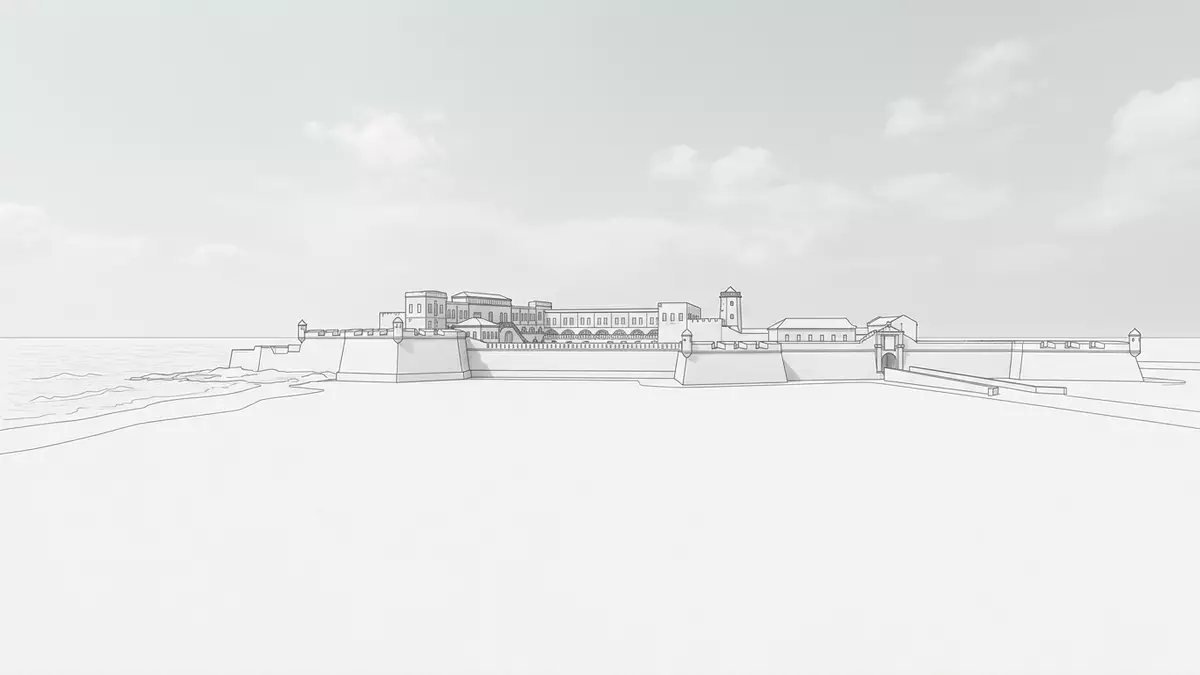
Cape Coast Castle in Cape Coast, Ghana, is a stone fortress whose layers of history remain visible in its walls, courtyards and sea-facing fronts. The building took form under Swedish rule in 1653 and later passed to the British, who expanded it into the castle seen today.
Swedish foundations and British layers
The first permanent structure on the site was laid out under the Swedish Africa Company and named Carlousborg after Charles X Gustav. The Swedish starting point, the British enlargement and the later museum use all belong to the castle’s identity.
1653 is the anchor date for the present monument, and the name of Charles X of Sweden still belongs in any account of its origin. The castle later became part of the British colonial world of the Gold Coast, which gives the site its layered profile.
A castle within a UNESCO coastal group
Cape Coast Castle is part of the UNESCO World Heritage property Forts and Castles along Ghana’s coast. That wider group gathers fortified trading-posts erected between 1482 and 1786, and Cape Coast Castle sits among its most recognisable members.
The whole complex reads as a military and commercial coastal building rather than a single-purpose palace. Thick masonry, enclosed spaces and sea-facing walls give it a severe profile that matches its role in Atlantic trade and colonial administration.
From fort to museum
The castle’s later life as a museum belongs to the building itself, not to a separate structure. It also served as a colonial administrative seat, a school and a headquarters for British power on the coast.
Those uses left an interior arranged around former storage, service and ceremonial spaces, with a museum interpretation added afterwards. The result is a place where the architecture and the historical record remain intertwined.
Visiting Cape Coast Castle: what travellers from Western Europe should know
- Cape Coast Castle stands in Cape Coast, on Ghana’s central coast. It lies near the sea and within the town’s historic core.
- The building has stairs, enclosed rooms and uneven historic masonry. Visitors move through a fortress rather than an open promenade.
- The castle forms part of the UNESCO serial property for Ghana’s forts and castles. That context places it among related coastal fortifications rather than as an isolated monument.
- The official language is English and the currency is the Ghanaian cedi.
- Entry requirements depend on your nationality; UK travellers can check the FCDO travel advice at gov.uk/foreign-travel-advice, Irish travellers the Department of Foreign Affairs at ireland.ie.
Searching for Cape Coast Castle on social platforms
These links open searches for Cape Coast Castle on each platform.
Frequently asked questions about Cape Coast Castle
Where is Cape Coast Castle?
It stands in Cape Coast on Ghana’s central coast, facing the Atlantic. It is part of the historic coastal belt linked with other forts and castles.
What does a visit involve?
The castle presents staircases, rooms and thick masonry inside a fortified shell. Its museum setting and defensive form remain visible together.
What makes it distinctive?
Its Swedish beginnings, British expansion and UNESCO status give it a layered identity. Few buildings in Cape Coast carry that much of the town’s coastal history in one place.


