Cape Coast Castle and the architecture of captivity
Published on 09/09/2026 at 17:57 | Editorial responsibility: Rafael Müller, Editor-in-Chief AD HOC NEWS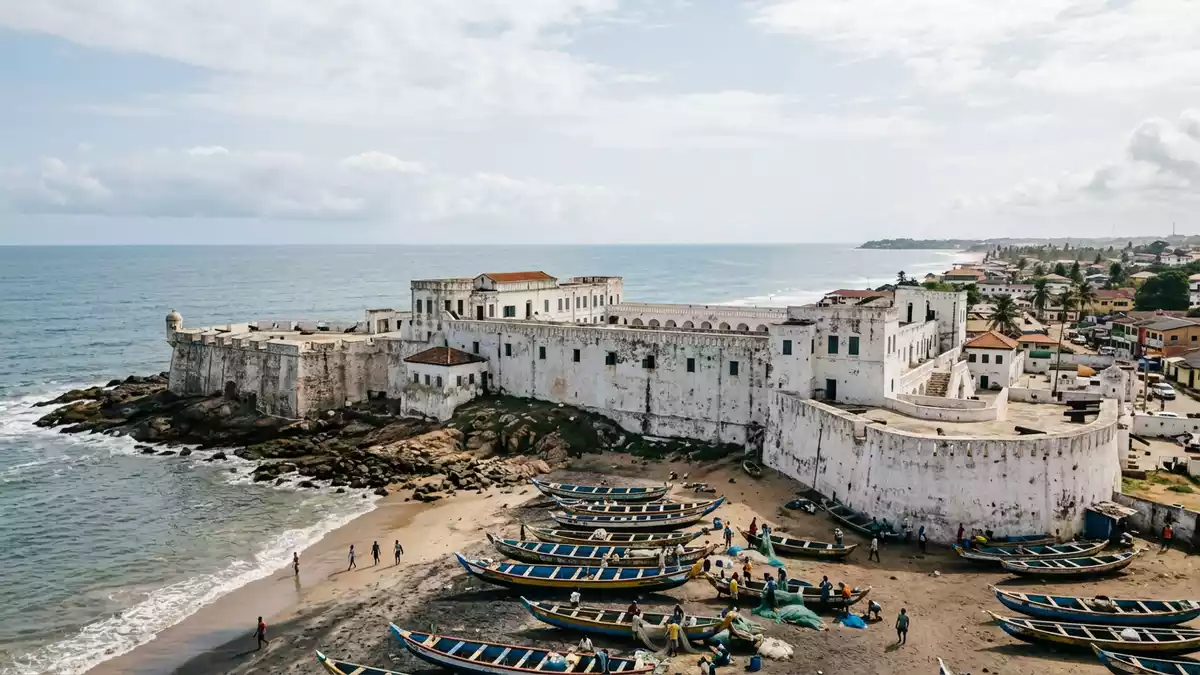
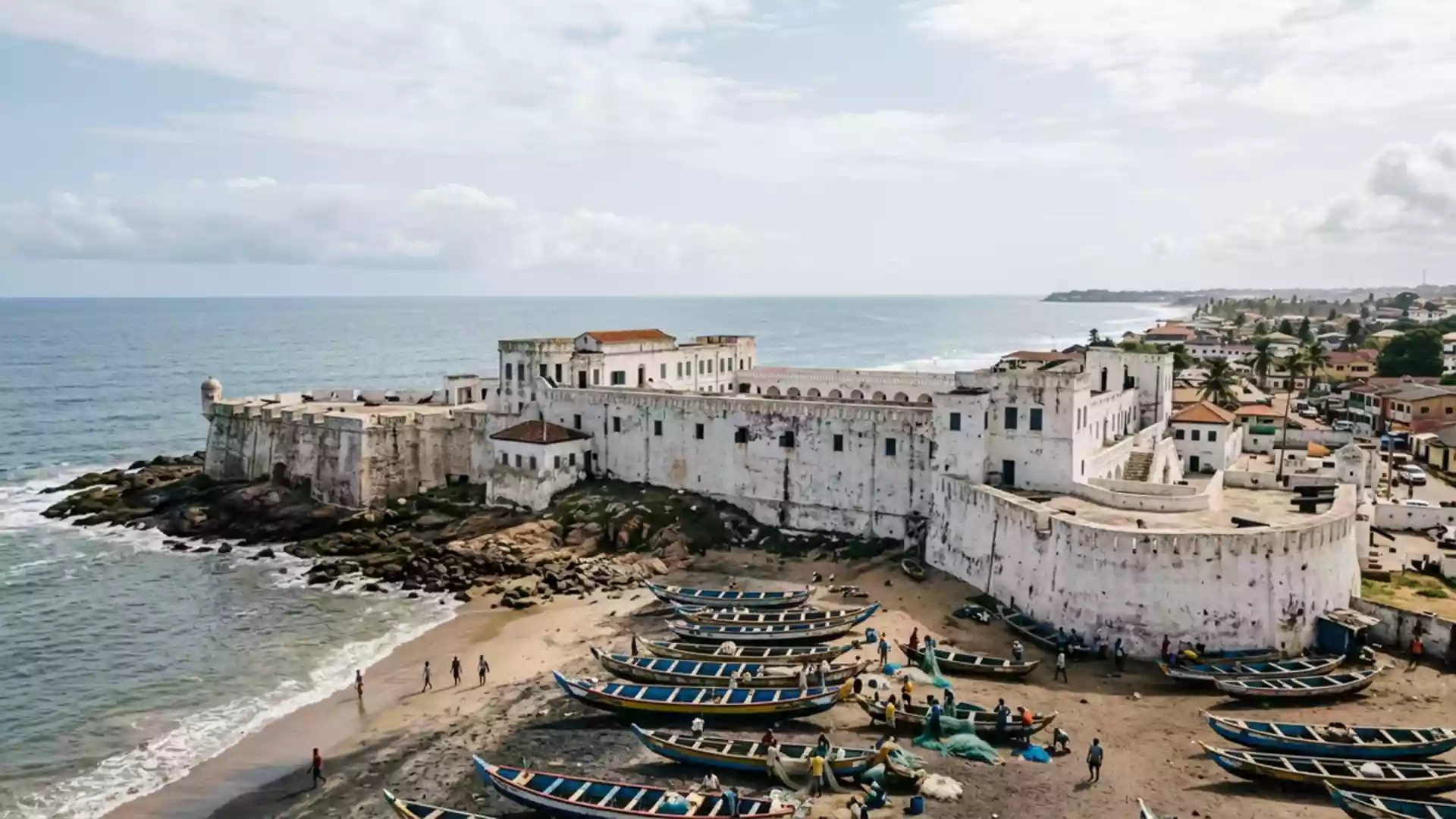
Cape Coast Castle on Ghana’s central coast is a whitewashed seaside fortress where thick walls, cannon-lined ramparts and underground dungeons stand side by side, making the architecture itself a record of Atlantic trade and British colonial rule.
From Portuguese trading post to British stronghold
The site began in the mid sixteenth century as a Portuguese trading post known as Cabo Corso, or “Short Cape”, set on a rocky shoreline above the Atlantic surf.Portuguese trading post Cabo Corso In 1653 the Swedish Africa Company erected a timber fort here, naming it Carolusborg after King Charles X Gustav of Sweden, and laid out the first permanent bastions and courtyard buildings.Carolusborg Swedish fort
Control of the fort shifted repeatedly in the seventeenth century, passing through Danish and Dutch hands before a British fleet under Captain Robert Holmes seized it in the 1660s.British conquest under Captain Holmes By around 1700 British works had transformed the earlier fort into a more extensive stone castle, with outer curtain walls, projecting bastions and batteries facing the sea, turning the complex into one of the principal coastal strongholds on the Gold Coast.expanded into stone castle
Architecture shaped by the Atlantic slave trade
Within these fortifications, Cape Coast Castle developed into a major node of the transatlantic slave trade in the eighteenth century, and the plan of the building still reflects that role.major node in slave trade Above ground, long galleries, governor’s apartments and an Anglican chapel look out over the ocean, forming a European-style administrative and religious quarter arranged around open courtyards.
Below, stone vaults were adapted into dungeons where enslaved African men and women were held before embarkation, linked to the outside by passageways leading to a seaward gate often described as a “door of no return”.dungeons and door of no return Heavy masonry, barred openings and narrow corridors express the castle’s double function: a fortress of guns and parapets for European traders, and a prison architecture designed to contain captive Africans until ships anchored offshore.
Colonial headquarters and present-day museum
In the nineteenth century, after Britain legally abolished the slave trade in 1807, Cape Coast Castle became an administrative and educational centre for the British colony of the Gold Coast, with offices and “castle schools” housed within its walls.administrative and educational centre From 1821 it served for a period as the seat of government for the colony, before the capital was transferred to Accra later in the century.seat of government for Gold Coast
Restoration campaigns in the twentieth century repaired war damage and weathered stonework, and Ghana’s independence in 1957 brought the castle under the care of the Ghana Museums and Monuments Board.Ghana Museums and Monuments Board It opened as a historical museum in 1974 and forms part of a group of forts and castles along the Ghanaian coast inscribed together on the UNESCO World Heritage List, with exhibits on European arrival, local cultures and the Atlantic slave trade arranged in former barracks and administrative rooms.UNESCO-listed coastal forts
Visiting Cape Coast Castle: what travellers from Western Europe should know
- Cape Coast Castle stands on the shoreline of Cape Coast in southern Ghana, reached overland from Accra and other regional centres by road along the country’s central coast.
- The complex is arranged around courtyards with staircases and upper levels; visiting the ramparts, towers and dungeons involves climbing stone steps and walking through confined interior passages.
- From the seaward walls the view takes in the Atlantic coastline and the surrounding town, with fishing beaches and coastal streets lying immediately beside the castle.
- The official language is English and the currency is the Ghanaian cedi.
- Entry requirements depend on your nationality; UK travellers can check the FCDO travel advice at gov.uk/foreign-travel-advice, Irish travellers the Department of Foreign Affairs at ireland.ie.
Searching for Cape Coast Castle on social platforms
These links open searches for Cape Coast Castle on each platform.
Frequently asked questions about Cape Coast Castle
Where is Cape Coast Castle and what kind of place is it?
Cape Coast Castle is a coastal fortress and former slave-trading post in the town of Cape Coast on the Gulf of Guinea in southern Ghana.
What can visitors expect inside Cape Coast Castle?
Visitors encounter courtyards, cannon terraces, former governor’s quarters and chapel, alongside stone dungeons and passageways that once confined enslaved Africans before Atlantic voyages.
What makes Cape Coast Castle distinctive among West African forts?
Its combination of large-scale fortifications, surviving slave dungeons, colonial administrative rooms and museum displays on the Atlantic slave trade gives the castle a particularly layered historical character.