
Candi Borobudur and its stone terraces in Java
Published on 09/22/2026 at 17:28 | Editorial responsibility: Rafael Müller, Editor-in-Chief AD HOC NEWS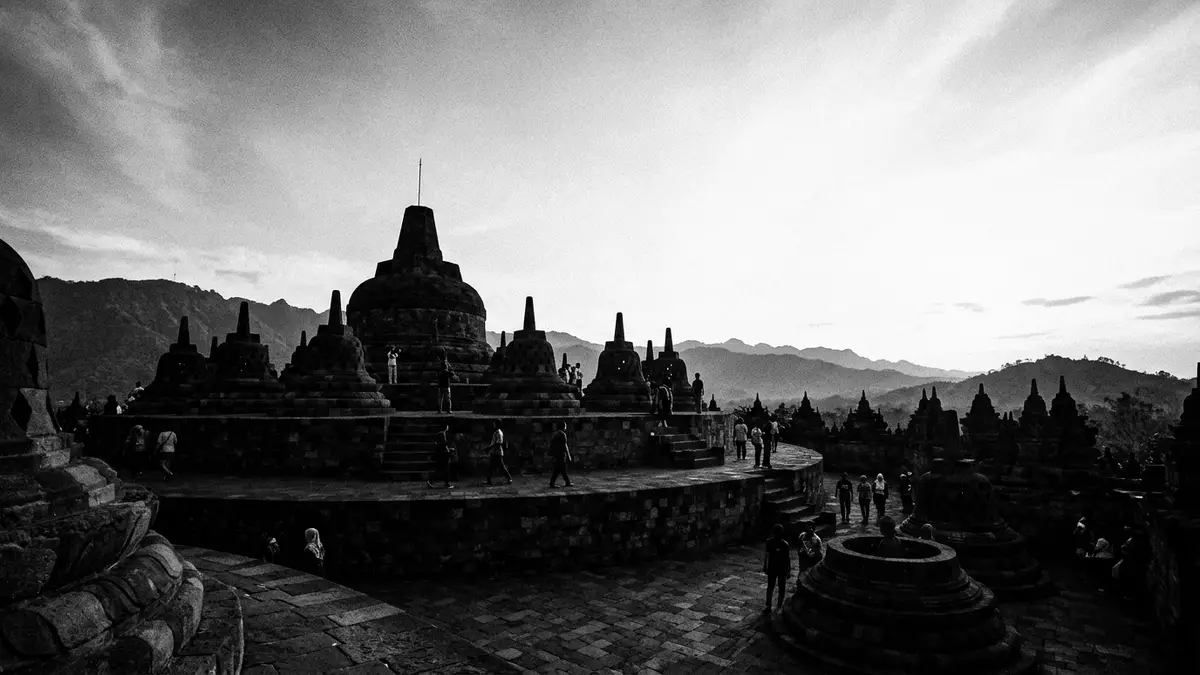
Candi Borobudur is a monumental Buddhist temple in Central Java, near Magelang. Its stepped stone terraces rise through a carefully ordered sequence of reliefs, niches, stupas and open galleries, creating a building that is also a sculpted landscape.
Candi Borobudur as a stepped stone mountain
The monument is built from volcanic stone and arranged as a broad, tiered mass. Lower galleries carry carved panels, while upper levels open into circular terraces with bell-shaped stupas. At the summit, a large central stupa crowns the composition.
The architecture is read from the base upwards. Reliefs cover the lower passages with scenes from Buddhist teaching, stories and daily life. The carved surfaces include figures, animals, plants, buildings and ships, turning the walls into an extensive visual record of the culture that created the temple.
The Sailendra dynasty and a Buddhist monument
Candi Borobudur was built during the period of the Sailendra dynasty, whose power was centred in Java. Construction belongs to the eighth and ninth centuries, and the monument is traditionally dated to the ninth century.
Its design combines architectural mass with Buddhist symbolism. The lower levels represent the world of desire, the middle galleries form a sphere of spiritual development, and the upper terraces present a less enclosed architectural order. The sequence is expressed through stone, movement and sculpture rather than through a separate interior sanctuary.
Reliefs include scenes associated with the life of the Buddha and Buddhist moral teaching. The monument also contains images of the Buddha placed in niches and within the upper stupas. Their arrangement contributes to the repeated rhythm of the galleries and terraces.
Reliefs, stupas and the landscape around Magelang
Candi Borobudur stands in a plain surrounded by volcanic landscapes. The temple’s horizontal terraces contrast with the mountains and hills of Central Java, while its dark stone surfaces carry detailed carving across the visible walls.
The upper terraces are formed by circular paths and perforated stupas. Each stupa encloses a seated Buddha figure, with the sculpture partly visible through the stone lattice. The repeated forms create a strong contrast between the solid lower galleries and the more open summit levels.
The monument became a UNESCO World Heritage Site in 1991. Its importance rests on the combination of architecture, sculpture, religious meaning and historical setting. The surrounding archaeological landscape includes other Buddhist and Hindu monuments associated with Central Java’s early medieval kingdoms.
Visiting Candi Borobudur: what travellers from Western Europe should know
- Candi Borobudur lies near Magelang in Central Java. Road transport from Yogyakarta is the usual way to reach the monument.
- The site consists of steep stone terraces, flights of steps and narrow gallery passages. Comfortable footwear suits the uneven masonry and repeated stairways.
- The monument is exposed to tropical weather. The upper terraces have little architectural shelter compared with the covered relief galleries.
- The official language is Indonesian and the currency is the Indonesian rupiah.
- Entry requirements depend on your nationality; UK travellers can check the FCDO travel advice at gov.uk/foreign-travel-advice, Irish travellers the Department of Foreign Affairs at ireland.ie.
Searching for Candi Borobudur on social platforms
These links open searches for Candi Borobudur on each platform.
Frequently asked questions about Candi Borobudur
Where is Candi Borobudur?
Candi Borobudur is in Central Java, Indonesia, near Magelang. The monument lies within a volcanic landscape and is commonly reached by road from Yogyakarta.
What can visitors see at Candi Borobudur?
Visitors encounter carved relief galleries, Buddha images, stairways, circular terraces and perforated stone stupas. The route rises from enclosed lower passages towards open upper levels.
What makes Candi Borobudur distinctive?
The monument combines a large stepped stone form with extensive Buddhist sculpture. Its upper terraces contain repeated bell-shaped stupas surrounding a central summit stupa.


