
Canal Grande in Venedig and its palaces along the waterway
Published on 08/28/2026 at 13:36 | Editorial responsibility: Rafael Müller, Editor-in-Chief AD HOC NEWS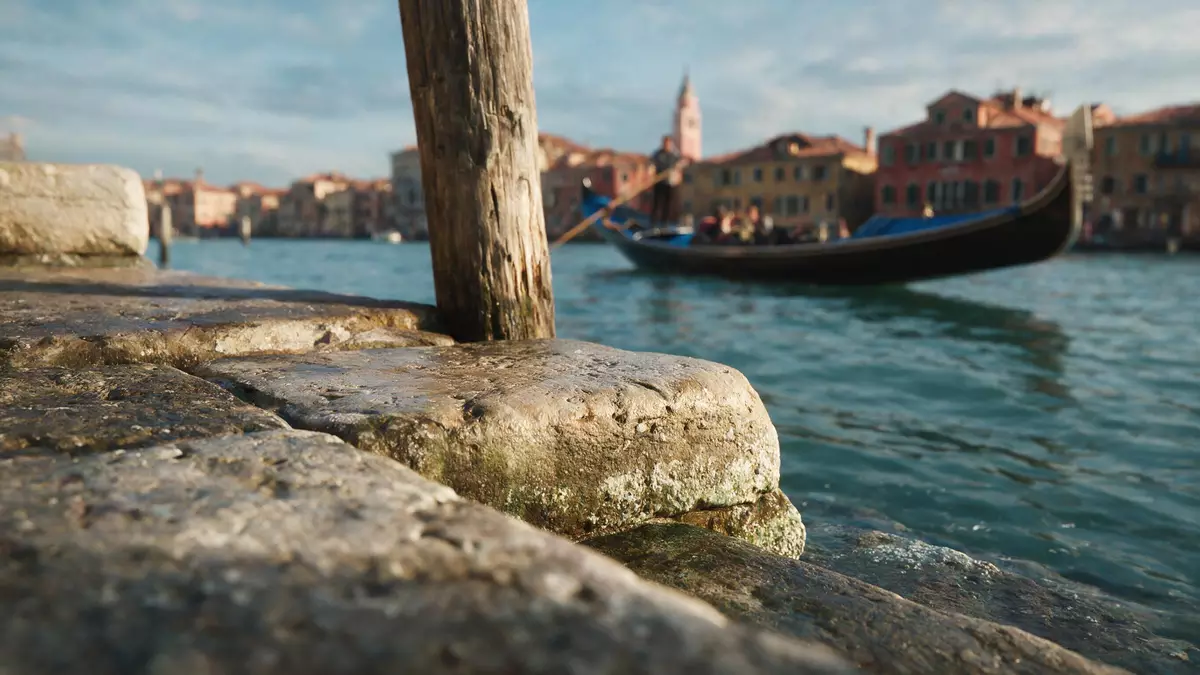
Canal Grande is the broad, winding waterway that cuts across Venedig and gives the city its most dramatic axis, a long curve framed by palaces from the medieval republic to the age of Neoclassicism. Stretching for around 3.8 km (2.4 miles) in a reverse S-shape through the historic centre, it gathers architecture from the thirteenth to the eighteenth century in one uninterrupted procession of facades.reverse S-shape
The main waterway of Venedig
Canal Grande functions as the principal water route of Venedig, running from the transport hub at Piazzale Roma and the railway station towards the wide basin in front of the Piazza San Marco. Rather than an engineered channel, it follows the course of an older natural waterway that the city grew around, a broad ribbon of water that splits the historic centre into two banks.principal water route
The canal is flanked by more than 170 buildings, many of them palaces, churches and civic structures that front directly onto the water and display Romanesque, Venetian-Byzantine, Gothic, Renaissance, Baroque and Neoclassical styles.more than 170 buildings Their facades form a continuous backdrop to boat traffic, with entrances, water doors and mooring posts taking the place of pavements and street fronts.
Centuries of palaces along Canal Grande
Architecture along Canal Grande follows the history of the Venetian Republic. Early structures in Venetian-Byzantine style appear from the twelfth and thirteenth centuries, combining long loggias with rounded arches and rich polychrome marble decoration.Venetian-Byzantine style Later Gothic palaces emphasise vertical lines and elaborate tracery, while Renaissance buildings introduce classical proportions and more regular window arrangements.
Baroque architecture gives Canal Grande some of its most recognisable silhouettes, notably the Basilica di Santa Maria della Salute, begun in 1631 by the architect Baldassare Longhena and rising at the mouth of the canal where it meets the lagoon.Baldassare Longhena Longhena also designed palaces such as Ca’ Pesaro and Ca’ Rezzonico, whose large masses and ornate decoration stand out among the more restrained Renaissance fronts. Neoclassical buildings, including Palazzo Grassi and San Simeone Piccolo, add later layers with clearer lines and pedimented temple forms facing the water.
Bridges and views along the canal
Only four bridges cross Canal Grande along its length, each with a distinct character and period. The Rialto Bridge, completed in 1591 to designs by Antonio da Ponte, carries shops along its single stone span and remains the oldest crossing over the canal.Rialto Bridge Further along, Ponte dell’Accademia provides a wooden arch near the Gallerie dell’Accademia, while Ponte degli Scalzi links the area by the railway station with the opposite bank.
The most recent bridge is Ponte della Costituzione, opened in 2008 and designed by Spanish architect Santiago Calatrava, a glass and steel structure that connects Piazzale Roma with the opposite shore.Ponte della Costituzione From the decks and embankments nearby, the view along Canal Grande reveals the curvature of the waterway, the sequence of palaces and the changing rooflines as the canal approaches the open water of the lagoon.
Visiting Canal Grande: what travellers from Western Europe should know
- Canal Grande runs through the centre of Venedig in north-eastern Italy and is reached by water from hubs such as the railway station at Venezia Santa Lucia and Piazzale Roma.
- The canal is entirely on water, with stone embankments, steps and landing stages; moving along it usually involves boats and negotiating narrow quays and bridges.
- Several notable churches and palaces stand directly beside Canal Grande, including Santa Maria della Salute near the lagoon entrance and Ca’ d’Oro on the northern bank.
- The official language is Italian and the currency is the euro.
Searching for Canal Grande on social platforms
These links open searches for Canal Grande on each platform.Frequently asked questions about Canal Grande
Where is Canal Grande located in Venedig?
Canal Grande runs through the historic centre of Venedig in north-eastern Italy, linking the transport hub at Piazzale Roma with the basin by Piazza San Marco.
What can visitors expect when travelling along Canal Grande?
Visitors encounter a continuous sequence of palaces, churches and public buildings from the thirteenth to eighteenth centuries, with boats moving along the broad curved waterway instead of streets.
What makes Canal Grande distinctive among waterways?
Its long reverse S-curve, limited number of bridges and dense line of historic facades create an urban water corridor where architecture and movement by boat define the character of Venedig.


